
Ductless mini splits for less · 2026 buyer's guides & free sizing helpSize my system →

Fast Answer: What Is a DIY Mini Split 3 Zone Heat Pump in 2026?

A DIY mini split 3 zone heat pump is an inverter-driven, ductless system with one outdoor unit and three indoor air handlers, each controlling the temperature in a separate room. DIY systems use pre-charged line sets with quick connect fittings and need no vacuum pump, so homeowners can self-install without calling in a full HVAC crew.

MRCOOL made this kind of system familiar, but Zone Air adds two things MRCOOL's DIY line doesn't: line sets cut to the exact length you measure, and wall, ceiling cassette and concealed ducted heads on one outdoor unit.

Zone Air's 3-zone wall systems are also rated 24 SEER2.

FeatureTypical 2026 3-Zone DIY System
Zones3 indoor air handlers, independently controlled
Outdoor unitAbout 18,000–36,000 BTU depending on brand (Zone Air uses one 27,000 BTU condenser for every 2- and 3-zone system)
Line setsPre-charged with quick connect fittings
Cold climateMost multi-zone DIY units rated to −13°F
EfficiencySEER2 about 22–24 / HSPF2 about 8.5–10.5
ControlsWi-Fi app, remote, Amazon Alexa, Google Home

How a 3 Zone DIY Mini Split Works

One outdoor condenser sits outside your home and connects to three indoor air handlers with its own copper line set for each one. Each air handler works on its own with its own thermostat and fan settings, so you get a true multi zone system and you do not need any ductwork.

  • Cooling mode: Refrigerant is absorbing heat from each indoor coil, then it travels to the outdoor unit where the condenser gets rid of that heat, then it cycles back. The variable-speed inverter compressor changes its output based on demand - if only one room calls for cooling, the system slows down instead of running at full capacity.
  • Heating mode: The refrigeration cycle turns around. The outdoor coil pulls heat from outside air (even in cold weather), and each indoor unit releases warmth. Cold-climate models use enhanced compressor designs so they can keep their capacity when it is below zero.
  • Zoning logic: Each indoor unit has its own remote or thermostat. You can close doors, you can set different schedules, and you can adjust the fan speed for each zone. If you shut off one head, it does not affect the others.
  • Power and controls: The outdoor unit typically needs a 208/230V circuit. Communication wires connect each air handler to a matching port on the condenser - wiring a head to a different port than its refrigerant line is a common install mistake that causes uneven cooling.

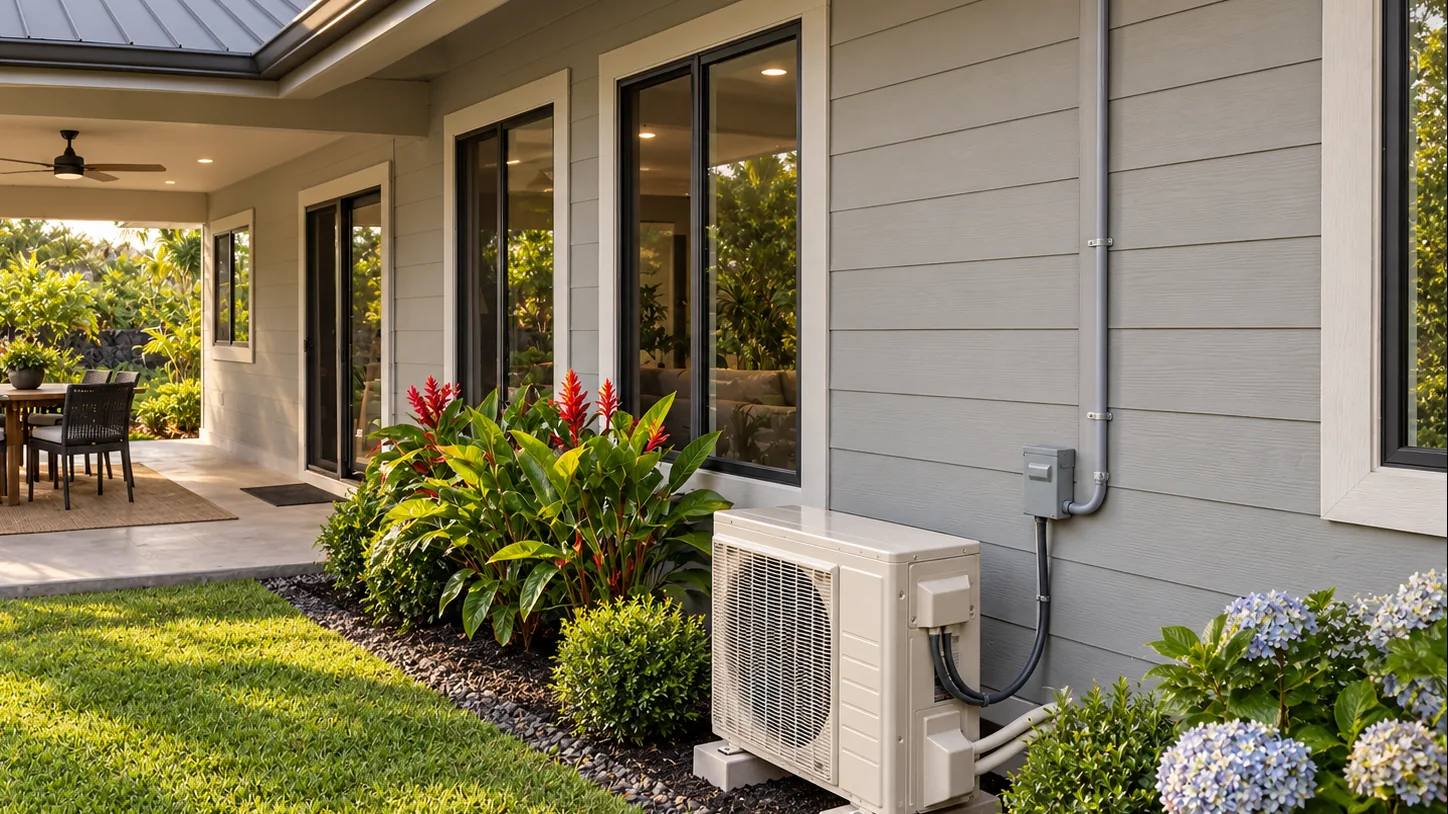
Think of the layout this way: the outdoor unit sits on a pad or wall bracket outside, three heads sit in separate rooms (high on the wall, in the ceiling or hidden above it), and insulated refrigerant lines plus condensate drain tubing run between each head and the condenser through small holes in the wall.

Why 3 Zone DIY Mini Splits Beat Older Systems in 2026

High-efficiency multi zone mini split systems do better than window ACs, portable units and many older central systems. They especially make sense for homes that don't have existing ductwork, or when you're only upgrading part of the house.

  • Efficiency: SEER2 ratings indicate cooling efficiency and directly impact your electricity bills, while HSPF2 ratings measure heating efficiency during winter. Zone Air's 3-zone wall systems are rated 24 SEER2 and 10.5 HSPF2 (8.8 in the colder Region V rating), well above the federal minimum of 14.3 SEER2 and 7.5 HSPF2. Check AHRI certification and your utility's rebate requirements before you buy.
  • Installation savings: If you have a professional put in a ducted central system for 1,500–2,000 sq ft, that will typically run you $8,000–$15,000. A Zone Air 3-zone system was $3,809.99 for wall heads up to $4,609.99 with ceiling cassettes as of November 2026, plus you get a pre-charged line set per zone at whatever length that room needs.
  • Comfort and air quality: Indoor units run quieter than window ACs, and they offer better dehumidification along with multiple fan speeds. Each air handler also has washable filters built right into it.
  • Flexibility: You can customize the capacity for each room. A 9k BTU head is the right size for the office, while a 12k BTU head is the right size for the living area. You don't have to change the size of any ducts. That kind of flexibility is useful in homes that have odd shapes.
  • Brand distinction: MRCOOL's DIY multi-zone condensers are rated up to 23.9 SEER2 on the 18K and 23 on the 27K. Zone Air's 27K condenser is 24 SEER2 with wall heads. It's the only DIY mini split that lets you mix wall-mount, ceiling cassette and concealed ducted units on one outdoor unit (as of November 2026).

Planning Your DIY 3 Zone Project

Getting the size right and planning the layout matter far more than any marketing claim about how easy the installation is. With DIY systems, there's no technician checking your work, so you have to plan carefully.

  • BTU sizing by room: So how big does the unit for each room need to be? A bedroom that is well-insulated and 250–400 sq ft typically needs a 9,000 BTU head. A 400–550 sq ft living space may need 12,000–18,000 BTU, depending on windows, ceiling height and how much sun it gets. You need to get the right size for each zone so the unit doesn't turn on and off too quickly. Zone Air's free sizing calculator runs the numbers for each room.
  • Total system capacity: Pair three indoor units (e.g., 9k+9k+12k = 30k BTU) with a matching outdoor unit. The capacity of multi zone systems should match the combined capacity needed for all zones, and the combination has to be one the manufacturer lists. Avoid oversized mini split systems to keep efficiency and humidity control where they should be.
  • Layout: Choose walls that allow short, direct line set runs to the outdoor unit. Avoid sharp turns. Mount each wall unit high on the wall for even airflow across the room. A ceiling cassette works best near the center of the room.
  • Line set length and elevation: You need to stay within the manufacturer's maximum run length and elevation differential because going past the specs will degrade performance and may void your warranty. MRCOOL sends fixed 11.5, 16, 25, 35 and 50 ft sets plus couplers and has you coil the excess. As of November 2026, and of the brands compared here, Zone Air is the only one that cuts your pre-charged line set to the exact length you measure, any whole foot from 5 to 75, and its 25–75 ft sets are each a single factory-sealed run with no field joint.
  • Power and breaker planning: Zone Air's 3-zone outdoor unit needs a 30A double-pole circuit with a disconnect. Consult local electrical code and consider hiring a licensed electrician for this portion of the work, even in a DIY project.

Parts of a DIY Multi Zone Mini Split System

A complete 3-zone kit is a matched set of parts that have to work together as a system.

  • Outdoor unit: This unit houses the inverter compressor, the fan and the heat exchanger. If you live in a humid area or near the coast, look for coil coatings that resist corrosion. Zone Air's 3-zone condenser is rated 62 dB(A) outdoors.
  • Indoor air handler: These come as wall-mount, ceiling cassette or concealed ducted units. They have a quiet DC fan, an evaporator coil that is built in, a drain pan and a way to get to the filter. Indoor noise really matters in bedrooms, so look for units that run in the low 20s to low 30s dB when the fan is on low.
  • Line set: This is insulated copper tubing that carries refrigerant between the indoor unit and the outdoor unit. True DIY systems use refrigerant lines that come pre-charged and have quick connect fittings. The current Zone Air and MRCOOL units both run R-454B. You'll want to use covers that are UV-resistant to protect any exposed runs.
  • Control hardware: Wireless controllers, Wi-Fi, wall thermostats and mobile apps let you control each zone. Amazon Alexa and Google Home are standard on most 2026 systems.
  • Accessories: You'll need a condenser pad or a wall bracket, condensate pumps for places where a gravity drain won't work, a surge protection device and a disconnect box near the outdoor unit.

DIY and "Official DIY" Systems Like MRCOOL and Other 2026 Options

Traditional pro-grade multi zone systems need brazing, vacuum pumps, gauges and EPA Section 608 certification. DIY systems skip all of that because they ship with line sets that are factory-sealed and pre-charged, and these line sets have quick connect fittings.

  • MRCOOL DIY 5th Gen: It has pre-charged lines and quick connect fittings, and MRCOOL says "no special tools or training are necessary to install". The multi-zone condensers can run up to six zones on R-454B refrigerant, and you can choose wall units or the OuttaSight ceiling cassette for indoors. On MRCOOL's Trustpilot page, people who left reviews as of September 2026 say warranty claims got refused on self-installed units and support answers were slow.
  • Zone Air: It uses the same pre-charged, no-vacuum-pump approach and hits 24 SEER2 on wall heads, but it has two things MRCOOL's DIY line doesn't. You can mix wall-mount, ceiling cassette and concealed ducted heads on the one outdoor unit, and MRCOOL doesn't sell a concealed-duct DIY unit. Also, the line sets are cut to length instead of coiled. So you get one outdoor unit, the right indoor unit for every room, and you install it yourself.
  • Refrigerants: Many 2026 systems use lower-GWP refrigerants like R-454B (A2L, slightly flammable). Factory-sealed, pre-charged line sets mean the refrigerant never opens to the air during install. Learn about A2L refrigerant safety and code requirements before buying.
  • Warranty and codes: Warranties for DIY systems depend on installing per the manufacturer's instructions. MRCOOL's DIY 5th Gen has a 5-year parts and 7-year compressor warranty with no registration required. Zone Air matches it: 5-year parts and 7-year compressor coverage with no registration deadline, and installing it yourself does not void it. Always check whether self-install is allowed in your local area.
  • When DIY should stop: Running new high-voltage circuits, penetrating fire-rated assemblies or handling open refrigerant systems should be left to licensed pros, even when the core system is sold as simple to install.

Step-by-Step 3 Zone DIY Installation Overview

This is a high-level overview, not a replacement for your install manual. Every brand has specific instructions to follow. Zone Air publishes a spec sheet, manual and install guide for every unit. Zone Air's FAQ puts a first-time single-zone wall install at 4–6 hours for two people, so plan extra time for three zones.

  • Preparation: Gather your tools. You'll need a drill with a 3 in hole saw, a level, a stud finder, a torque wrench, wrenches, a tool to check the electrical work, and safety gear. Pull any permits you need.
  • Mount indoor air handlers: Find the wall studs, put the mounting plate up level, and drill a hole with a slight downward slope toward the outside so the line set and condensate drain can run out.
  • Set the outdoor unit: Place it on a level pad or wall bracket with the room the manufacturer says you need for airflow. Add vibration pads to cut down on the amount of sound that gets through.
  • Route line sets: Gently uncoil the pre-charged lines and avoid kinks. You can protect them with line set covers, and make sure you stay within the manufacturer's maximum length.
  • Connections: For quick connect systems, clean the fittings and tighten them to the torque spec the manufacturer provides. For flare-type systems, you'll need to flare the lines, torque them, pressure test and evacuate with a vacuum pump.
  • Wiring: Connect communication cables between the outdoor unit and each air handler following the numbers on the terminals. Connect outdoor power from the disconnect. Confirm polarity and ground continuity.
  • Start-up and test: Turn the power on and run it in cooling and heating modes. Verify that each zone answers to the remote or app, check that condensate drains properly, listen for any odd sound, and inspect all joints for oil stains or other signs of a refrigerant leak.

Performance, Cold Climate & Power Outage Behavior

Modern multi zone mini splits are built for very hot summers, freezing winters and the occasional power interruption.

  • Cold-climate heating: Zone Air systems are rated to heat down to −13°F and cool in outdoor temperatures up to 131°F. MRCOOL's DIY multi-zone condensers from 18K to 48K are rated −13°F to 122°F, and only its 55K reaches −22°F. Heating output drops for every heat pump as it gets colder, so check the low-temperature capacity, not just the minimum operating temperature, if this will be your main heat.
  • Defrost cycles: When frost builds up on the outdoor coil, the system goes into a brief defrost mode. You may feel a temporary temperature dip indoors, but modern logic keeps it short.
  • Energy modulation: What happens when only one small zone calls? The inverter ramps down to very low output. That cuts the short-cycling you get with single-stage equipment.
  • Power outage behavior: Quality systems automatically restore the previous mode, temperature and louver settings after a power outage. Use a dedicated HVAC surge device to protect the sensitive electronics.
  • Noise and comfort: Typical indoor levels sit at 22–42 dB depending on the fan speed. Place the outdoor units away from bedroom windows and the neighbor's property lines.

Smart Controls and Multi Zone Scheduling

Multi zone mini splits now work closely with smart homes, so you can set up a schedule for each room and change the settings from anywhere you are.

  • Remote controls and "Follow Me": Hand-held controls with built-in temperature sensors let you tune the airflow to where you actually sit or sleep, not just to where the indoor head is mounted on the wall.
  • Wi-Fi apps: You can change the mode, the temperature, the fan speed, the louver direction and the scheduling right from your phone. Sleep mode also is designed to reduce energy use overnight.
  • Smart helpers: You can use voice commands through Amazon Alexa or Google Home - "set office to 72°F" or "turn off bedroom mini split" - which adds convenience without picking up a remote.
  • Zoning strategies: Stagger the setbacks between zones, keep doors open or closed based on the airflow you want, and don't over-cool a small space while a large room still needs air.
  • Adding zones later: On a Zone Air system you can start with fewer heads and add one to a spare port on the 27K condenser later, with a pre-charged line set and no vacuum pump.

Maintenance, Troubleshooting and When to Call a Pro

Even DIY-installed systems need routine care, but most of these jobs take only minutes and you don't need any special training for them.

  • Routine maintenance: Clean the washable filters every 4–8 weeks, wipe the indoor grilles, clear the outdoor coil of leaves and debris, and make sure the drain lines discharge away from the foundation.
  • Seasonal checks: Before summer, test cooling output. Before winter, verify heating mode and defrost. Inspect line set insulation for damage and confirm secure electrical connections at accessible panels.
  • Basic troubleshooting: Error codes on the indoor display point to specific faults - sensor errors, high/low pressure alerts, or communication failures. Safe user actions include power cycling and filter cleaning. Unsafe actions include opening refrigerant circuits or bypassing safeties.
  • Safety warnings: Never cut into copper lines, add refrigerant yourself or get around the interlocks. EPA-certified technicians are required for refrigerant work.
  • When to call a professional: Repeated error codes, tripped breakers after a power outage, ice buildup on the indoor coil, persistent refrigerant smell or performance loss after basic cleaning all warrant professional support.
  • Brand support: Zone Air sells direct and offers live technical support 8 AM–6 PM MT, an install video library and a written DIY manual, with final assembly, testing, and inspection in the USA. The 30-day return window on uninstalled units and free shipping to the lower 48 come straight from the manufacturer.

A 3-zone DIY mini split heat pump is one of the smartest home HVAC investments you can make in 2026. Start by sizing your zones accurately, choose a proven system like Zone Air, and plan your layout before you spend a dollar. The savings, comfort and control are worth every hour you put into the project.

Specs, prices and warranty terms are manufacturer-published as of November 2026, subject to change; verify before purchase. MRCOOL® is a trademark of its owner.
Sources & Methodology

Where our data comes from

Capacity, efficiency, cold-climate, line set and warranty figures are the manufacturers' published specifications; Zone Air prices were checked in November 2026.

Keep Reading

Related guides

More on three-zone and multi-zone systems, cold-climate heating and sizing each room.

Size all three rooms before you pick heads

Run the free calculator for each zone, then compare 3-zone systems side by side.