
Ductless mini splits for less · 2026 buyer's guides & free sizing helpSize my system →

Quick Answer: Best DIY 2-Zone Mini Split for Heating Two Zones

The best overall DIY 2-zone mini split for heating two zones in 2026 is the Zone Air 2-Zone DIY system. MRCOOL DIY 5th Gen is the nearest runner-up, and you can find it at more retailers, though it doesn't give you as many indoor unit options.

The recommendation is based on three criteria:

  • Heating capacity in cold climates is what both DIY systems are rated for, and they can keep heating down to about −13°F.
  • Energy efficiency is measured by SEER2 and HSPF2 ratings (SEER2 replaced the older SEER standard in 2023).
  • True DIY installation uses factory pre-charged line sets and quick connect fittings, so there's no vacuum pump, no flaring and no refrigerant handling.

At a glance:

  • Zone Air 2-Zone DIY: Best for flexibility across indoor unit styles (wall mount, ceiling cassette, concealed duct) and custom-length pre-charged lines from 5 to 75 feet. 24 SEER2 with wall heads.
  • MRCOOL DIY 5th Gen 2-Zone: Best for big-box store availability and simple, fixed-length line set options. Up to 23.9 SEER2 on the 18K multi zone condenser.
  • Traditional multi zone mini splits (Pioneer, Senville, Klimaire, etc.): Not true DIY. They ship with empty copper lines that need vacuum pumps, flaring tools and EPA-certified refrigerant work.

These recommendations are current as of November 2026. Manufacturers may update SEER2 ratings, cold climate certifications and warranty terms at any time, so it's a good idea to verify specs at the point of purchase.

How a 2-Zone Mini Split Heats Two Spaces

A dual-zone mini split system connects a single outdoor unit to two indoor air handlers. Each handler has its own thermostat, so independent zone control allows each room to maintain a different temperature. One bedroom can sit at 68°F while the living room holds 72°F.

  • "Mini split" and "mini splits" refer to ductless heat pump systems: an outdoor condenser paired with one or more indoor heads, no ductwork required.
  • A multi zone mini split is one outdoor condenser that runs two or more indoor units. A single-zone system is one outdoor unit matched with one indoor head.
  • DIY multi-zone mini split systems for two zones usually run on a 208-230V dedicated circuit and use inverter-driven compressor technology to adjust how much heating and cooling they put out.
  • A 2-zone setup makes sense when you have two rooms with different occupancy patterns or heating needs. That could be two bedrooms on one side of a house, or a living room matched with a primary bedroom, or a finished basement plus a main-floor office.
  • Multi zone systems have less turn-down than two separate single-zone units, so their minimum output is higher. When only one zone calls for heat, the compressor still produces a base output. That can reduce efficiency in shoulder seasons or in very small spaces.

What Makes the Best DIY 2-Zone Mini Split for Heating?

This section is about the criteria we used to rank the best DIY multi zone mini split for heating two zones.

  • Heating capacity at low outdoor temperatures. Look for the rated BTU output at 5°F, 0°F, and −13°F. Operating temperature ratings show how the units do during extreme conditions. For cold climates, look for mini splits that can heat effectively down to −13°F.
  • Cold climate performance vs mild climate needs. A system that's rated to −13°F handles most of the northern US, but budget units that only heat well to 5°F or warmer are less suitable for harsh winters.
  • Energy efficiency metrics. SEER2 measures cooling efficiency and HSPF2 measures heating efficiency for mini split systems. Higher numbers reduce heating bills and electricity costs over time, but heating performance should be evaluated for efficiency ratings in cold weather, not just at the standard 47°F test point.
  • True DIY installation. That means the line sets are pre-charged, the fittings are quick connect. You do not need a vacuum pump. True DIY systems do not need HVAC technician certification to install well.
  • Indoor unit flexibility. In a single 2 zone or 3 zone system, you can use wall mount heads, ceiling cassette heads and concealed duct heads together.
  • Noise levels, Wi-Fi/app controls, and smart thermostat integration. These are features that affect daily comfort and usability.
  • Warranty and support. That includes length of compressor and parts coverage, and whether the manufacturer explicitly permits homeowner installation without voiding coverage.

Brands like Mitsubishi and Daikin make some of the most reliable mini split systems on the market, but they are not DIY products. Both need a licensed HVAC installer, traditional line sets and a pro to do the refrigerant work.

Best Overall Pick for Zone Air 2-Zone DIY Mini Splits

With cold climate performance, the highest efficiency of the pre-charged quick-connect brands compared here, and a level of indoor unit flexibility that no other DIY brand matches, Zone Air 2-zone DIY mini splits earn the top spot for 2026.

  • Efficiency. Zone Air's 2-zone systems with wall heads are rated 24 SEER2 and 10.5 HSPF2, against MRCOOL's 23.9 (18K) and 23 (27K) multi zone condensers. That HSPF2 means lower heating bills compared with systems in the 8.0-9.0 HSPF2 range. You can get dual-zone wall kits in 12K+12K, 12K+9K, and 9K+9K head combinations, and all of them run on one 27,000 BTU outdoor unit at 208-230V with a 30A double-pole breaker.
  • Cold climate performance. Every Zone Air system is rated to heat down to −13°F, and that is the same floor as MRCOOL's standard DIY 5th Gen multi zone condensers. It is suitable for primary or hybrid heat across much of the northern US and southern Canada when properly sized.
  • Indoor unit options. As of November 2026, Zone Air is the only DIY mini split that lets you mix wall-mount, ceiling cassette and concealed ducted units on one outdoor unit. You can pair a wall mount in a bedroom with a 4-way ceiling cassette in an open-plan living area, or swap one head for a concealed ducted air handler hidden above a hallway soffit.
  • Custom line sets. Of the brands compared here, Zone Air is the only one that cuts your pre-charged line set to the exact length you measure, any whole foot from 5 to 75, factory sealed with R-454B refrigerant. There are no excess copper coils hanging on the side of the house. This is what matters when the outdoor unit sits 8 feet from one zone and 45 feet from another.
  • Installation. True DIY quick connect fittings: no flaring, brazing or vacuum pump. Electrical work for the 208-230V circuit and outdoor disconnect may still require a licensed electrician depending on local code.
  • Warranty. With no registration deadline, Zone Air offers 5-year parts and 7-year compressor coverage, and installing it yourself does not void it when the system is installed per the manual and applicable codes. Live US-based technical support is available from Zone Air from 8 AM to 6 PM MT.
  • Buying direct. Zone Air sells direct from the manufacturer, with free shipping to the lower 48 (1-2 business days to process, 2-5 in transit) and final assembly, testing, and inspection in the USA from globally-sourced components.

When a homeowner wants design flexibility across two or three zones, not just basic wall mount heads in every room, Zone Air is particularly strong.

Runner-Up and Big-Box Favorite MRCOOL DIY 5th Gen 2-Zone

MRCOOL DIY 5th Gen systems are the most widely available DIY mini split option on the market. You can find them at major big-box retailers and online stores, which makes buying simple if you want equipment in hand quickly.

  • DIY advantages. MRCOOL systems come with pre-charged line sets and patented quick connect fittings, so you don't need a vacuum pump to install them. That makes them a good pick if you're a first-time DIYer who wants something you can grab off the shelf from a brand you've already heard of.
  • Performance and efficiency. MRCOOL's multi zone condensers that run two heads are rated 23.9 SEER2 (18K) and 23 SEER2 (27K). They operate down to −13°F in heating, which is enough for a lot of cold climate applications.
  • Limitations vs Zone Air. MRCOOL systems use pre-charged line sets that come in fixed lengths (11.5, 16, 25, 35 and 50 ft, plus couplers, with a maximum of 75 feet per head). When your run is shorter than the line set you've got, you end up with extra line that has to be coiled and hidden somewhere. For multi zone indoor units, MRCOOL sells wall-mounted heads and the one-way OuttaSight ceiling cassette. They don't offer a concealed-duct DIY unit. Their DIY Hybrid Air Handler is a central, furnace-style air handler rather than a concealed room unit.
  • Electrical and warranty. Most 2 zone MRCOOL systems need a dedicated 208/230V circuit and a hardwired outdoor disconnect. MRCOOL DIY 5th Gen comes with a 5-year parts and 7-year compressor warranty with no registration required. But you have to install it per the manual or the coverage won't apply, and faulty installation is excluded.

Pick MRCOOL if you want a readily available DIY mini split from a big-box store, if standard wall mount heads are fine for what you need, and if fixed line set lengths won't cause routing headaches in your layout.

Why Not Just Install Any Multi-Zone Mini Split Yourself?

Most multi zone mini splits sold on Amazon or HVAC wholesale sites are not true DIY systems, even if the listing makes it sound like they are.

  • Traditional mini split systems use empty copper line sets that have to be cut, flared, pressure-tested with nitrogen and vacuum-pumped before the refrigerant gets released from the outdoor unit. If you do this work without EPA Section 608 certification, you can void warranties and break federal regulations.
  • Pioneer and Senville 2-zone mini split systems generally have to have professional installation to keep their compressor and parts warranties valid. Senville clearly excludes DIY installs from warranty coverage on many models. The Senville AURA Series heats effectively down to −22°F, but you still need a licensed tech to install the equipment.
  • Other brands in this category have similar limits. The Friedrich Floating Air Premiere Series operates down to −13°F, and the Cooper & Hunter Hyper Heat Series functions in temperatures as low as −22°F, but both need traditional line sets and professional refrigerant work.
  • Brands like Mitsubishi and Daikin are built so that a pro installs them, not so that you can do a DIY mini project. Their warranties have to have a certified technician do the setup.
  • "DIY-able" does not always equal "true DIY warranty." Some brands label units as DIY but then require a licensed installer's invoice to honor claims. Verify warranty terms before you spend more money on equipment that locks you into professional installation anyway.

Sizing Heating Capacity for Two Zones

Proper sizing determines comfort, energy efficiency and equipment lifespan. An oversized multi zone system short-cycles, wastes electricity and creates humidity problems.

  • Typical small 2 zone layouts are 9,000 + 9,000 BTU heads, or 9,000 + 12,000 BTU heads. The exact BTU you need depends on what your climate is like and how big the rooms are.
  • Rough square footage guidance: a 9,000 BTU head covers about 250-450 sq ft in a room that is well-insulated and in a moderate climate. A 12,000 BTU head covers up to about 600 sq ft. These ranges shift because of the quality of your insulation, how much window area you have, how high your ceilings are, and what the outdoor design temperature is, so treat them as starting points rather than hard rules.
  • Do not install an oversized multi zone outdoor unit for two rooms that add up to 300 sq ft. Limited turndown in multi zone systems means the compressor cannot turn down low enough. That causes the temperature to go past the set point and uses too much energy.
  • Use an online BTU calculator or a Manual J-style estimate that accounts for insulation, ceiling height, windows and sun exposure. With sizing support from Zone Air, you can get help choosing between a 2 zone system and multiple single-zone systems.
  • Heating capacity will drop as outdoor temperatures fall. A system sized "just right" at 47°F may be too small at 0°F. For primary heat in cold climates, go slightly bigger while still avoiding going too big. Proper sizing prevents both frozen rooms and wasted money.

Heating in Real-World Winters with Cold Climate Performance

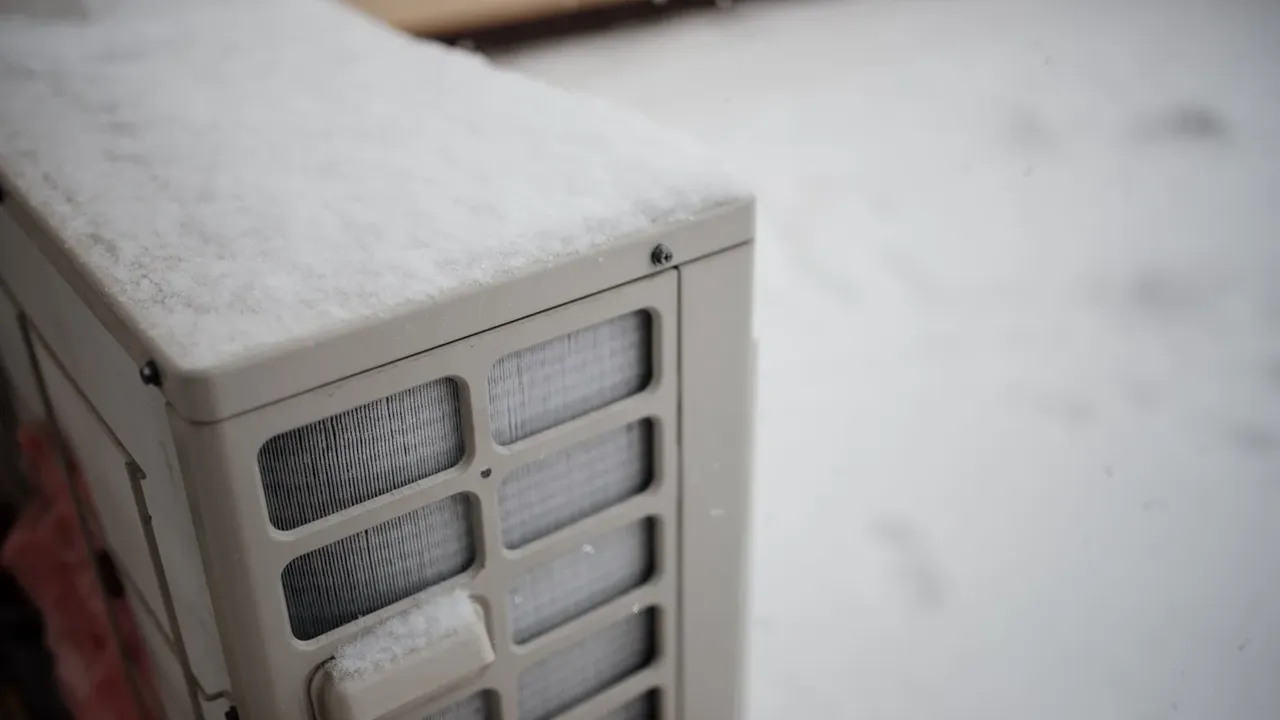
If the mini split system will serve as primary or major supplemental heat in a region with freezing temperatures, cold climate performance is the spec that separates a useful system from a space heater with extra steps.

  • Many cold climate models keep heating down to −13°F, but the capacity and the efficiency both go down as the outdoor temperature drops. A unit that is rated at full output at the standard 47°F test point will deliver a lot less heat, and at a lower COP, when it is 5°F outside. Check the manufacturer's low-temperature capacity table, not just the big BTU number.
  • Budget mini splits that only heat well down to 5°F or warmer are not a good fit for harsh winters where the overnight lows regularly reach −5°F or colder.
  • Rated to heat down to −13°F, Zone Air 2 zone systems and MRCOOL's DIY 5th Gen multi zone condensers both have that same −13°F floor. Both are a solid pick for many northern US climates.
  • For very cold weather that goes below the mini split's rated floor, plan to have backup heat: electric baseboards, a gas furnace or a wood stove for times of extreme cold.
  • Features that matter in cold climates: intelligent defrost cycles that run only when necessary, cold weather-optimized compressor designs and outdoor unit coatings that help shed ice buildup. Year round comfort in a cold zone depends on these details, not just the top temperature rating.

Wall-Mount vs Ceiling Cassette vs Concealed Duct Indoor Units

One advantage of modern DIY mini splits is the variety of indoor unit styles you can pick from to match the layout and look of the room. Not every room works well with a wall mount head.

  • Wall-mounted air handlers. These are the most common type and they're the easiest to install for DIY. These work well in bedrooms, offices and small living rooms where you have upper wall space available. Zone Air wall mount heads range from 9K to 18K BTU. The indoor sound is as low as about 30 dB in quiet mode.
  • Ceiling cassette units. Zone Air's 4-way ceiling cassette mounts flush in a ceiling and sends air out in four directions from a chassis that is 22 inches square. These are great for open-plan living rooms, kitchens and dining areas where wall space is limited or you care about how the room looks. Each cassette has a built-in condensate pump. Installation needs ceiling plenum clearance and is more involved than a wall mount. MRCOOL's OuttaSight is a 50-inch single-slot cassette that blows air one way.
  • Concealed ducted units. Zone Air's Thin-Air concealed duct handlers are 7⅞ inches tall and hide above hallways or inside soffits. They send air through short duct runs to adjacent rooms. This gives you a "central air" look while you still get the efficiency of a mini split. Installation is more complex, and you need ceiling access and you have to run ducts.

Zone Air allows mixing wall mount, ceiling cassette and concealed duct indoor units on the same 2 zone or 3 zone outdoor unit. MRCOOL's DIY multi zone line puts together wall heads and its OuttaSight cassette, but it has no concealed duct handler.

Line Sets, Refrigerant and True DIY Mini Split Installation

Line sets are the insulated copper tubes that carry refrigerant between the outdoor unit and each indoor head. The way the line sets ship from the factory determines whether the installation is a true DIY project or whether it needs a licensed technician.

  • Traditional mini splits use empty lines that have to be cut, flared, pressure tested with nitrogen and vacuumed before a technician can add refrigerant. You'll need an EPA Section 608 certification and specialized equipment for this work.
  • DIY mini splits like Zone Air and MRCOOL ship with pre-charged line sets and quick connect fittings that keep refrigerant sealed at the factory. You never open or charge the refrigerant loop.
  • With customizable pre-charged line sets from 5 to 75 feet, Zone Air cuts each one to exact length at the factory and seals it with R-454B. Every length up to 75 ft is a single factory-sealed run with no field joint, and that is different from MRCOOL because they join two sets with a coupler beyond 50 ft. That means less visible coiling and it fits complex plans better when the outdoor unit sits far from one zone.
  • MRCOOL sends fixed-length pre-charged lines (11.5, 16, 25, 35 or 50 ft). If a run only needs 10 feet but the nearest set is 16 feet, the extra line must be coiled and hidden behind the condenser.
  • Both brands have moved to low-GWP R-454B refrigerant in their newer systems. R-454B has a global warming potential of about 466, compared with roughly 2,088 for older R-410A. That improves environmental impact and it can help with rebate eligibility.
  • Homeowners still need to drill holes through walls, attach the line sets and drain lines so they stay in place, and follow torque specs on connections. But they don't have to open, vacuum or charge the refrigerant circuit, and they don't need to add refrigerant.

DIY Installation Realities for What You Can and Can't Do Yourself

Even the best DIY mini split still needs planning, basic hand tools and some trade skills. A 2 zone layout doubles the routing work compared with a single-zone install, so it's worth thinking through before you start.

  • Typical DIY project: You mount indoor units securely on walls or within ceilings, drill 2-3 inch wall penetrations for line sets and drains, route and protect line sets, condensate drains and control cables between zones and the outdoor condenser, and level the outdoor unit on a pad or bracket.
  • Electrical work. Most 2 zone mini split systems require a dedicated 208-230V circuit and outdoor disconnect. Hire a licensed electrician for this portion if local code requires it, even when the rest of the mini split system is installed by the homeowner. DIY systems allow homeowners to install without licensed HVAC help, but electrical code is a separate matter.
  • Timeline. A first-time DIYer should plan on a full weekend, about 6-10 hours, to install a 2 zone system. That includes mounting, electrical setup, line routing and commissioning. You can finish faster if you have experience.
  • When to call a pro. Call someone when you're looking at structural modifications like cutting joists or building soffits, high ladder work above two stories, or complex condensate drain runs through finished spaces.
  • Warranty protection. Warranty coverage from Zone Air depends on following the installation manual, torque specifications and all local codes. How reliable the system is over the long term, and whether warranty claims go through, also depends on proper maintenance after installation.

2-Zone vs Two Single-Zone Systems: Which Is Better for Heating Two Rooms?

Homeowners often debate between one 2 zone mini split and two separate single-zone units for heating two rooms. Neither option is always better, and which one makes sense depends on your situation.

  • 2-zone advantages. You get one outdoor unit instead of two, which saves exterior wall space and cuts down on electrical work. Maintenance is centralized and the up-front equipment cost is often lower than buying two separate systems of similar quality. Zone Air dual-zone wall bundles are $3,239.99 (November 2026), so you can save money compared with buying two individual single-zone systems at regular price. Starting with the 2-zone outdoor unit also leaves room to add a third head later on the spare port.
  • Multi zone downsides. The limited minimum output can be an issue compared with two small single-zone units, especially in shoulder seasons and in very small rooms. Also, if the outdoor unit fails, both zones will lose heat. You have a backup with two single-zone units.
  • Where two single-zone units shine. They work better for rooms that are very different sizes (like a 120 sq ft office and a 450 sq ft living room) because sizing them separately gives you more precise output. They're also good when one zone runs year-round and the other is seasonal, like a guest bedroom.

For most typical two-room applications in 2026, a well-sized Zone Air 2 zone DIY mini split offers the best balance of how much energy it uses to run, cost and flexibility without requiring you to have two outdoor units.

Which DIY 2-Zone Mini Split Should You Choose for Heating Two Zones?

The right 2 zone mini split depends on your climate, how big the rooms are, the kind of indoor units you want, and how comfortable you are with DIY.

  • Choose Zone Air 2 zone DIY mini splits if you want the best combination of cold climate performance (heating to −13°F), high energy efficiency (24 SEER2 and 10.5 HSPF2 with wall heads), custom-length pre-charged line sets, a flexible indoor unit mix across wall mount, ceiling cassette and concealed duct styles, and 30-day returns on uninstalled units.
  • Consider MRCOOL DIY 5th Gen dual-zone systems if you want to be able to pick it up off the shelf at big-box retailers and you are fine with line sets that come in fixed lengths and wall or one-way cassette heads.
  • In very small total areas (about 300 sq ft across two rooms), look at whether two 9,000 BTU single-zone mini splits or a single head with good air circulation might create better comfort than a multi zone outdoor unit with limited low-end output.
  • Verify current SEER2 and HSPF2 ratings and low-temperature heating specs before purchase. Check local incentives, utility rebates and permitting rules for DIY installation; some rebates require specific certifications like ENERGY STAR Cold Climate.
  • Sketch your floor plan and write down the square footage of each room, how well insulated it is, which way the windows face, and the coldest outdoor design temperature for your area. Then get in touch with Zone Air support so they can give you a customized 2 zone recommendation that accounts for your specific space, climate and equipment layout.
Specs, prices and warranty terms are manufacturer-published as of November 2026, subject to change; verify before purchase. MRCOOL® is a trademark of its owner.
Sources & Methodology

Where our data comes from

Capacity, efficiency, cold-climate, line set and warranty figures are the manufacturers' published specifications; the Zone Air price was checked in November 2026.

Keep Reading

Related guides

More on two-zone systems, cold-climate heating and sizing each room.

Size both rooms before you pick heads

Run the free calculator for each zone, then compare 2-zone systems side by side.