Ductless mini splits for less · 2026 buyer's guides & free sizing helpSize my system →

Best Multi-Zone DIY Mini Split in 2026

For most two- and three-room projects, Zone Air's multi-zone systems are the best mini split you can install yourself in 2026. Here's the short version.

  • Custom-cut pre-charged line sets. Of the DIY brands in this guide, Zone Air is the only one that cuts your pre-charged line set to the exact length you measure (anywhere from 5 to 75 ft per zone). You probably won't end up with extra tubing that has to be coiled up behind the outdoor unit.
  • You can mix indoor unit styles on one outdoor unit. As of October 2026, Zone Air is the only DIY mini split with a slim concealed ducted unit you can mix with wall-mount and ceiling cassette units on one outdoor unit, so each room gets the indoor unit that fits it.
  • Higher efficiency on wall-mount systems. Zone Air's wall-mount 2- and 3-zone systems are rated 24 SEER2 and 10.5 HSPF2 (Region IV), versus 23 SEER2 and 9.5 to 9.9 HSPF2 on MRCOOL's 27K and 36K DIY multi-zone condensers (MRCOOL catalog).
  • DIY install does not void the warranty. You get 5 years parts, 7 years compressor, with no registration deadline.
  • Lower price on a similar kit. A Zone Air 12K + 12K wall-mount dual zone with two 16 ft line sets is $3,499.97, versus about $3,932 for MRCOOL's 27K condenser with two 12K heads and 16 ft line sets (retail prices as of October 11, 2026).
  • Sold direct, with free shipping to the 48 contiguous states, and the final assembly, testing and inspection happens in the USA from parts that come from around the world.

The honest tradeoff is that Zone Air tops out at three zones per outdoor unit. If you need four, five or six zones on one condenser, MRCOOL DIY 5th Gen multi-zone is the other major quick-connect option, with condensers from 18K to 55K BTU. Its pre-charged line sets come in fixed lengths, though and its installation manual says to keep excess line coiled.

Both platforms use factory-sealed, quick connect fittings so homeowners never open the refrigerant circuit. Because you're connecting sealed fittings rather than charging or recovering refrigerant, you don't need manifold gauges, a vacuum pump or an HVAC contractor for the refrigerant side. DIY mini splits give you independent climate control without ductwork, and avoiding HVAC labor is where most of the savings come from. That labor often runs $1,500 to $4,000 on a 3 to 4 zone job.

Here are the top picks at a glance:

  • Best Overall Multi-Zone DIY: Zone Air 3-Zone 36,000 BTU (12K+12K+12K): 24 SEER2, R-454B, custom-cut pre-charged line sets, mix wall/cassette/concealed ducted
  • Best for Four or More Zones: MRCOOL DIY 5th Gen Multi-Zone: 18K to 55K condensers, up to 6 zones, R-454B, fixed line set lengths
  • Best Budget Pick (DIY-Adjacent): Pioneer or Senville multi-zone: lower equipment cost, but needs a vacuum pump and pro help for refrigerant work

What Is a DIY Multi-Zone Mini Split?

A multi zone mini split is a ductless heat pump system where one outdoor condenser connects to two, three or more indoor units, and each one is controlled independently as its own zone. Most modern mini splits are full heat pumps, so they handle air conditioning in summer and heating in winter. Because there's no ductwork, you avoid duct losses, which the Department of Energy says can top 30% in a forced-air system.

Here's what sets a true diy mini split apart from a conventional system:

  • Pre charged line sets that come filled at the factory with refrigerant (R-454B or R-410A), sealed with internal valves
  • Quick connect fittings are what keep the circuit closed while you install it yourself
  • Clear documentation with photo-rich manuals made for you as a first-time installer
  • There's no refrigerant handling, so there's no evacuation, charging or recovery work on your end
  • A single outdoor unit can serve multiple indoor zones in multi zone systems, which means you don't need multiple outdoor units filling up your yard
  • Zone Air systems connect two or three indoor units. MRCOOL's DIY condensers support up to three, four, five or six depending on size
  • Each indoor unit in a multi-zone system is controlled on its own with a remote, thermostat or app

Typical use cases include whole-home upgrades in small to mid-size homes, using 9K heads for bedrooms and 18K heads for living areas, large finished basements, garage conversions and ADU additions. Zone Air's ability to mix styles on one outdoor unit opens up floor plans that were hard to do DIY before. You can put a wall-mount in the bedroom, a ceiling cassette in the kitchen, and a concealed ducted unit hidden above a bonus room ceiling, all on the same condenser.

The distinction matters because "DIY-adjacent" budget mini splits from value brands still need vacuum pumps, manifold gauges and a certified technician for refrigerant work. True DIY platforms like Zone Air and MRCOOL DIY do not.

How Pre-Charged Line Sets and Quick-Connect Fittings Work

A pre charged line set is copper tubing that has been filled with refrigerant at the factory and sealed with internal valves at each end. When you buy a diy mini split kit, the refrigerant line shows up ready to go. There's no charging, no evacuation, no nitrogen flush.

Here's how it works in practice:

  • You will mount the indoor unit and outdoor unit where you plan to install them
  • Run the line set through the wall penetration and along the exterior or interior path
  • Connect the quick connect fittings at both the indoor unit port and the outdoor unit port
  • Torque the fittings to the value the manufacturer calls for with a torque wrench
  • The internal valves open as the fittings are tightened down, and refrigerant flows through the sealed circuit

Understanding the difference between DIY quick-connect systems and conventional precharged systems matters for compliance and ease of installation. With MRCOOL's pre-charged line sets, you pick from fixed lengths. Its current catalog lists 11.5, 16, 25, 35 and 50 ft sets, plus connectors to join two, and MRCOOL's multi-zone manual says to keep excess line coiled. Zone Air does it differently. You measure your actual run, and they ship a pre-charged line set cut to that length. Zone Air also has standard 16, 25, 33, 50 and 75 ft lengths if your run happens to match one.

Line sets should be measured and routed carefully so you don't get unnecessary kinks or excess length. Kinks in the tubing restrict refrigerant flow, kill efficiency and can void your warranty. Correct torque is non-negotiable. Under-torque causes slow leaks, and over-torque damages the sealing surfaces.

The bottom line is that no vacuum pump is needed for true DIY platforms. You never open the refrigerant circuit.

Key Specs to Compare in 2026 (BTU, SEER2, HSPF2, Refrigerant)

When you're shopping for multi zone diy mini split systems, these are the numbers that actually matter:

  • Outdoor unit and connected capacity: The rated output of the outdoor condenser, and how much indoor capacity it can take. Zone Air's 2- and 3-zone systems all use one 27,000 BTU outdoor unit that takes up to 36,000 BTU of connected indoor heads, since rooms rarely peak at the same time. So how big are MRCOOL's DIY multi-zone condensers? They run 18K, 27K, 36K, 48K and 55K (catalog).
  • Per-zone BTU range: Zone Air wall-mount heads come in 9K, 12K and 18K, ceiling cassettes in 9.5K and 12K, and concealed ducted units in 9.5K and 11K. MRCOOL offers wall heads from 6K to 36K and ceiling cassettes from 6K to 18K.
  • SEER2 (cooling efficiency): The federal minimum for split-system heat pumps is 14.3 SEER2, and the best ductless units reach the low 30s. Above 21 is excellent. Zone Air's multi-zone systems run 19 to 24 SEER2 depending on indoor unit style, with wall-mount systems at 24.
  • HSPF2 (heating efficiency): HSPF2 ratings matter for winter heating efficiency because they set heat pump operating costs in winter. Zone Air's wall-mount multi-zone systems post 10.5 HSPF2 in Region IV. MRCOOL's DIY multi-zone condensers range from 9.5 (27K) to 10.6 (55K).
  • Minimum operating temperature: This is how cold it can get outside before the system stops moving heat effectively. Many cold-climate mini splits operate down to −13°F, and hyper-heat models go to −22°F. Zone Air's multi-zone systems heat down to −13°F, the same heating floor MRCOOL lists for its 18K to 48K DIY multi-zone condensers. MRCOOL's 55K goes to −22°F (manual).
  • Refrigerant type: Under the EPA's Technology Transitions rule, new residential split systems manufactured or brought in from January 1, 2025 must use a refrigerant with a GWP below 700. R-454B (GWP ~466) passes. R-410A (GWP 2,088) does not. The EPA has since dropped the January 1, 2026 installation deadline, so R-410A equipment built before 2025 can still be installed until stock runs out (New York keeps its own deadline). Both Zone Air and MRCOOL 5th Gen multi-zone use R-454B.

Multi-zone outdoor condensers need a dedicated 208/230V circuit, though some single zone units run on 115V. Check the spec sheet for MCA (minimum circuit ampacity) and MOCP (max overcurrent protection) before you order.

The minimum thresholds I'd recommend for 2026 are SEER2 18+ as a floor, SEER2 21+ for any zone you use daily, and cold climate ratings (continuous operation below 0°F) for homes north of the I-70 corridor. That's my recommendation, not a code requirement.

BTU per Zone and Whole-Home Sizing

To figure out the BTU capacity you need, you have to look at the square footage of each space, and getting the sizing right is crucial for how well your mini split performs.

  • 9,000 BTU: 300–450 sq ft, a primary bedroom or home office
  • 12,000 BTU: 400–600 sq ft, a larger bedroom, den or small open-plan area
  • 18,000 BTU: 600–900 sq ft, a living room, great room or combined kitchen-dining area
  • 24,000 BTU: 900–1,200 sq ft, large finished basements or open spaces

Oversized units short-cycle and fail to dehumidify properly. In humid climates, an oversized head pushes cold air in short, powerful bursts, then shuts off before pulling enough moisture from the air. The result is cold, clammy rooms. Short cycling also increases wear on the compressor and makes the unit noisier over time.

Adjust upward and downward based on conditions:

  • Add 10–15% BTU for hot, humid climates (Sun Belt states, Gulf coast)
  • Add 15–25% for spaces with poor insulation, vaulted ceiling height or large window areas
  • Adjust downward for well-insulated new construction or rooms with little solar gain

Use a Manual J calculator (like CoolCalc or an HVAC designer's load calculation) even if you plan to DIY. A proper load calculation prevents expensive mistakes that no amount of wifi control or smart features can fix.

Example layouts:

  • 1,200 sq ft ranch: One outdoor unit running an 18K head for the living/kitchen area + two 9K heads for bedrooms (36,000 BTU connected, which fits a Zone Air 3-zone system)
  • 1,600 sq ft two-story: 12K for the main floor living area + 12K for the primary bedroom + 12K for a guest room. If you'd rather run 18K + 12K + 9K, that's 39,000 BTU of heads, over Zone Air's 36,000 BTU limit, so you'd either drop a head size or go to a larger condenser.

Best Multi-Zone DIY Mini Splits for 2026

The picks below focus on systems with factory-approved homeowner installation paths. That means pre-charged, sealed line sets and official documentation supporting diy installation without a licensed HVAC technician for the refrigerant side.

Before getting into the true DIY platforms, it's worth noting the wider landscape of ductless heat pump systems. Among professionally installed brands, the Mitsubishi Electric MSZ-GL Series is widely regarded as a top pick for reliability and long-term performance. The Daikin Aurora Series is built for cold climates. The Fujitsu Halcyon Series is a favorite for bedrooms because it's quiet, and LG's ARTCOOL Deluxe line reaches 25.5 to 27 SEER2.

Those are strong systems, but they all need professional installation for refrigerant management, and their longest warranties are tied to installation by the brand's certified contractors. If you want a true DIY multi-zone path, the field narrows to Zone Air and MRCOOL DIY.

Best Overall Zone Air Multi-Zone Systems

Zone Air is the best overall multi zone diy mini split option in 2026, and the reason is simple. It has custom-length pre charged line sets, you can mix indoor unit styles on one outdoor unit. It has the highest SEER2 of the DIY multi-zone systems compared here.

Zone Air sells 2-zone and 3-zone systems, all built on the same 27,000 BTU outdoor unit, which takes up to 36,000 BTU of connected indoor heads. Every system has an inverter compressor and uses R-454B refrigerant. Wall-mount multi-zone systems are rated 24 SEER2 and 10.5 HSPF2 in Region IV. Ceiling cassette and concealed ducted systems are rated 19 to 24 SEER2 depending on configuration.

What makes Zone Air stand out:

  • Made-to-measure line sets: You provide your measured run, and Zone Air sends pre charged line sets cut to that length. No coiling, no wasted tubing and cleaner routing along exterior walls.
  • Mix-and-match indoor units: Wall-mount, ceiling cassette and slim concealed ducted heads can share one outdoor unit. As of October 2026, no other DIY mini split has a slim concealed ducted unit that works with the other two styles on one condenser.
  • Efficiency: 24 SEER2 / 10.5 HSPF2 on wall-mount systems, versus 23 SEER2 and 9.5 to 9.9 HSPF2 on MRCOOL's 27K and 36K DIY multi-zone condensers.
  • Cold climate performance: Heats down to −13°F outdoors. Plan backup heat if your winters regularly go below that.
  • DIY warranty support: Zone Air's warranty covers 5 years parts and 7 years compressor, and a homeowner install does not void coverage. There's no registration deadline. Like most mini split warranties, it covers parts, not labor.
  • Install guidance: Photo-rich manuals and install videos are available. A communication cable comes with every unit, and wall-mount systems include drain hose and tape. Zone Air recommends a licensed electrician for the dedicated circuit and outdoor disconnect, but the refrigerant-side work is completely yours.
  • Direct pricing: Sold direct from Zone Air with free shipping to the 48 contiguous states. The final assembly, testing and inspection happens in the USA from parts that come from around the world.

A 3-zone 36K BTU wall-mount system (12K+12K+12K) is $3,509.99, or about $4,200 with three 16 ft line sets. Ceiling cassette and concealed ducted 3-zone systems run about $4,800 to $4,900 before line sets (prices as of October 2026). That's competitive with, and often cheaper than, a budget brand plus pro labor.

Best for Four or More Zones MRCOOL DIY 5th Gen Multi-Zone

MRCOOL DIY 5th Gen Multi-Zone is the pick if you need more than three zones on one outdoor unit.

Key configurations and specs are from MRCOOL's catalog:

  • 18K condenser: up to 3 zones, 23.9 SEER2, 10 HSPF2
  • 27K condenser: up to 4 zones, 23 SEER2, 9.5 HSPF2
  • 36K condenser: up to 5 zones, 23 SEER2, 9.9 HSPF2
  • 48K condenser: up to 6 zones, 21.8 SEER2, 10 HSPF2
  • 55K condenser: up to 6 zones, 22 SEER2, 10.6 HSPF2
  • All use R-454B. Single-zone MRCOOL DIY 9K and 12K models run on 115V. The multi-zone condensers need 208/230V.

MRCOOL DIY systems do eliminate the need for professional refrigerant handling. MRCOOL's pre-charged line sets come in fixed lengths, with a maximum of 75 ft per indoor unit. If your run is 20 feet, you're buying a 25-footer and coiling 5 feet of excess, which the manual says to keep coiled. For indoor units, MRCOOL multi-zone offers wall-mount heads, its OuttaSight ceiling cassette and a larger 24K/36K DIY Hybrid Air Handler for ducted setups, but no slim concealed ducted head sized for a single room.

MRCOOL's DIY 5th Gen warranty is 5 years parts and 7 years compressor with no registration needed.

For three zones or fewer, Zone Air's custom-cut line sets, higher SEER2 and HSPF2 on wall-mount systems, slim concealed ducted option and lower price on a similar 2-zone kit make it the better-balanced choice for most homeowners. MRCOOL is the one to look at when you need four to six zones on a single condenser.

Best Budget Multi-Zone Mini Splits

If your priority is the lowest equipment cost, budget mini splits from Pioneer, Senville and Cooper & Hunter often cost less up front than full DIY kits.

  • Not true DIY: These systems use conventional flare fittings and need a vacuum pump, manifold gauges and EPA-certified refrigerant handling.
  • Equipment savings erased by labor: A budget 3-zone condenser and heads might cost $2,200–$3,500 in equipment, but adding about $800 to $1,400 per indoor unit for a pro install narrows or wipes out the savings versus a Zone Air system you install yourself.
  • When it makes sense: If you have access to low-cost local HVAC labor, you're doing a larger whole-home retrofit with 5+ zones, or you're going for the lowest upfront equipment cost and don't mind hiring out the refrigerant work.
  • Warranty conditions: Read them before buying. Senville's warranty says DIY installation will void coverage and needs a licensed HVAC professional to evacuate and pressure-test the line sets. Cooper & Hunter's limited warranty applies only to units installed by a licensed HVAC technician. Pioneer covers 1 year of parts unless you register the unit within a week of installation, which extends it to 5 years. Zone Air's warranty, by contrast, isn't affected by a DIY install.

If you want to avoid the vacuum pump completely while still getting competitive pricing, Zone Air is a better value. The total cost of a Zone Air system plus an electrician is usually less than a budget brand plus HVAC contractor labor.

Cold and Humid Climate Tips

Climate drives which multi zone systems work and which ones struggle.

Cold climate (frequent temps below 15°F):

  • You need strong cold climate performance: high HSPF2, a rated minimum operating temperature at or below −13°F, and robust defrost strategies.
  • Zone Air's multi-zone systems heat down to −13°F, as do MRCOOL's 18K to 48K DIY multi-zone condensers (its 55K is rated to −22°F). Daikin's Aurora Series is another cold-climate option for those willing to go the pro install route.
  • Heat pumps lose capacity as it gets colder, and near their minimum rated temperature they deliver noticeably less heat. Plan for backup heat (electric baseboard, a wood stove or a gas furnace) for extreme cold snaps.
  • Match cold climate ratings to your local winter design temperature. If your area regularly hits −20°F, a mini split alone won't cut it as your sole heating source.

Humid climates (Southeast, Gulf states, Sun Belt):

  • In humid climates, proper sizing and inverter operation are critical. An oversized system pushes cold air in short cycles, cools the room fast, but never runs long enough to pull humidity below 55%.
  • Use dry style and low fan settings to extend run times. Long, low-speed inverter operation keeps indoor relative humidity around 45–55% without overcooling.
  • Avoid "starving" zones in multi-zone setups: a south-facing room with heavy solar gain paired with a too-small 9K head will run at max capacity while other zones get more than they need.

In both climates, check the square footage against manufacturer sizing charts and adjust downward or upward based on insulation quality, window area and ceiling height.

Mini Split Installation Cost in 2026

Here's where the numbers are hard to ignore.

Cost CategoryFull Pro Install (3–4 zone)DIY with Zone Air/MRCOOLHybrid (Budget Brand + Pro Evac)
Equipment$3,000–$6,000$3,500–$6,000$2,200–$3,500
HVAC Labor$1,500–$4,000$0$1,200–$2,800
ElectricianIncluded in pro bid$400–$1,000$400–$1,000
Permits, Materials, Misc$200–$500$200–$500$200–$500
Total Cost$4,700–$10,500$4,100–$7,500$4,000–$7,800

Professional installation commonly runs $1,000 to $3,500 for single-zone systems, while a pro install for multi-zone systems adds about $800 to $1,400 per indoor unit. A DIY mini split removes the HVAC labor line completely.

DIY installation needs a licensed electrician for electrical connections in most jurisdictions. That's the one line item you won't escape, and it's worth paying for: a miswired circuit is a safety problem and can lead to a denied warranty claim.

Example scenario: A 36K 3-zone system in a 1,600 sq ft home. A full pro Mitsubishi install is often quoted around $7,500–$9,500. A DIY Zone Air 3-zone wall-mount system lands around $4,800–$5,700 total including line sets, electrician and materials. A hybrid approach with a budget brand plus local HVAC evacuation might hit $5,000–$6,500, about the same as Zone Air DIY or more, and with warranty conditions tied to licensed work.

Don't forget overlooked costs: line-set covers ($100–$300), condensate pumps for below-grade installs ($50–$120), electrical panel upgrades if your panel is full ($500–$2,000), and wall repair or painting after wall penetration work.

In rebate-heavy states, professional installation of cold-climate heat pumps can end up cheaper net of incentives. In low-incentive areas, DIY wins on upfront cost almost every time.

Multi-Zone DIY Installation Steps

This is a roadmap, not a replacement for your manufacturer's manual. To install a mini-split system properly, you need to get the right permits and follow the manufacturer's guidelines.

  1. Plan your layout and BTU per zone. Walk every room, measure the square footage, note solar exposure, insulation quality and ceiling height. Run a load calculation. Decide on head sizes, head styles and where each indoor unit will go.
  2. Measure each line set run. With Zone Air, this measurement is what your custom-cut line sets are built to, so measure along the actual route, not a straight line.
  3. Mount indoor unit templates and backing plates. Use the included mounting template to mark screw holes. You'll want to secure the wall bracket to studs or use the right anchors.
  4. Drill the wall penetration. A 2½ to 3-inch hole, sloped slightly downward toward the outside, is what you need for the refrigerant line, communication wire and condensate drain.
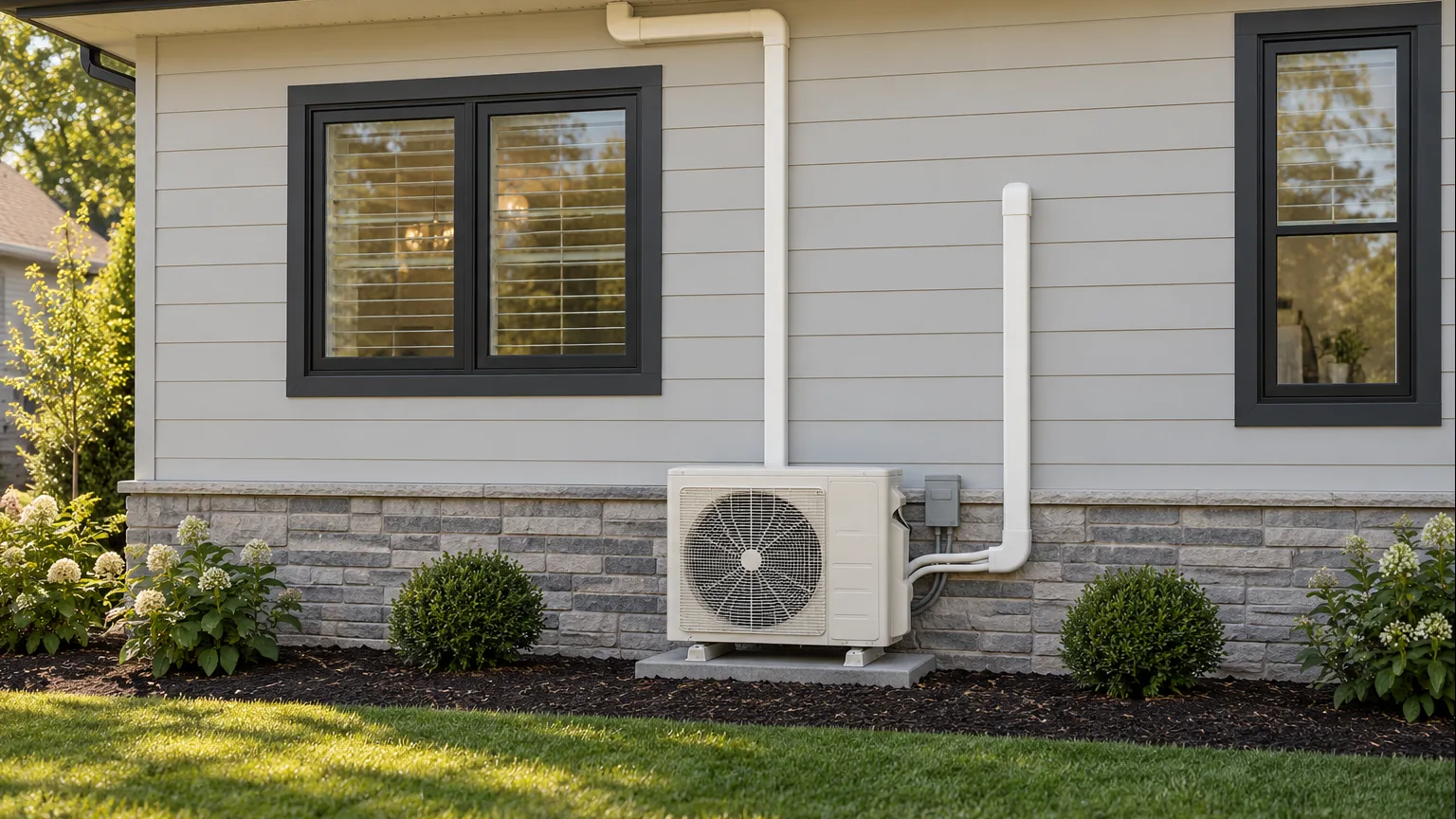
  5. Set the outdoor condenser. Place it on a concrete pad, ground-level stand or wall bracket. Maintain manufacturer clearances on all sides for airflow.
  6. Route and secure line sets. For Zone Air, your custom-length lines route cleanly with little excess. For MRCOOL, plan for coiling extra length neatly behind the outdoor unit or inside a line-hide channel.
  7. Connect the quick connect fittings. Torque to the manufacturer's specified value at both the indoor unit and outdoor unit ports. Do not over-torque.
  8. Complete electrical connections. Have your licensed electrician wire the dedicated circuit, install the outdoor disconnect within sight of the condenser, and verify breaker sizing.
  9. Power up and test. Turn on the system, verify cooling and heating operation in each zone, check for error codes and confirm airflow direction.

Installation of multi-zone systems must comply with local building, electrical and mechanical codes. Many first-time installers complete a 2–3 zone project over a weekend, with additional time for trim work and line-hide channels.

Electrical, Code and Warranty Details

Even though pre-charged diy mini splits avoid refrigerant licensing, the electrical side still has real requirements.

  • Voltage and breaker sizing: Multi-zone condensers need 208/230V on a dedicated circuit. Zone Air's 2- and 3-zone systems call for a 30A double-pole breaker. Larger condensers can need more. Check the spec sheet for exact MCA and MOCP.
  • Outdoor disconnect: Most jurisdictions need an outdoor disconnect switch within sight of the outdoor unit. This is a code requirement your electrician should handle.
  • Permits: DIY installations typically require an electrician for electrical work. Many areas require an electrical permit even if you're doing the mechanical mounting yourself. Skipping permits can void warranties and create problems when selling the home.
  • Surge protection: In rural areas and storm-prone regions, a whole-panel or point-of-use surge protector protects the inverter board, the most expensive single part to replace.
  • Warranty language: Zone Air's warranty states that a homeowner install does not void coverage. MRCOOL's DIY line is also designed for you to install. Several budget and premium brands need licensed installation to maintain full coverage. Always read the official warranty before buying.

Window units and space heaters don't need this level of planning, but they also don't deliver the same efficiency, comfort or property value. The electrical work for a mini split is a one-time investment.

Maintenance, Filters and Longevity for Multi-Zone Systems

Multi-zone mini splits share one outdoor unit, so keeping that outdoor condenser clean and clear is critical for every zone in the house.

Routine tasks:

  • Indoor pre-filters: Clean every 2–4 weeks during heavy use. Most slide out and rinse under a faucet.
  • Outdoor condenser fins: Spray down each season with a garden hose to remove dust, pollen and debris. Keep at least 24 inches of clearance around the unit.
  • Condensate drains: Check for clogs every few months, especially in humid climates where algae growth can block the line.
  • Line set insulation: Visually inspect annually. Degraded foam insulation on the suction line reduces efficiency and can cause condensation dripping.

Mini split internal filters are comfort and coil protection filters, not hospital-grade air purifiers. If indoor air quality is a priority, add a standalone HEPA filtration unit or whole-home solution.

How often should you schedule a professional check-up? Every 2–3 years, particularly for multi-zone systems in harsh climates. Even if the initial diy installation went perfectly, a trained tech can catch refrigerant leaks, electrical wear and failing components before they become expensive problems. Dirty coils and clogged filters quietly cut real-world efficiency and raise energy bills without any obvious symptom.

Heat Pump Rebates and Incentives in 2026

The federal 25C tax credit for heat pumps ended for systems placed in service after December 31, 2025. For 2026 buyers, incentives depend on state and utility programs.

  • State HEAR rebates: The federally funded, state-run HEAR program offers up to $8,000 toward a heat pump for income-qualified households. Each state sets its own rules and rollout. Many route rebates through approved contractors.
  • Utility rebates: Local utility programs may offer $500–$1,500. Some utilities rebate equipment-only purchases or allow DIY plus a post-install inspection. Others need a participating contractor.
  • DIY and rebate friction: In strict programs, rebate requirements may force professional involvement even if the system is DIY-friendly. Verify requirements before choosing between Zone Air DIY and a full pro-installed premium system.
  • Certification: Most rebates need the exact outdoor and indoor combination to be listed in the ENERGY STAR or AHRI directory. For any brand, look up your specific combination before you count on a rebate.
  • Stacked example: A homeowner in a rebate-friendly state who qualifies for a $4,000 state HEAR rebate plus $1,000 from their utility could find a pro-installed system effectively cheaper than a DIY install in a state with $0 incentives.

Always verify your state's requirements before ordering. A quick call to your utility's energy efficiency program can save you thousands or prevent a costly surprise.

When a DIY Multi-Zone Mini Split Is Right

When it shines:

  • Existing homes without ductwork, the classic retrofit case
  • Additions, garage conversions and ADUs where extending existing HVAC is impractical
  • Homes where different rooms suit different indoor units, such as a wall-mount in a bedroom and a ceiling cassette or slim concealed ducted unit in a living space, which Zone Air can run on one outdoor unit
  • Moderate to cold climates where one outdoor condenser with 2–3 heads covers the main living spaces
  • If you're comfortable with basic tools and willing to follow a manual exactly
  • If you want to avoid high labor bills and control the timeline of your installation

When it may not be ideal:

  • Very large, complex homes with high design loads where a single outdoor unit can't cover all zones adequately
  • Projects that need four or more zones on one condenser (Zone Air tops out at three. Pair two systems or look at MRCOOL's larger multi-zone condensers)
  • Extreme cold climates where backup heat is needed most of the winter and a ducted system would distribute that backup heat more evenly
  • Homes with undersized electrical panels that would need a $1,500+ panel upgrade before adding a 230V dedicated circuit
  • Projects where regulating multiple levels with a single condenser is tricky, such as three-story homes or split-levels with wildly different exposures

Multi-zone vs. multiple single zone systems: One outdoor condenser serving three zones means fewer outdoor units, less exterior noise and simpler permitting. But it's also a single point of failure. If the condenser dies, every zone goes down. Multiple single-zone units add redundancy at the cost of more outdoor space, more electrical connections and more wall penetrations. For a lot of small and mid-size homes, one multi-zone outdoor unit is the right trade-off.

Replacing window units and space heaters with a proper multi-zone mini split is almost always an upgrade in comfort, efficiency and property value. But for some projects, pro-installed Mitsubishi or Daikin systems, despite the higher cost, are the better long-term call.

Final Thoughts for 2026 Buyers

Multi-zone diy mini splits with pre-charged line sets are mature, safe and cost-effective for the majority of homeowners in 2026. Zone Air is the best all-around choice for two- and three-zone DIY installs thanks to its made-to-measure line sets, the option to mix wall-mount, ceiling cassette and slim concealed ducted units on one outdoor unit, 24 SEER2 and 10.5 HSPF2 on wall-mount systems, a warranty that a DIY install doesn't void, and a lower price than a similar MRCOOL 2-zone kit. MRCOOL DIY is the one to look at if you need four to six zones on a single condenser.

Your action plan:

  • Confirm room-by-room loads using a Manual J calculator or professional load calculation
  • Choose between single-zone and multi-zone layouts based on your home's size and complexity
  • Decide which indoor unit style suits each room: wall-mount, ceiling cassette or concealed ducted
  • Measure each line set run so you can order the right length
  • Check your electrical panel capacity: can it handle a 230V dedicated circuit without an upgrade?
  • Price out DIY vs. pro options including utility rebates in your state
  • Pick a specific system. For most two- and three-zone projects, that means Zone Air's multi-zone systems.

Go for reliability, cold climate performance appropriate to your region, and strong warranty support instead of chasing the lowest-priced budget mini splits. The best system is the one that keeps you comfortable for 15+ years without surprise repair bills. Start with your square footage, your climate and your budget, and build from there.

FAQ

Multi Zone DIY Mini Split FAQ

For two or three rooms, Zone Air is our pick: custom-cut pre-charged line sets, 24 SEER2 and 10.5 HSPF2 on its wall-mount multi-zone systems, and the option to mix wall-mount, ceiling cassette and slim concealed ducted units on one outdoor unit. If you need four to six zones on a single condenser, MRCOOL DIY 5th Gen multi-zone is the quick-connect option that goes that high.
Not with a quick-connect system like Zone Air or MRCOOL DIY, where each line set arrives sealed and charged and you never open the refrigerant circuit. Budget multi-zone kits with flare fittings, such as Pioneer, Senville and Cooper & Hunter, do need a vacuum pump, gauges and certified refrigerant work.
Zone Air runs two or three zones on one 27,000 BTU outdoor unit that accepts up to 36,000 BTU of connected indoor heads. MRCOOL's DIY multi-zone condensers run up to 3 zones (18K), 4 (27K), 5 (36K) or 6 (48K and 55K).
With Zone Air, yes: two or three heads of any style, including its slim 9.5K and 11K concealed ducted units, can share one outdoor unit. MRCOOL's DIY multi-zone mixes wall-mount heads and its OuttaSight ceiling cassette, and also offers a larger 24K/36K DIY Hybrid Air Handler for ducted setups.
Zone Air's 2- and 3-zone systems run on 208/230V and call for a 30A double-pole breaker on a dedicated circuit, with an outdoor disconnect within sight of the condenser. Larger condensers from other brands can need more, so check the MCA and MOCP on the spec sheet.
Not with Zone Air: its warranty covers 5 years parts and 7 years compressor, a homeowner install does not void coverage, and there's no registration deadline. MRCOOL's DIY 5th Gen warranty is also 5 years parts and 7 years compressor with no registration required. Senville and Cooper & Hunter tie coverage to licensed installation.
Zone Air's multi-zone systems heat down to −13°F outdoors, the same floor as MRCOOL's 18K to 48K DIY multi-zone condensers; MRCOOL's 55K is rated to −22°F. Every heat pump loses capacity as it gets colder, so plan backup heat where winters regularly drop below about −10°F.
Specs, prices and warranty terms are manufacturer-published as of October 2026 and can change. Verify before you buy. MRCOOL® and other brand names are trademarks of their respective owners. Ductless4Less is not affiliated with or endorsed by Zone Air or MRCOOL; brand names are trademarks of their respective owners.
Sources & Methodology

Where our data comes from

Efficiency, electrical, line set and warranty figures are the manufacturers' published specs, manuals and warranty documents, checked in October 2026; retail prices are the listings on the dates given.

Keep Reading

Related guides

Compare premium multi-zone systems, then size every room.

Avery Lang

Lead Reviewer, Ductless4Less

Avery leads a small team of hands-on DIY installers who cross-check every SEER2, warranty, and price claim against AHRI-certified and manufacturer documentation. The goal is simple: help homeowners buy and install the right ductless mini split for the best possible value, without the salesy noise.

Plan your multi-zone system

Size every room with the free calculator, then compare 3-zone systems.