
Ductless mini splits for less · 2026 buyer's guides & free sizing helpSize my system →

Quick Answer: Best 6,000–9,000 BTU DIY Mini Split for ~250 sq ft in 2026

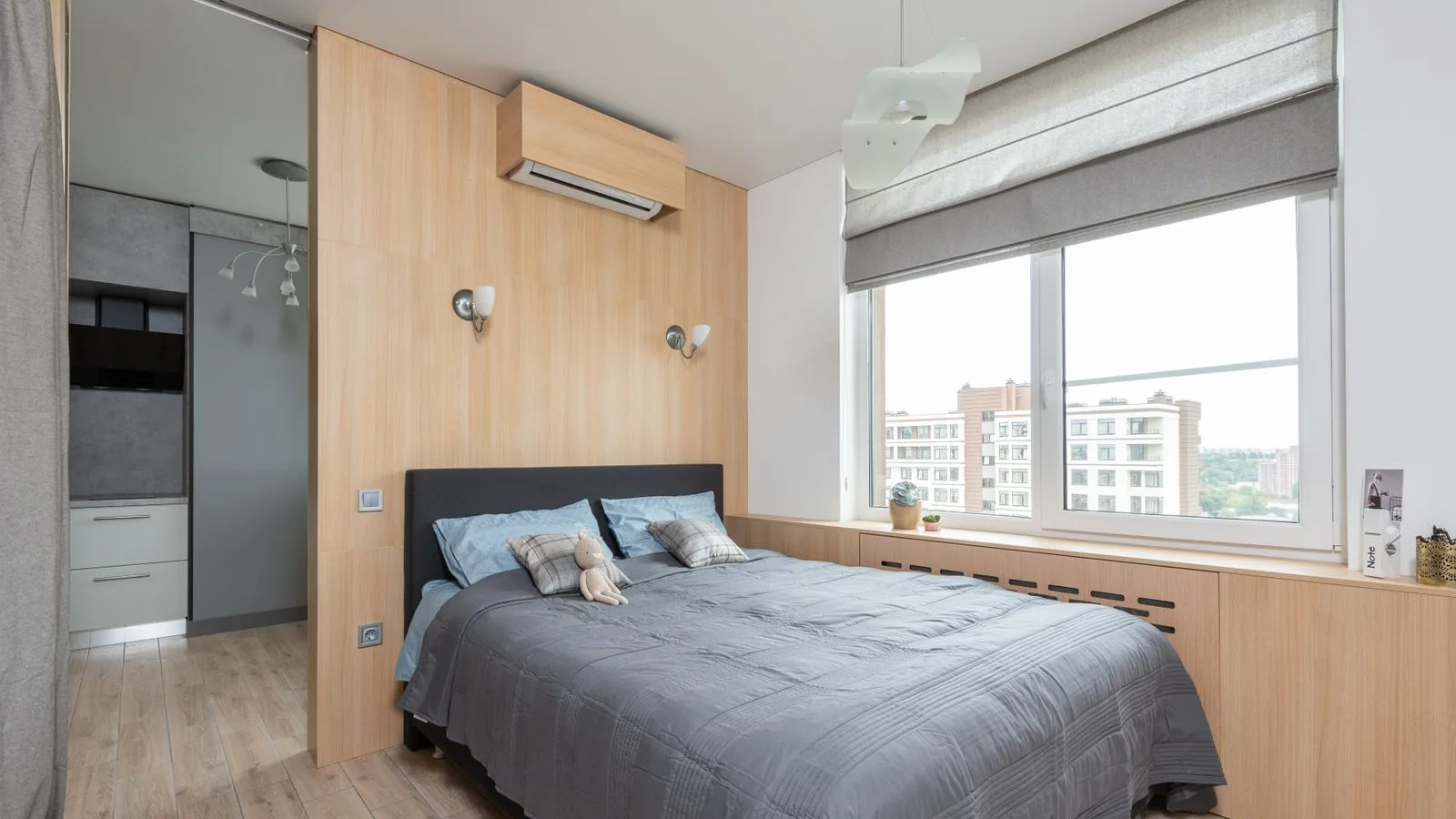
For a typical 250 sq ft bedroom or home office, a 6,000–9,000 BTU DIY mini split system delivers year round comfort without overshooting your needs. Both the 6,000 BTU and 9,000 BTU systems utilize pre charged line sets with Quick Connect fittings, making homeowner installation realistic.

  • A 6,000 BTU unit works well in a well-insulated, shaded 250 sq ft room with standard ceiling height.
  • A 9,000 BTU model is the safer pick for rooms with sun exposure, poor insulation, or dual heating and cooling duty in hotter or colder climates.
  • "True DIY" means pre charged line sets, no vacuum pump, no EPA license, and no specialized tools. In 2026, MRCOOL and Zone Air are the two main true DIY mini split brands that meet this standard.
  • The main difference: MRCOOL DIY mini splits are the more widely stocked name with Hyper Heat options. Zone Air focuses on easier 115V installs, custom-length line sets from 5–75 ft, and typically 10–20% lower prices.

The rest of this article walks through sizing, features, and a head-to-head MRCOOL vs Zone Air comparison. For the wider field of DIY brands, see our best DIY mini splits ranking.

What Size Mini Split Do You Need for 250 sq ft? (6,000 vs 9,000 BTU)

A 250 sq ft single room generally falls between 6,000 and 9,000 BTU for a single zone ductless mini split. The standard rule of thumb is roughly 20–25 BTU per sq ft, which translates to about 5,000–6,250 BTU under average conditions. Sizing affects comfort, efficiency, and system lifespan, so getting this right matters. Our free mini split sizing calculator runs the numbers for your exact room.

When 6,000 BTU is enough:

  • Newer construction, good insulation, 8 ft ceilings
  • North-facing or shaded room size with minimal sun exposure
  • Mild climate with moderate summers

The 6,000 BTU system is rated for up to 200 square feet in current model specifications, but a 6,000 BTU mini split system is typically suited for a 250 square foot area when insulation and conditions are favorable.

When to step up to 9,000 BTU:

  • South- or west-facing windows, poor insulation, ceiling height over 9 ft
  • Hot, humid climates or year-round heating and cooling needs
  • The 9,000 BTU unit is more suitable for rooms with high ceilings or poor insulation

A 9K BTU mini split covers up to 400 sq ft. For reference, a 12K BTU mini split covers up to 550 sq ft, and an 18K BTU mini split covers up to 800 sq ft. Oversizing causes short cycling and poor dehumidification—your room cools fast but stays clammy. However, inverter technology allows substantial over-sizing to be less problematic because inverter-driven compressors modulate output dynamically to prevent temperature swings. Humidity can be a concern with a 9,000 BTU unit in a humid climate due to short cycling, but the modest jump from 6K to 9K is common and generally safe for bonus rooms, garages, and server rooms.

Worth knowing: neither brand's single-zone DIY lineup includes a 6,000 BTU kit, so with MRCOOL DIY or Zone Air a 250 sq ft room means the 9,000 BTU model. That's less of a compromise than it sounds: Zone Air's 9K 115V unit, for example, modulates its cooling output between 2,500 and 12,500 BTU/h, so it throttles down in a small room instead of cycling on and off.

For larger open spaces or a whole home layout, consider multi zone options rather than forcing one small unit to serve too big an area.

What Makes a Mini Split System Truly "DIY" in 2026?

A true DIY mini split is not the same as a standard ductless unit that ships with empty lines. Most mini split brands—Pioneer, Senville, Mitsubishi, Daikin—are DIY friendly at best, meaning they still require an EPA-certified technician to evacuate, pressure-test, and charge the system.

In 2026, MRCOOL DIY and Zone Air DIY mini splits are the two main systems that ship with factory pre charged line sets and quick-connect fittings that complete the sealed refrigeration circuit on site. The line sets are pre-charged with R-454B refrigerant, which is designed with a significantly lower Global Warming Potential than older R-410A. Installation requires no vacuum pump or EPA license. The Quick Connect Line Set simplifies the installation process so that no special tools are needed beyond a drill with hole saw, level, stud finder, wrench set, and a ladder.

Installation takes only a few hours for most homeowners, and true DIY mini splits save roughly $3,000–$5,000 per zone versus professional installation—especially relevant when contractors are booked solid during peak summer and winter seasons. For the full field of no-vacuum systems, see our best precharged mini split brands comparison.

MRCOOL DIY Mini Splits (6,000–9,000 BTU) for 250 sq ft

MRCOOL DIY is the most widely marketed DIY mini split on the market, known for its patented Quick Connect line set and a catalog spanning from 9,000 BTU single zone units up to 36,000 BTU multi zone systems that can cover areas up to 2,290 sq ft. MRCOOL DIY systems can be installed in a few hours by homeowners with basic tools.

For a 250 sq ft room, MRCOOL's smallest mainstream DIY units are 9,000 and 12,000 BTU—both sized for 200–400+ sq ft, so they handle 250 sq ft easily.

Key specs and features:

  • The 9,000 BTU model features a 23.6 SEER2 rating, indicating high energy efficiency. MRCOOL DIY systems reach up to 23.6 SEER2 efficiency across the lineup.
  • MRCOOL Hyper Heat models operate efficiently down to -22°F, making them a strong pick for colder climates. MRCOOL's DIY 5th Gen E-Star models operate down to about -13°F (full capacity to about 5°F), while the entry-level Easy Pro line is rated to 5°F.
  • The 5th Generation MRCOOL systems include app control and voice integration features, compatible with Google Assistant and other smart assistants for convenient temperature control.
  • Energy Star certification applies to select MRCOOL models only, on certain 9K/12K 5th Gen units using R-454B refrigerant.
  • MRCOOL DIY units are certified by Intertek for safety and performance. The Gold Fin condenser resists corrosion for durability in harsh outdoor conditions.

What's in the kit: outdoor condenser, wall-mounted indoor air handler, 25 ft pre charged line set, communication wire, and mounting brackets with a template.

Limitations for 250 sq ft installs:

  • Fixed line set lengths (16, 25, 35, or 50 ft) may force you to coil excess copper behind the outdoor unit or buy extensions, adding connect points and leak risk.
  • Pricing lands in the low-to-mid $2,000s for 9K BTU DIY systems in 2026. Some models require 230V, potentially adding electrical panel work.
  • Manufactured overseas with strong distribution through dealers and online retailers. Warranty covers self installation on DIY-labeled products: the DIY 5th Gen warranty is 5-year parts / 7-year compressor with no registration required, while the DIY Select line carries 1-year parts / 2-year compressor.

For MRCOOL's generation-by-generation differences, see our MRCOOL DIY 4th Gen vs 5th Gen vs Zone Air comparison.

Zone Air DIY vs MRCOOL for 250 sq ft: Main Differences

Zone Air is the other true DIY mini split brand in 2026, positioned directly against MRCOOL with a focus on simplified installation, final assembly and testing in the USA, and cost savings. Zone Air systems undergo final assembly, testing, and inspection in the USA from globally sourced components.

Line set design—the structural advantage: Zone Air offers custom-cut, factory pre charged line sets from 5 to 75 ft in a single run. If your run from indoor head to outdoor condenser is 22 feet, you get a 22-foot line set with one pair of quick-connect fittings. MRCOOL's fixed lengths (16/25/35/50 ft) force you to coil surplus copper or couple two sets together, doubling your connect valves and leak points. This is not a marketing claim—it's a structural difference in how the system is built.

115V plug-in install: Zone Air offers 115V mini splits in the 9,000–12,000 BTU range that run on a standard dedicated 15A 115V circuit. No 230V wiring and no electrical panel upgrade; power connects at the outdoor unit, and an optional cord kit plugs into a dedicated GFCI outlet where local code allows. For a 250 sq ft bedroom, office, or garage, this is the easiest DIY install on the market.

Pricing: Zone Air single zone units run 10–20% cheaper than comparable MRCOOL DIY systems because Zone Air sells direct. A Zone Air 12K single zone lists around $2,049.99 (230V; the 9K 115V model is $1,899.99) versus similar MRCOOL DIY models in the low-to-mid $2,300s, as of September 2026.

Performance: Zone Air DIY systems achieve up to 24 SEER2 efficiency (24 on the 230V models, 23 on 115V), with cold-climate certification for heating down to -13°F. MRCOOL Hyper Heat still holds the edge at -22°F for extreme cold, but most 250 sq ft rooms outside far northern climates won't need that. See do mini splits work in cold weather for the details.

Multi zone flexibility: Zone Air supports mix-and-match multi zone systems with wall mount, ceiling cassette, and concealed ducted air handler heads on a single condenser. MRCOOL DIY multi zone primarily supports wall and cassette only—less critical for a single room but important if you plan to add heads later for all season comfort across a whole home.

Who should pick which:

PriorityBest Fit
Retail availability, dealer network, Hyper Heat to -22°FMRCOOL DIY
Simplest 115V install, custom line sets, US final assembly and testing, lower costZone Air

Key Features to Look For in a 6,000–9,000 BTU DIY Mini Split

Beyond BTU size, these features protect your comfort and investment in a 250 sq ft space.

  • Energy efficiency: Target at least 18 SEER2. Premium DIY mini splits from MRCOOL and Zone Air hit 20–24 SEER2, which directly cuts energy costs. An Energy Star rated unit signals the highest tier of efficient operation.
  • Cold-climate capability: Hyper heat ratings mean the unit maintains strong heating output at 0°F or below. Homeowners in colder climates should look for at least -13°F operation. MRCOOL Hyper Heat models operate efficiently down to -22°F for the most extreme conditions. Our best cold-climate mini splits ranking covers the deep-freeze options.
  • Air handler options: Wall mount is the standard for a single room install. Ceiling cassettes save wall space in compact rooms. Zone Air's multi zone lineup also integrates concealed ducted handlers for hidden installs—all on one outdoor condenser.
  • Line set design: A pre charged line set with reliable quick-connect fittings is non-negotiable for easy installation. Custom-length single runs eliminate coiled copper and extra fittings.
  • Power requirements: A 115V model avoids 230V rewiring. If a unit requires 230V, factor in electrician costs and permits.
  • Smart controls and noise: Look for Wi-Fi apps, scheduling, and voice-assistant support through Google Assistant or similar. Quality units run well under 55 dB indoors—Zone Air's quiet mode hits about 30 dB, which matters in bedrooms and offices. See our best quiet mini splits for more low-noise picks.

Installation Overview: DIY Mini Splits in a 250 sq ft Room

This is a high-level overview. Always follow your manufacturer's manual for the complete install process. Our easiest DIY mini split install guide goes step by step.

  1. Site planning: Pick an exterior wall near the room's center for optimal air distribution. Confirm the outdoor unit has clearance and a stable pad or wall mount bracket location.
  2. Mount the indoor air handler: Use the supplied template and level to secure mounting brackets to studs. Drill the line set hole (roughly 2.5–3.5 inches) with a slight downward pitch for condensate drainage.
  3. Route the line set: Feed the pre charged line set through the wall without kinking. For MRCOOL, manage excess coil carefully. For Zone Air, order the closest custom length to keep lines clean.
  4. Connect indoor and outdoor units: Attach quick-connect fittings per torque specs. Connect the communication wire and power wiring according to labeled terminals on both the condenser and air handler.
  5. Startup: Open service valves in the sequence specified to release refrigerant. Power on the system, set to cooling or heating, and verify stable operation, condensate drainage, and no error codes.
Safety note: Use a dedicated circuit sized per manufacturer specs. Even with a 115V plug-in design, consult an electrician if you're unsure about your wiring. No specialized tools are required for installation, but electrical safety basics always apply.
FAQ

Frequently Asked Questions About DIY 6,000–9,000 BTU Mini Splits

Usually yes, in a well-insulated room with mild climate. Most homeowners choose a 9,000 BTU model for extra margin, especially for rooms that serve as both office and guest room.
A DIY mini split ships with a pre charged line set and quick-connect fittings. A standard split requires a contractor with a vacuum pump, gauges, and refrigerant to complete the install.
No. Zone Air is the main other true DIY brand with pre charged line sets. Brands like Pioneer and Senville are DIY friendly but still need professional refrigerant work.
High-SEER2 DIY mini splits from both MRCOOL and Zone Air cost significantly less to operate than window units for the same 250 sq ft space, often cutting energy costs by 30–50%.
Both brands offer 5-year parts and 7-year compressor coverage valid with homeowner installation per guidelines (for MRCOOL, that's the DIY 5th Gen line; its DIY Select line carries 1-year parts and 2-year compressor coverage). Zone Air adds US-based support and a 30-day return window on uninstalled systems. MRCOOL's DIY series is warrantied for self installation when installed per their specifications.

Bottom Line: Choosing the Best DIY Mini Split for Your 250 sq ft Space

  • For a 250 sq ft room in 2026, focus on a 6,000–9,000 BTU single zone DIY mini split from a true DIY brand. The perfect solution balances room size, climate, and budget.
  • MRCOOL DIY offers broad availability, Hyper Heat for extreme cold, and a massive ecosystem. Zone Air stands out with final assembly, testing, and inspection in the USA, custom-cut pre charged line sets, 115V models, and lower pricing.
  • Prioritize correct BTU sizing, Energy Star-level efficiency, and installation simplicity—line set length and power requirements matter more than brand name alone.

Measure your 250 sq ft room, check your insulation and climate zone, and then choose the 6,000 or 9,000 BTU DIY mini split system that fits. For most homeowners who want the simplest, most cost-effective install, Zone Air's 9K 115V model (with its optional plug-in cord kit) and a custom-length line set is hard to beat. If you need heating performance below -13°F, MRCOOL's Hyper Heat lineup has you covered. Either way, you'll complete the install yourself in a few hours and skip the contractor bill entirely. When you're ready, shop single-zone systems by brand.

Specs, prices and warranty terms cited in this comparison are the manufacturers' published figures as of September 2026, are subject to change, and should be verified on the manufacturer's site before purchase. Ductless4Less is not affiliated with or endorsed by MRCOOL; brand names are trademarks of their respective owners.
Sources & Methodology

Where our data comes from

Warranty terms are taken from each manufacturer's published warranty documents; efficiency, sound, capacity and low-temperature figures are the manufacturers' published specs; certification criteria are from ENERGY STAR.

Keep Reading

Related guides

Size your room precisely, compare every pre-charged brand, or see the full MRCOOL generation breakdown.

Avery Lang

Lead Reviewer, Ductless4Less

Avery leads a small team of hands-on DIY installers who cross-check every SEER2, warranty, and price claim against AHRI-certified and manufacturer documentation. The goal is simple: help homeowners buy and install the right ductless mini split for the best possible value, without the salesy noise.

Find the right mini split for your room

Size your space with the free calculator, then compare the single-zone systems that fit a 250 sq ft bedroom, office, or bonus room.