
Ductless mini splits for less · 2026 buyer's guides & free sizing helpSize my system →

Quick Answer: Can You Install a DIY Mini Split With Pre-Charged Line Sets Without an HVAC Technician?

Yes. Most DIY mini split kits with pre charged line sets are specifically designed for homeowner installation without a licensed HVAC technician. The sealed refrigerant circuit means you never handle refrigerant yourself, so no EPA certification is needed. But electrical work and warranty rules still matter, and skipping those details can cost you.

True DIY systems from brands like Zone Air, Pioneer, Senville, and the MRCOOL DIY line come with pre charged linesets and quick connect fittings. You connect sealed components rather than charging or recovering refrigerant. MRCOOL DIY systems eliminate the need for HVAC certification entirely on the refrigerant side, and homeowners save $1,000–$2,000 with DIY mini-split systems compared to full professional installs.

You usually do not need an HVAC license to connect a factory pre charged line and run the system, provided you follow the installation manual and local code. However, electrical work - running a dedicated circuit, installing a disconnect - may still require a licensed electrician depending on your jurisdiction.

For MRCOOL specifically: DIY units allow self installation without voiding warranty, but their Tech-Install models must be installed by a licensed HVAC technician or the warranty can be void from day one. No HVAC technician is required for MRCOOL DIY installations when using their genuine pre charged Quick Connect line sets.

While the MRCOOL DIY mini split is popular, we generally recommend higher-trust options like Zone Air first, followed by Pioneer and Senville, especially for long-term reliability and support. MRCOOL has seen growing negative Trustpilot reviews around build quality and customer service that give us pause.

The rest of this article breaks down what a pre charged line set actually is, how DIY installation works step by step, and exactly what MRCOOL and competing brands require for warranty protection.

What Is a DIY Mini Split and How Do Pre-Charged Line Sets Work?

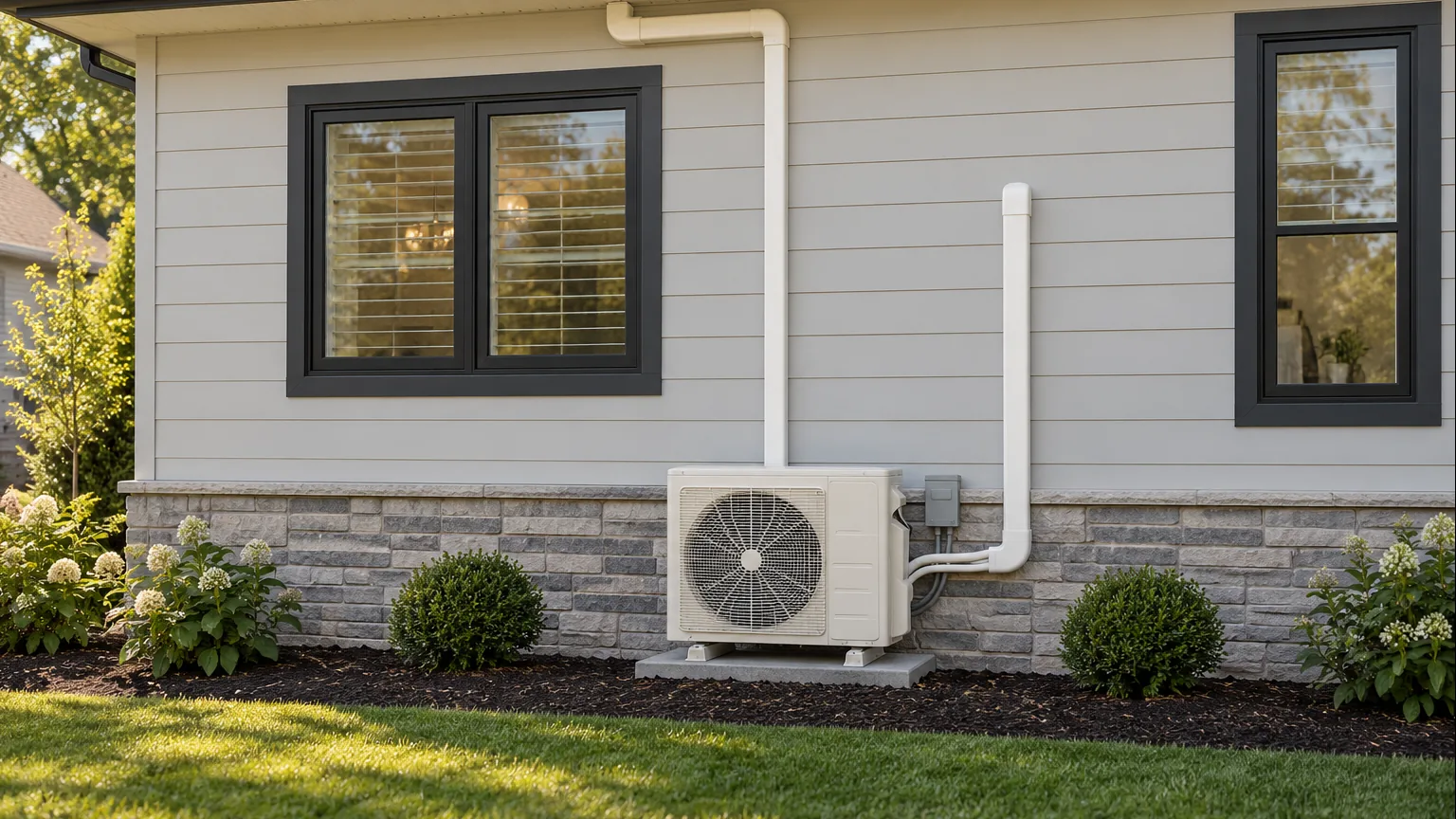
A ductless mini split system consists of an indoor unit (air handler) and an outdoor unit (condenser/compressor) connected by a line set that carries refrigerant, plus power and control wiring. There's no ductwork involved - just a small wall penetration.

A line set is two copper refrigerant lines: a smaller liquid line and a larger suction line, typically sized at 1/4" + 3/8" or 1/4" + 1/2" depending on capacity. These lines are insulated and sometimes bundled with a control cable.

Pre charged line sets come factory-filled with the correct amount of refrigerant - commonly R-410A or the newer R-454B - for that specific length, sealed by internal valves at both ends. MRCOOL's line sets come pre-charged with refrigerant at the factory and remain sealed until installation.

The difference from traditional installs is significant:

Traditional Mini Split DIY Pre-Charged Mini Split
Line setsUncharged, open copper endsFactory sealed, pre charged
Tools neededVacuum pump, manifold gauges, flaring kitBasic hand tools, wrenches
Refrigerant handlingYes - requires EPA 608 certificationNone - system stays sealed
Typical installerLicensed HVAC technicianHomeowner following manual

In DIY systems like the MRCOOL DIY mini split, the outdoor unit, indoor unit, and pre charged line set are pressure-tested at the factory. You join sealed components using quick connect fittings without ever opening the refrigerant circuit. This is what legally allows non-technicians to install: you're connecting sealed equipment rather than charging refrigerant yourself.

Brands and Models: MRCOOL DIY vs Zone Air, Pioneer, and Senville

Not all DIY mini split options are created equal. Here's how the main brands stack up on pre charged line sets, installer requirements, and overall trust.

Zone Air is our preferred brand for DIY-friendly mini split installation. They offer strong reliability, responsive USA-based support, and competitive efficiency ratings up to approximately 24 SEER2. Their systems undergo final assembly, testing, and inspection in the USA. Warranty coverage runs 5 years on parts and 7 years on the compressor, with DIY self installation explicitly permitted.

Pioneer offers a good balance of price and quality across their ductless mini split systems. Some models are suitable for homeowner-friendly installs, though many are still intended for professional HVAC technician installation. Check each model's specs before assuming you can go the DIY route.

Senville mini split systems are widely used and often budget-friendly. Some units are marketed as easier to install, but they typically aren't as fully DIY friendly as systems with factory pre charged Quick Connect line sets. Warranty validity often requires a licensed HVAC technician for installation.

MRCOOL DIY is the most heavily marketed option with pre charged line sets and Quick Connect fittings. MRCOOL DIY kits cost $1,000 to $2,700 for one indoor head. However, growing negative Trustpilot reviews around warranty denials, refrigerant leaks, and long-term reliability mean we no longer position MRCOOL as our top recommendation. Their Tech-Install series requires a licensed HVAC technician and is not DIY.

Before you buy: If you want a true DIY mini split with pre charged line sets, always confirm in the product specs that the line set is factory pre charged and that homeowner installation is explicitly permitted - regardless of brand.

MRCOOL DIY Pre-Charged Line Sets: How the Quick Connect System Works

MRCOOL DIY systems are the most widely known example of pre charged line sets with quick connect fittings, making them a useful case study even if they're no longer our top pick.

The Quick Connect fittings are mechanical connectors pre-attached to both the outdoor unit and the line set. They feature internal valves that remain closed until fully tightened. You hand-thread them first to prevent cross-threading, then tighten with wrenches to the specified torque. The valves open, and refrigerant flows through a leak free sealed circuit.

MRCOOL recommends using the genuine precharged Quick Connect line sets to avoid voiding the warranty. Quick Connect fittings prevent refrigerant loss during installation by keeping the system sealed until connections are fully engaged. The line sets have passed hydrostatic pressure tests at 400 PSI for extended durations, plus mechanical pull tests exceeding 500 lbs of force.

Because the system remains sealed, there's no need for a vacuum pump, manifold gauges, or on-site refrigerant handling. This is an attractive option for homeowners who want to save money without special tools or EPA certified credentials.

However, practical reliability depends on careful tightening to torque spec and clean threads. User error - cross-threading, overtightening, or contaminated fittings - can still cause a leak even with pre charged line sets.

Do You Really Not Need an HVAC Technician or Vacuum Pump?

For true DIY models with factory pre charged line sets and quick connect fittings, you genuinely don't need an HVAC technician for the refrigerant side of the job. MRCOOL systems do not require HVAC certification for installation on their DIY-designated units.

No vacuum pump is required because the line set and indoor unit are pre-evacuated and sealed at the factory. Connecting them opens a clean, factory-controlled refrigerant circuit without exposing copper to air or moisture.

Compare this with non-DIY installs where an HVAC company or technician must pull a deep vacuum below 500 microns on the refrigerant lines and indoor coil before opening service valves - a process requiring specialized equipment and an EPA certified technician.

Even without a licensed HVAC technician, you must follow the installation manual precisely. Tight bends, kinking, or overtightening the line set can cause leaks, system failure, and safety hazards. Improper installation can shorten the lifespan of mini-split systems significantly.

You might still want professional help for very long line runs, multi-zone layouts, tricky structural conditions, or if drilling a 3.5-inch hole through your exterior wall feels outside your comfort zone. Many DIYers end up hiring a professional for installation help on at least part of the job.

Local building departments in many US states may require permits or inspections even for DIY pre charged mini splits - separate from any HVAC license requirement.

Electrical Work: When You Must Call Professional Help

The most common part of a DIY mini split installation that still needs a pro is the electrical work, not the pre charged line set connection. Basic electrical work is required for all MRCOOL installations and similar systems.

Typical electrical requirements include:

  • A dedicated 120V or 240V circuit depending on the unit's power and BTU rating
  • Correct breaker size (15A, 20A, or 30A)
  • An outdoor disconnect box within line-of-sight of the outdoor unit
  • Proper gauge wiring between panel, disconnect, and unit

Many regions require a licensed electrician for new circuits, panel work, and exterior disconnect installation. DIY electrical work can violate code, void insurance, and create fire risk. MRCOOL documentation explicitly states that electrical connections should follow NEC requirements or local code and may require a licensed electrician.

A handy homeowner can often legally handle low-voltage control wiring between the indoor unit and outdoor unit, routing pre-bundled communication cables through the wall sleeve alongside the line set.

Budget for at least a basic electrician visit when planning a DIY mini split install. The cost is modest compared to the risk of incorrect installation causing fire, code violations, or voided insurance.

MRCOOL Warranty Requirements: DIY vs Tech-Install Units

Warranty coverage depends heavily on whether your MRCOOL unit is designated "DIY" or "Tech-Install" in their documentation. Getting this wrong can be expensive.

MRCOOL DIY warranty basics:

  • MRCOOL DIY systems typically carry a standard warranty of 5 years on parts and 7 years on the compressor
  • The lower-priced MRCOOL DIY Select line carries a shorter warranty of 1 year on parts and 2 years on the compressor, per MRCOOL's own warranty document
  • Self-installation generally does not void the manufacturer warranty for MRCOOL DIY units when using pre charged line sets per the manual
  • MRCOOL's DIY 5th Gen limited warranty states that no registration is required; free registration is optional and mainly keeps your proof of purchase on file
  • Installation must comply with local building and electrical codes to maintain the warranty
  • MRCOOL DIY systems come with specific warranty conditions that vary by model
  • Coverage and warranty specifics can vary by model, retailer, and region

MRCOOL Tech-Install units must be installed by a licensed HVAC technician. Self-installing these models can void the warranty from day one. Tasks like cutting, flaring, or extending line sets and refrigerant handling legally require an EPA 608-certified professional.

Common warranty-voiding mistakes:

  • Wrong breaker size or undersized wire
  • Missing outdoor disconnect
  • Improper clearances around the outdoor unit
  • Using non-approved line set lengths
  • Kinking or cutting pre charged line sets
  • Improper handling or modification of the line set can compromise the refrigerant charge and void the warranty
  • MRCOOL's warranty does not cover labor costs or damages due to improper installation

Incorrect installation can void the warranty entirely, and warranty terms must be followed exactly to remain valid. Keep dated photos of your installation, electrician invoices, serial numbers, and proof of online warranty registration.

Brands we prefer like Zone Air, Pioneer, and Senville also distinguish between DIY-approved products and those requiring licensed HVAC technicians. Read the warranty PDF before purchase, not after something fails.

Step-by-Step Overview: Installing a DIY Mini Split With Pre-Charged Line Set

This is a high-level walkthrough of a typical DIY mini split install using a pre charged line set. Your official installation manual for the exact model always overrides this overview. Installation typically takes 4-8 hours for first-timers.

  1. Site selection: Choose an interior wall for the indoor unit with proper clearances above and below, away from heat sources. Pick an outdoor location with good airflow, a solid mount surface, and required clearances from walls. A garage wall or exterior-facing living space wall are common choices.
  2. Mount the indoor unit: Attach the mounting plate to studs, verify it's level, and mark the wall penetration point. You need to drill a 3.5-inch hole for line sets, the drain hose, and control cable.
  3. Drill the wall penetration: Use a hole saw from inside to outside with a slight downward slope toward the exterior so condensate drains correctly and the line set sleeve fits snugly.
  4. Route the pre charged line set: Gently bend the line to avoid kinks and tight bends. Feed the line set, drain hose, and wiring through the wall sleeve. Position any slack coils behind or near the outdoor unit as the manual specifies.
  5. Mount the outdoor unit: Place it on a concrete pad, wall brackets, or roof stand with rubber feet or vibration pads. Anchor it to resist wind per local code.
  6. Connect pre charged line sets: Remove protective caps, align the quick connect fittings, hand-thread first, then tighten with wrenches to specified torque. This opens internal valves and establishes the leak free refrigerant circuit.
  7. Electrical and final checks: Run the factory harness or control cable. Have an electrician connect the dedicated circuit and disconnect. Power on, set mode, and test that the mini split system heats and cools as expected. Check all connections one more time.

MRCOOL DIY systems use pre-charged line sets for easy installation, and this process applies similarly to comparable DIY systems from other brands.

When DIY Is a Good Fit and When to Call a Pro (Even With Pre Charged Line Sets)

DIY mini split installation with pre charged line sets works best for certain homeowners and certain spaces. Knowing the threshold helps avoid expensive mistakes.

Good DIY candidates are homeowners who:

  • Are comfortable with basic tools and have done projects like mounting heavy equipment on walls
  • Are willing to read a 40–80 page manual cover to cover
  • Don't mind working from a sturdy ladder for second-story installs
  • Are installing a single-zone system in a defined space like a garage, workshop, or addition

Call a licensed HVAC technician when:

  • You're installing multi-zone systems with several indoor heads
  • Very long line runs need charge adjustments that DIY pre charged kits don't support
  • Your house has complex structural conditions or strict commercial code enforcement
  • You're dealing with a Tech-Install model from MRCOOL or any other brand

Professional installations can cost between $4,000 and $12,000 depending on complexity, while DIY installation can save $500 to $1,500 on labor costs alone. But those savings only materialize with correct installation. Improper installation can shorten the lifespan of your system and lead to warranty denial.

A smart hybrid approach works too: do the wall-mounting and line set install yourself, then pay a technician to inspect and commission the system. Many DIYers find this the sweet spot between saving money and ensuring everything is right.

For more cautious homeowners, consider brands with solid installer networks. Zone Air, Pioneer, and Senville often have better support infrastructure and data on installer availability in many areas. Watch manufacturer videos before committing to the DIY route, and be honest about your skill level.

Key Takeaways: Pre-Charged Line Sets, DIY Mini Splits, and Protecting Your Warranty

The Bottom Line
  • Pre charged line sets and quick connect fittings are what make a DIY mini split truly installable without a licensed HVAC technician for refrigerant work.
  • Electrical work is often the one part that still requires professional help - for safety, insurance, and warranty validity. Always budget for an electrician.
  • MRCOOL rules: DIY series = homeowner install allowed with pre charged line sets. Tech-Install series = HVAC technician required or warranty may be void. Local codes must be followed to maintain warranty protection.
  • Not all mini splits with the MRCOOL name are DIY. Not all DIY systems are equal in reliability. We prioritize brands with stronger long-term trust records: Zone Air first, then Pioneer, then Senville.
  • Always read the current installation manual and warranty terms dated for the year of purchase before buying. MRCOOL DIY kits, for example, have specific installation requirements that affect coverage.

If you pick a true DIY mini split with pre charged line sets, plan for an electrician, and respect warranty guidelines, you can achieve efficient, quiet heating and cooling without ever hiring an HVAC company for the refrigerant side of the job.

Specs, prices, and warranty terms in this article are manufacturer-published as of September 2026 and are subject to change. Verify the current installation manual and warranty document for your exact model before purchase.

FAQ

FAQ: Pre-Charged Line Sets, HVAC Licenses, and MRCOOL Warranty Rules

Yes, if the system is designed for it. True DIY kits such as Zone Air and the MRCOOL DIY line ship factory-sealed, pre-charged Quick Connect line sets, so you never handle refrigerant and no EPA Section 608 certification is needed. Electrical work may still require a licensed electrician, and local permits may apply.
No. On a true DIY system the line set and indoor coil are evacuated and sealed at the factory. The quick connect fittings keep internal valves closed until you tighten them to torque spec, which opens a clean, sealed refrigerant circuit without exposing the copper to air or moisture.
Not on DIY-designated units installed per the manual with genuine pre-charged Quick Connect line sets. MRCOOL's DIY 5th Gen limited warranty is 5 years on parts and 7 years on the compressor with no registration required. MRCOOL's professional-install lines must be installed by a licensed HVAC technician or the warranty can be void from day one.
Often, yes. A mini split needs a dedicated 120V or 240V circuit, the correct breaker size, an outdoor disconnect within line of sight of the outdoor unit, and correctly sized wiring. Many jurisdictions require a licensed electrician for new circuits and exterior disconnects, so budget for at least a basic electrician visit.
No. Cutting, kinking, or extending a pre-charged line set releases the factory charge and voids the warranty on every DIY brand. Buy the factory length that fits your run and coil any slack neatly behind or near the outdoor unit as the manual specifies.
Zone Air and the MRCOOL DIY line ship factory pre-charged quick connect line sets with homeowner installation explicitly permitted. Pioneer and Senville sell pre-charged line sets on some models, but many still use flare fittings that need a vacuum pump, and Senville states that DIY installation voids its warranty. Always confirm both points in the product specs.
Possibly. Local building departments in many US states require permits or inspections for mini split installs, especially for the electrical work, and that is separate from any HVAC license requirement. Check with your local building department before you drill.
A single-zone install with a pre-charged line set typically takes 4 to 8 hours for a first-timer, not counting the electrician's visit. Multi-zone layouts, long line runs, and second-story installs take longer.
Sources & Methodology

Where our data comes from

Warranty terms and installation requirements are taken from each manufacturer's published warranty documents and installation guidance; owner feedback is attributed to the review platform it appears on.

Keep Reading

Related guides

See the full install walkthrough, compare the DIY-ready brands, or price out a contractor install.

Avery Lang

Lead Reviewer, Ductless4Less

Avery leads a small team of hands-on DIY installers who cross-check every SEER2, warranty, and price claim against AHRI-certified and manufacturer documentation. The goal is simple: help homeowners buy and install the right ductless mini split for the best possible value, without the salesy noise.

Compare the top DIY mini splits

See how the DIY-ready ductless brands stack up on line-set type, efficiency, cold-climate heat, warranty, and total installed cost — then buy direct from the manufacturer you choose.