Ductless mini splits for less · 2026 buyer's guides & free sizing helpSize my system →

Quick Answer: Best DIY Mini Split for a 500 sq ft Room

Best overall: Zone Air 12,000 BTU single-zone wall-mounted mini split (115V option at 23 SEER2, or 24 SEER2 on 230V; inverter heat pump). Here's why it stands out:

  • 24 SEER2 efficiency on the 230V model - the highest in the DIY mini split category, compared to MRCOOL's 23.5 SEER2 on its 12K unit.
  • 115V design on the 12K model runs on a dedicated 15A circuit, so many homeowners can avoid wiring a new 230V line (an optional cord kit plugs into a dedicated GFCI outlet where local code allows).
  • Custom-cut single-run line sets from 5 to 75 feet - one pair of quick-connect fittings instead of multiple unions and coiled excess copper.
  • Direct-to-consumer pricing, typically 10–20% below comparable retail models.
  • Mini splits can save about 30% on energy costs versus older central air conditioning or window AC units, and this unit's high SEER2 pushes those savings even further.

The rest of this post explains how sizing works for your square footage, compares DIY vs professional installation, and walks through every consideration before you buy. Sizing a smaller room? See our best DIY mini split for 250 sq ft guide.

What Size Mini Split Do You Need for 500 sq ft?

Most 500 sq ft rooms land in the 9,000 BTU to 12,000 BTU range. Most mini splits range from 9,000 to 24,000 BTU for residential single-zone use, while most DIY mini-splits range from 9,000 to 36,000 BTU across single and multi-zone configurations. For a single room, 12K BTU is usually the safer, more comfortable pick.

The basic rule of thumb: roughly 20–25 BTU per sq ft. So 500 sq ft × 25 BTU = ~12,500 BTU, which rounds down to the standard 12,000 BTU unit size. From there, adjust for real-world conditions (or run the numbers for your exact room in our mini split sizing calculator):

  • A well-insulated 500 sq ft bedroom in Seattle with moderate windows might be fine on 9,000 BTU.
  • A sunny 500 sq ft bonus room over a garage workshop in Texas almost certainly needs 12,000 BTU.
  • A 500 sq ft basement with minimal sun exposure and below-grade insulation could work at 9K, but 12K gives you reliable heating margin in winter.

A 12,000 BTU unit is suitable for rooms with average insulation and sun exposure. Proper sizing of the unit is crucial to avoid inefficient performance and humidity issues - undersized systems run constantly without reaching temperature, while oversized ones short-cycle and leave the air clammy. DIY mini-splits can cover areas up to 2,290 square feet with multi-zone configurations, but for a single 500 sq ft space, one 12K head and one outdoor condenser is all you need.

Why a DIY Mini Split Instead of Central Air or Window Units?

If you're conditioning a single 500 sq ft space, a ductless mini split makes more practical sense than extending central air or plugging in a window AC. Here's why. (For whole-house decisions, see mini split vs central air.)

Over central air:

  • According to the U.S. Department of Energy, duct losses can account for more than 30% of energy consumption for air conditioning, especially when ducts run through unconditioned attics and crawlspaces. A ductless system delivers conditioned air directly into the room.
  • Installation costs for a single-zone mini split are a fraction of extending ductwork to a new room.
  • Mini splits provide individual temperature control for each room, so you're not heating or cooling your entire house just to condition one space.
  • Mini split systems can be installed without cutting into existing ceilings or floors.

Over window and portable AC units:

  • Mini splits operate quietly compared to traditional HVAC systems - and dramatically quieter than a window AC rattling in the frame.
  • Mini splits can be installed without ductwork, simplifying installation and keeping your windows free.
  • Most mini splits today are heat pumps, meaning one system handles both summer cooling and winter heating. Window units are cooling-only and seasonal.
  • The installation of mini splits allows for zoning, cooling or heating specific rooms independently, which saves money over time.

DIY models specifically eliminate contractor labor from the equation. On a straightforward single-zone install, that can mean saving $1,500–$3,000 in professional installation fees.

Why Zone Air Is the Best DIY Mini Split for 500 sq ft

Zone Air is a DIY-focused brand built around a few structural advantages that matter most when you're the one doing the install.

Custom-cut line sets. This is the single biggest differentiator. Zone Air offers custom-cut single-run refrigerant line sets from 5 to 75 feet. Most competing DIY mini split brands - including MRCOOL, which uses Quick Connect pre-charged line sets in fixed 16, 25, 35, or 50-foot lengths - force you to either coil excess copper behind the outdoor unit or join multiple sets with additional quick-connect valves. Each union is a potential leak point. Zone Air gives you one pair of connects at exactly the length you need.

115V plug-in option. The 12K 115V model runs on a dedicated 15A single-pole breaker, with power connected at the outdoor unit. With Zone Air's optional cord kit, where local code allows, you can plug into a dedicated GFCI outlet on that circuit - never an extension cord. This is what makes it arguably the easiest DIY installation on the market for a 500 sq ft room.

Higher efficiency. Zone Air's 12K 230V wall mount hits 24 SEER2, the top rating among true DIY systems. MRCOOL's standard DIY 5th Gen 12K comes in 115V only and is rated 23.5 SEER2; Zone Air's 115V version sits at 23 SEER2 - within half a point. Our SEER2 explainer covers what those ratings mean.

Better reviews. Zone Air's verified customer reviews average about 4.8/5 across more than 140 reviews, while MRCOOL's Trustpilot profile sits at 3.2/5 from 89 reviews as of September 2026. They're different platforms, so treat the comparison as directional - but if you want to see the contrast, check MRCOOL's Trustpilot page and compare.

Price. The direct-to-consumer model keeps pricing 10–20% below comparable systems sold through retailers. The Zone Air 12K 230V single-zone lists at $2,049.99; the 115V version at $1,999.99. MRCOOL's DIY 5th Gen 12K 115V lists around $2,359 at Home Depot as of September 2026 - about $360 more than Zone Air's 115V model.

Other brands in the space include Mirage, whose mini splits start at 9,000 BTU, though its systems use flare connections and Mirage recommends a certified HVAC technician for installation. Zone Air's combination of line set design, efficiency, and price is hard to beat for a straightforward 500 sq ft install. For every true DIY brand side by side, see MRCOOL DIY vs competitors.

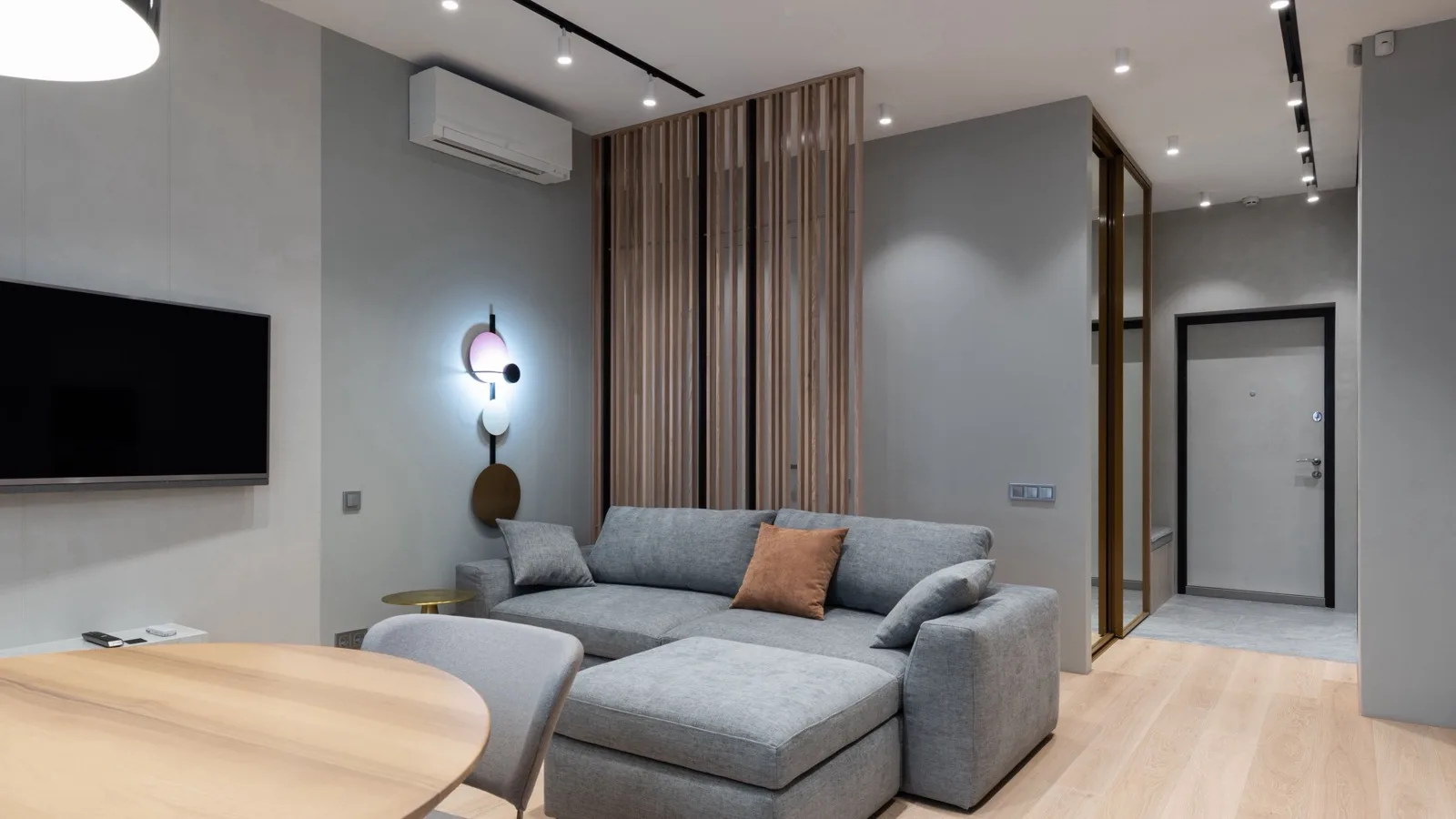
Zone Air 12,000 BTU Single-Zone DIY Mini Split: Ideal Specs for 500 sq ft

Here's what you're getting with the recommended Zone Air 12K for a ~500 sq ft room:

SpecZone Air 12K single zone
Capacity12,000 BTU cooling / 12,400 BTU rated heating
Efficiency24 SEER2 (230V) or 23 SEER2 (115V); HSPF2 Region IV 10.0 on the 115V model
CompressorVariable-speed DC inverter
Operating rangeHeats down to −13°F; cools up to 131°F
Voltage115V (dedicated 15A circuit, optional cord kit) or 230V hardwired (double-pole breaker)
NoiseIndoor ~30 dB(A) in mute mode; outdoor ~52 dB(A)
Airflow~500 CFM (turbo) down to ~205 CFM (mute)
Line setPre-charged R-454B, 16 ft included, custom lengths 5–75 ft
CoverageRated for 350–600 sq ft
Warranty5 years parts, 7 years compressor
  • Compressor: inverter-driven compressors adjust output instead of constantly cycling on and off, which improves comfort and efficiency.
  • Operating range: many DIY mini-splits operate from about −13°F to 122°F, so Zone Air's 131°F cooling ceiling actually exceeds the category norm.
  • Refrigerant: R-454B (low global warming potential under the EPA Technology Transitions rule).

Many DIY mini splits can operate in temperatures as low as −13°F, and Zone Air matches that threshold. For a 500 sq ft room, a unit this size will pull a room down from 85°F to a comfortable 72°F efficiently and maintain temperature with minimal cycling. Worried about winter? Read do mini splits work in cold weather.

Line Sets and Layout: Getting DIY Installation Right in a 500 sq ft Space

A line set is the pair of insulated copper refrigerant lines (plus communication wire and drain line) that connect your indoor air handler to the outdoor condenser. Installation involves connecting indoor and outdoor units with these refrigerant lines, and how that connection is designed has a direct impact on reliability.

Here's the problem with fixed-length line sets: if your run between the indoor and outdoor unit is 30 feet and your line set is 25 feet, you need a coupler kit to extend it. If your run is 40 feet and you bought a 50-foot set, you're coiling 10 feet of excess copper behind the condenser. Both MRCOOL and Zone Air use R-454B refrigerant, a low-GWP alternative to older R-410A, so keeping the refrigerant circuit sealed and leak-free matters.

Zone Air's approach eliminates most of this:

  • Single custom-cut run from 5 to 75 feet - one pair of quick-connect fittings, period.
  • No coiled excess copper cluttering your condenser area.
  • No extra unions doubling your potential leak points.

Concrete layout examples for 500 sq ft:

  • A 500 sq ft over-garage space with the condenser on a ground-level pad typically needs a 30–40 ft vertical and horizontal run. Zone Air ships a single 35 ft set, cut to spec.
  • A 500 sq ft basement room with the condenser just outside the rim joist might only need 10–15 ft. Zone Air can cut to that length instead of leaving you with 10+ feet of extra line to manage.
  • A 500 sq ft ADU where the outdoor unit sits on the far side of the building could require 50–60 ft. One set, one connection, no couplers.

For the full comparison of no-vacuum line sets across brands, see best precharged mini split brands.

DIY Installation Steps for a 500 sq ft Ductless Mini Split

This is a high-level overview - always follow the official installation manual for your specific system. Our easiest DIY mini split install guide goes deeper.

  1. Plan and size. Confirm your room is ~500 sq ft, select a 12K BTU unit, and choose your wall for the indoor air handler (typically a high exterior wall for short line set routing). Plan the location of the outdoor condenser to ensure proper clearance and airflow - most units need 12–24 inches of clearance on all sides.
  2. Mount the indoor unit. Install the mounting plate level on the wall using a stud finder, drill, and level. The unit sits mounted high, typically 7+ feet, for optimal air distribution.
  3. Drill the wall penetration. Use a 3-inch hole saw to create the pass-through for the refrigerant line, drain line, and communication cable. Slope slightly downward to the outside for condensate drainage.
  4. Mount the outdoor condenser. Place on a concrete pad or wall-mount bracket. Keep it level and accessible for maintenance.
  5. Route the line set. Run the pre-charged refrigerant line through the wall sleeve, connect the quick-connect fittings per the manual, and secure the line set along the wall with appropriate clips or a line set cover.
  6. Electrical connection. Zone Air's 115V models can often connect to an existing dedicated 15A circuit. DIY mini-splits require a dedicated electrical line - verify electrical requirements to match the capacity of the mini split unit. Install a disconnect box near the outdoor unit per local code. Shut off power before any electrical work.
  7. Startup and test. Power on, run through the system's auto-test or commissioning sequence, and check for cool (or heat) output, proper drainage, and remote control response.

Installation can be completed using basic tools in hours - no special tools like vacuum pumps or manifold gauges are needed with pre-charged quick-connect systems, and no EPA license is required. MRCOOL DIY systems allow for easy installation without specialized training, and Zone Air follows the same principle with an even simpler line set design.

Single-Zone vs Multi-Zone Mini Splits for 500 sq ft

A single 500 sq ft room almost always calls for a single-zone system. But most people buying a mini split for one room today are thinking about adding more rooms later.

Multi-zone systems connect multiple indoor units to one outdoor condenser. Here's where brand choice matters for future-proofing:

  • Zone Air lets you mix and match wall-mounted, ceiling cassette, and concealed ducted indoor units on a single multi-zone condenser. This flexibility matters if you're planning a whole-house layout or adding a head to a different type of room later.
  • MRCOOL's DIY multi-zone line supports wall and ceiling cassette heads; mrcool.com lists no slim concealed-duct head (MRCOOL's ducted DIY air handler is a separate whole-home unit).

Example scenario: You start with a 12K wall mount for a 500 sq ft living room. Six months later, you add a ceiling cassette for a 250 sq ft kitchen and a concealed ducted air handler for two small bedrooms - all connected to one outdoor unit on Zone Air's multi-zone system.

For a standalone 500 sq ft studio or ADU, a single-zone is the simplest and most cost-effective route. But if expansion is likely, choosing a brand with broader multi-zone flexibility saves you from replacing equipment down the line. See our best multi-zone mini splits and best DIY 3-zone mini split guides.

Energy Efficiency and Operating Costs for a 500 sq ft Room

SEER2 measures seasonal cooling efficiency - higher means less electricity per hour of cooling. HSPF2 does the same for heating. These ratings directly control your electric bill.

Here's how the numbers compare for a 500 sq ft room:

  • Zone Air 12K: 24 SEER2 (230V) / 23 SEER2 (115V)
  • MRCOOL DIY 5th Gen 12K: 23.5 SEER2 (115V)
  • Typical older central AC: 14–16 SEER2
  • Budget window AC: ~10–12 EER equivalent

In a warm climate where your system runs ~1,200 cooling hours per year, a 12,000 BTU, 24 SEER2 unit consumes roughly 600 kWh annually for cooling, while an 18 SEER2 unit consumes roughly 800 kWh. At $0.15/kWh, that's about $30 a year in savings - more in hotter climates with longer run hours - modest year over year, but it compounds across the life of the system. Mini splits can save about 30% on energy costs compared to conventional systems, especially when replacing ductwork-dependent central air.

Mini split heat pumps also dramatically outperform electric baseboard heaters or portable space heaters for winter heating in the same 500 sq ft space. Zone Air's 115V 12K model has a COP of 3.81 at 47°F, meaning it produces nearly four times more heat energy than the electricity it consumes. For the heat pump field, see best mini split heat pumps.

Look for smart controls with Wi-Fi capability to monitor energy usage remotely - many units support Google Assistant or app-based control. Monthly maintenance like washing filters and checking drainage is important for mini splits to maintain peak energy efficient performance and keep operating costs low. Our lifespan and maintenance guide has the checklist.

Comfort Features That Matter in a 500 sq ft Space

In a 500 sq ft room where you sleep, work, or relax, comfort goes beyond raw BTU output. A variable-speed inverter compressor ramps up and down to match the load, which means the system holds a steady temperature instead of blasting cold air and shutting off like window units do.

Features to look for:

  • Multiple fan speeds (turbo, high, medium, low, mute) - a quality unit runs at low speed most of the time, keeping indoor noise around 30–32 dB
  • Sleep mode that gradually adjusts temperature overnight
  • Follow-me or remote-sensing mode that uses the remote control's built-in sensor to measure temperature where you're sitting, not at the wall unit
  • Precise temperature control in 1°F increments via remote or app
  • Effective dehumidification - a properly sized 12K unit for 500 sq ft won't short-cycle, so it runs long enough to pull moisture from the air in humid weather conditions

In everyday use, a well-matched mini split in a 500 sq ft room feels invisible. You adjust the temperature once, and the inverter holds it there quietly. The difference versus a window AC that cycles on and off every few minutes is dramatic. Noise-sensitive? Compare our best quiet mini splits.

Comparing Zone Air DIY Mini Splits to MRCOOL and Other Brands

MRCOOL is the most widely stocked name in the DIY mini split market, and for good reason - they popularized the Quick Connect pre-charged line set concept and made DIY mini split installation accessible to non-professionals. MRCOOL DIY systems can operate in temperatures from -13°F to 122°F, and installation of MRCOOL DIY systems requires no specialized training.

But there are clear structural differences:

FactorZone Air 12KMRCOOL DIY 5th Gen 12K
Line setsCustom-cut single run, 5–75 ftFixed 16 / 25 / 35 / 50 ft; couplers for longer runs
Efficiency24 SEER2 (230V) / 23 SEER2 (115V)23.5 SEER2 (115V)
Price (Sept 2026)$1,999.99 (115V) / $2,049.99 (230V)~$2,359 (115V, Home Depot)
Reviews~4.8/5 across 140+ verified reviews3.2/5 on Trustpilot (89 reviews)
Multi-zone headsWall, ceiling cassette, concealed ductedWall, ceiling cassette
  • Line sets: MRCOOL uses fixed-length pre-charged sets (16, 25, 35, 50 ft). Longer runs require couplers - each coupler adds a pair of connections and a leak risk. Zone Air's custom-cut single run eliminates this entirely.
  • Efficiency: Zone Air's 12K 230V hits 24 SEER2; MRCOOL's DIY 5th Gen 12K (115V) is 23.5 SEER2, and Zone Air's 115V is 23. On 230V, that gap adds up over 10–15 years of operation.
  • Price: Zone Air's direct-to-consumer model keeps comparable systems 10–20% cheaper: $1,999.99 for a 12K Zone Air 115V vs about $2,359 for MRCOOL's 12K 115V at retail.
  • Reviews: Zone Air carries better average customer ratings. Check MRCOOL's public Trustpilot profile for comparison.
  • Multi-zone flexibility: Zone Air supports wall, cassette, and concealed ducted heads on one condenser. MRCOOL's DIY multi-zone offers wall and cassette heads.

What about non-DIY brands? If you're willing to pay for professional installation, there are excellent options. Fujitsu's AIRSTAGE Altair 500 Series reaches up to 26 SEER2, and the Altair line tops out at 30 SEER2 on the 9K Altair 700. LG ARTCOOL Deluxe has SEER2 ratings between 25.5 and 27. Mitsubishi Electric describes its Diamond Contractor program as the largest network of certified ductless contractors in the U.S., and like every heat pump, Mitsubishi units lose capacity as outdoor temperatures drop. Check for minimum outdoor operating temperatures in colder climates when selecting heat pumps from any brand.

These are outstanding systems, but they require professional installation, which adds significant cost. This article focuses on true DIY mini split options, and in that category, Zone Air leads on efficiency (on 230V), line set design, multi-zone flexibility, and price. For the wider DIY field, see our best DIY mini splits ranking.

Common Mistakes When Choosing a DIY Mini Split for 500 sq ft

Picking the right system is mostly about avoiding a few predictable mistakes:

  • Undersizing to save money. Choosing a 9,000 BTU unit when the room's heat load calls for 12K means the system runs flat-out and never reaches your set temperature. In hot or humid climates, this is a recipe for discomfort and high bills.
  • Ignoring electrical capacity. If your house doesn't have a spare 230V circuit and you buy a 230V unit, you'll need an electrician - which eats into your DIY savings. The 115V option exists specifically to avoid this.
  • Blocking airflow. Mounting the indoor air handler behind a tall bookshelf or above a door where the air can't circulate wastes capacity. Place it on an open wall with clear space below and in front.
  • Using joined line sets when a single run would work. Multiple unions from coupler kits increase leak risk over time. If your run is 30 feet, don't join a 16-foot and a 25-foot set - use a single custom-cut 30-foot line.
  • Skipping warranty verification. Many traditional mini split brands void the warranty if the system wasn't professionally installed. Confirm your chosen DIY model explicitly supports and warrants homeowner installation.
  • Placing the outdoor condenser in a tight, enclosed space. The condenser needs airflow. An enclosed alley or a spot surrounded by shrubs reduces performance and can cause the system to overheat or ice up in extreme weather conditions.

Is DIY Installation Right for You?

Not every homeowner should attempt a mini split install. Here's an honest self-assessment:

  • You're comfortable on a ladder and can safely mount a 20–30 lb indoor unit at 7+ feet.
  • You can use a drill, hole saw, and level confidently.
  • You're willing to read and follow the full installation manual - not just skim it.
  • You understand basic home electrical concepts: breakers, dedicated circuits, disconnect boxes.

If that describes you, Zone Air's design - 115V option on the 12K model, single-run pre charged lines, quick connects - is built specifically to simplify the process for non-professionals. The system doesn't require special tools like vacuum pumps or refrigerant gauges.

Consider hiring a pro or at least a licensed electrician if:

  • Your breaker panel is full and needs a new circuit or sub-panel
  • You need to run a new 230V line from the panel to the install location
  • Your local jurisdiction requires permits or licensed HVAC work for any mini split install
  • You're not comfortable drilling a 3-inch hole through an exterior wall

Final Checklist: Choosing the Best DIY Mini Split for Your 500 sq ft Room

Before you order, run through this list. Sketch your room, measure distances, and check your breaker panel - doing this homework now prevents returns and headaches later.

  • ☐ Confirm room square footage is ~450–550 sq ft with standard ceiling height
  • ☐ Select a 12,000 BTU heat pump - the right size for this space in most U.S. climates
  • ☐ Choose a high-efficiency unit: 24 SEER2 (Zone Air 230V) or 23 SEER2 (Zone Air 115V)
  • ☐ Measure the line set route from planned indoor unit location to outdoor condenser pad - order the correct custom length
  • ☐ Confirm 115V vs 230V power availability: check your breaker panel for an open slot on a dedicated circuit
  • ☐ Decide single-zone vs future multi-zone expansion - if you'll add rooms later, choose a brand that supports mixed indoor unit types
  • ☐ Verify the outdoor condenser location has 12–24 inches of clearance on all sides and sits on a level surface
  • ☐ Read the full installation manual before starting, not during

For most people tackling a 500 sq ft room, the Zone Air 12K single-zone DIY mini split checks every box: right capacity, top-tier energy efficiency, a genuinely easier install, and a price that reflects direct-to-consumer savings rather than dealer markup. Measure your space, check your panel, and get started. When you're ready, shop single-zone systems by brand.

FAQ

DIY Mini Split for 500 sq ft: Frequently Asked Questions

Most 500 sq ft rooms need 9,000 to 12,000 BTU. At roughly 20–25 BTU per sq ft, 500 sq ft works out to about 10,000–12,500 BTU, so a 12,000 BTU single-zone unit is the safer pick for average insulation and sun exposure.
Only in a well-insulated, shaded room in a mild climate. Sunny rooms, rooms over garages, hot or humid climates, and rooms that need winter heating margin should use 12,000 BTU.
Yes, with a true DIY system that ships with a pre-charged quick-connect line set. No vacuum pump, gauges or EPA license are needed. Zone Air and MRCOOL DIY both warranty homeowner installation; local code may still require a licensed electrician for the circuit.
A 115V 12K unit runs on a dedicated 15A circuit and avoids a new 230V line, which is the simplest DIY route. A 230V unit is slightly more efficient (Zone Air's 12K is 24 SEER2 on 230V vs 23 SEER2 on 115V) but may need electrician work if you have no spare 230V circuit.
A 12,000 BTU, 24 SEER2 mini split running about 1,200 cooling hours a year uses roughly 600 kWh, or about $90 a year at $0.15/kWh. An 18 SEER2 unit would use about 800 kWh for the same cooling.
Both are true DIY systems. Zone Air offers custom-cut line sets from 5 to 75 ft, a 24 SEER2 230V option and lower pricing ($1,999.99 for the 12K 115V vs about $2,359 for MRCOOL's DIY 5th Gen 12K 115V as of September 2026). MRCOOL offers wider big-box availability and a 23.5 SEER2 12K 115V unit.
Specs, prices and warranty terms cited in this guide are the manufacturers' and retailers' published figures as of September 2026, are subject to change, and should be verified on the manufacturer's site before purchase. Ductless4Less is not affiliated with or endorsed by MRCOOL or Zone Air; brand names are trademarks of their respective owners.
Sources & Methodology

Where our data comes from

Capacity, efficiency, sound, airflow and temperature figures are the manufacturers' published specs; prices are list prices checked in September 2026; sizing follows the common 20–25 BTU per sq ft rule of thumb.

Keep Reading

Related guides

Size your room precisely, see the smaller-room guide, or compare every true DIY brand.

Avery Lang

Lead Reviewer, Ductless4Less

Avery leads a small team of hands-on DIY installers who cross-check every SEER2, warranty, and price claim against AHRI-certified and manufacturer documentation. The goal is simple: help homeowners buy and install the right ductless mini split for the best possible value, without the salesy noise.

Find the right mini split for your 500 sq ft room

Size your space with the free calculator, then compare the 12,000 BTU single-zone systems that fit a living room, bonus room, basement or ADU.