
Ductless mini splits for less · 2026 buyer's guides & free sizing helpSize my system →

Fast Answer: Can You Really DIY a 3 Zone Mini Split Heating System?

Yes. A 3 zone DIY mini split uses one outdoor condenser and three indoor air handlers to deliver separate climate control to three rooms. Each air handler acts as its own thermostat-controlled unit, so you can adjust the temperature in separate spaces without affecting the rest of the house. Multi zone systems eliminate the need for ductwork installation, which saves both labor cost and the energy loss found in traditional ductwork.

Precharged line sets are what make homeowner installation realistic. These are insulated copper tubes pre-filled with refrigerant and sealed at both ends. When you connect them, the refrigerant pathway is complete and it never opens to the atmosphere, so you don't need a vacuum pump, a gauge set or EPA 608 certification for the install. MRCOOL puts it as "no special tools or training are necessary to install."

A handy homeowner can install an official MRCOOL DIY 3 zone kit, but Zone Air's multi zone systems are often the better choice for efficiency, flexibility and direct support. Current MRCOOL DIY 5th Gen units and Zone Air systems both use R-454B, a lower global warming potential refrigerant. For a 3 zone setup, MRCOOL sells 18K, 27K and 36K multi-zone condensers (plus larger 48K and 55K units), while every Zone Air 3 zone system runs on one 27,000 BTU outdoor unit that supports up to 36,000 BTU of connected indoor capacity.

This article walks through how these systems work, sizing considerations (18,000 BTU vs 27,000 BTU vs 36,000 BTU), communication wire basics, line set planning, heating performance in colder climates, and what to watch for before you shop and install.

How a DIY Multi Zone Mini Split 3 Zone System Works

You can think of a multi zone mini split as one power source that gives power to three separate climate control stations. One outdoor unit will sit on the exterior of your home and will connect to three indoor air handlers that are mounted in different rooms. Each indoor head works like it is its own mini split with its own temperature settings and its own schedules.

Modern multi-zone systems have variable-speed inverter compressors that change capacity to match the combined demand from all three zones. If only one bedroom calls for heat, the compressor is running at partial power. When all three zones fire up, it scales to full output. Heat pumps are able to move heat rather than generate it, so they use energy more efficiently. Mini splits can deliver multiple units of heat energy for every unit of electricity they consume.

Each indoor unit needs:

  • A dedicated precharged line set that refrigerant flows through
  • A condensate drain for moisture removal
  • For control signals, a communication wire runs back to the outdoor condenser
  • A 230V power supply at the outdoor unit that a dedicated circuit gives power to

MRCOOL's largest DIY condensers (48K and 55K) can run up to six indoor units, and Zone Air's 27K runs two or three, though three is the sweet spot for most homes. Each zone can operate on its own, so you only heat or cool the spaces you actually use instead of conditioning the whole home. That cuts down on energy waste.

Choosing the Right 3 Zone Condenser Size (18,000 BTU vs 27,000 BTU vs 36,000 BTU)

Getting the outdoor condenser size right prevents short-cycling, noisy operation and rooms that never reach the temperature you set. Here's how the numbers break down.

  • A 27,000 BTU condenser works well for three rooms that are small to medium in size. You can pair it with three 9k air handlers for bedrooms in the 300–400 sq ft range. MRCOOL has its DIY 9k BTU unit rated for up to 400 sq ft and its 18k for up to 800 sq ft. For Zone Air, its 9K head is rated for up to 450 sq ft and its 18K for up to 900.
  • On Zone Air, the same 27K outdoor unit covers the bigger setups too: 9K+9K+12K, 12K+12K+12K, or 9K+9K+18K for a bedroom, an office and an open living area, up to 36,000 BTU connected. On MRCOOL, larger or poorly insulated spaces step up to the 36K condenser. The catalog has that one for up to 1,500 sq ft.
  • An 18,000 BTU multi zone condenser exists from brands including MRCOOL, but it's usually better suited for two zones, not a full 3 zone layout. MRCOOL's 18K is rated at 23.9 SEER2 and takes up to three heads. That's solid, but its catalog coverage is about 750 square feet, so spreading it across three heads risks cutting every room short on power.

Always account for your climate zone because northern states with harsh winters need more heating capacity than mild coastal regions. Poor insulation, vaulted ceilings or heavy sun exposure should push you toward the next size up.

Efficiency is where the condenser choice shows up on the power bill. With wall heads, the 27K from Zone Air is rated 24 SEER2, against 23.9 from MRCOOL (18K) and 23 from MRCOOL (27K and 36K). With other head styles, the figure from Zone Air drops - ceiling cassette and concealed ducted heads rate lower - so check the spec sheet for your mix.

Precharged Line Sets, Lengths and Communication Wires

Precharged line sets are the single biggest reason a DIY system doesn't need an HVAC tech or special tools. Here's what you need to know.

  • A precharged line set is insulated copper tubing pre-filled with refrigerant and sealed at both ends. The Quick Connect fittings establish the refrigerant pathway when properly connected - no field charging, no gauges. Both MRCOOL DIY and Zone Air multi zone systems use this approach.
  • MRCOOL sends out fixed 11.5, 16, 25, 35 and 50 ft sets, plus couplers to join two sets for longer runs, and its manual has you coil the excess behind the condenser. Of the brands compared here, Zone Air is the only one that cuts your pre-charged line set to the exact length you measure, any whole foot from 5 to 75 (as of November 2026), and its 25, 33, 50 and 75 ft sets are each a single factory-sealed run with no field joint.
  • Each indoor unit needs its own line set and communication wire, and each one connects directly to the outdoor condenser. MRCOOL's multi-zone manual allows up to 75 ft per indoor unit and a combined 172 ft on the 18K condenser (221 ft on the 27K and up).
  • Plan your paths before you order. Stay below the maximum combined length, avoid turns that are tighter than the manufacturer's minimum radius, and keep the visible line on exterior walls to a minimum.
  • Communication wire connects each indoor air handler to the matching terminals on the outdoor unit. Every unit comes with the cable from Zone Air. Getting the labels right (zone 1, zone 2, zone 3) and following the wiring diagram in your manual is critical. Cables that are wired wrong cause error codes or zones that won't respond.
  • Avoid using expanding spray foam at wall penetrations around line sets. R-454B indoor units carry a refrigerant sensor that stops the compressor and shows an error code when it detects refrigerant, and installers have reported false alarms from fresh foam fumes. You can use silicone caulk or putty pads instead.

3 Zone Heating Performance in Cold Weather

In many parts of the country, heating performance is far more important than cooling. This is where system choice has the biggest impact on all season comfort.

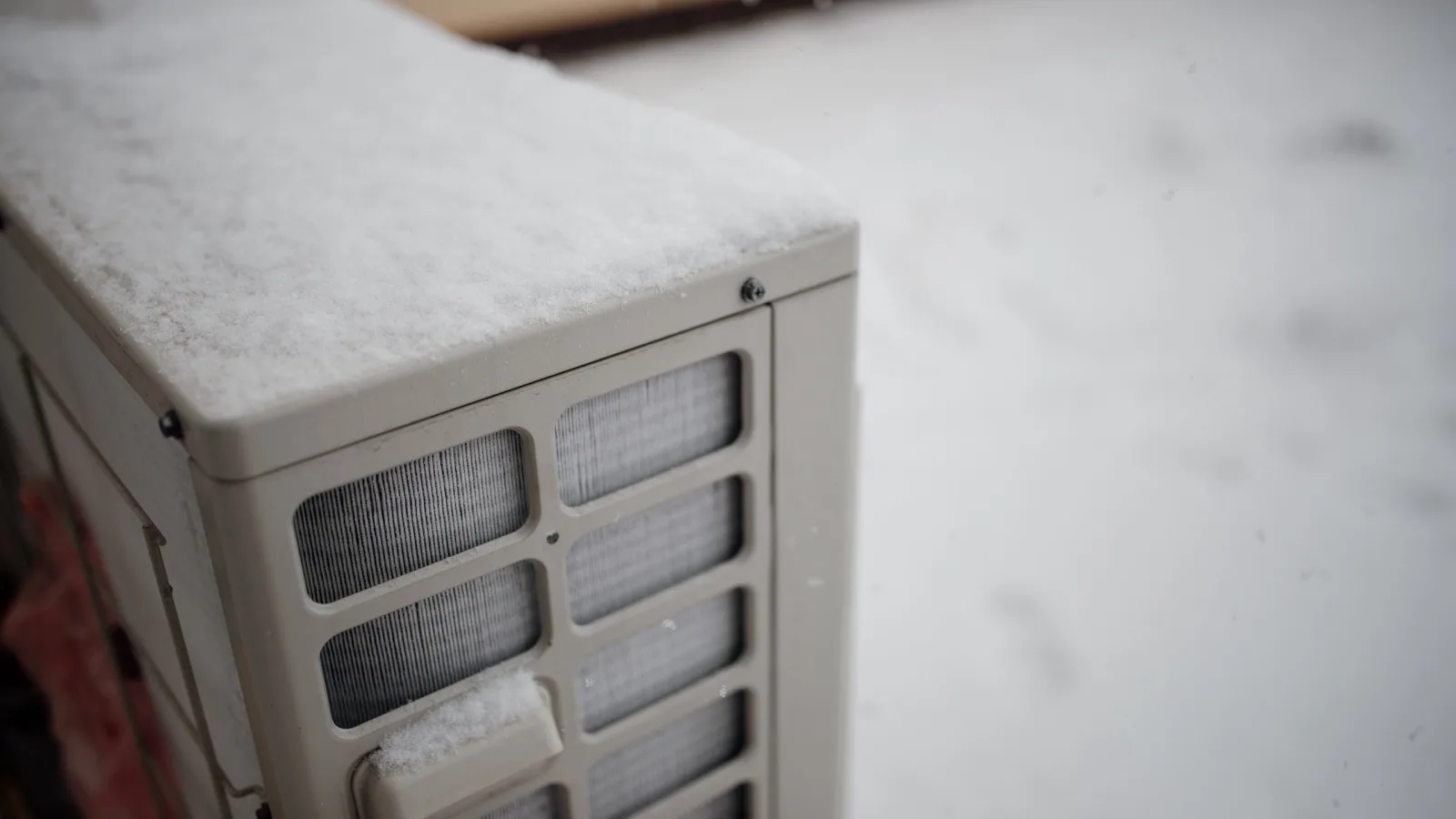
  • MRCOOL's DIY multi-zone condensers from 18K to 48K are rated to operate in heating down to −13°F. Only the 55K reaches −22°F. The DIY models from MRCOOL that are rated for colder temperatures are single-zone units, not multi-zone.
  • Zone Air's multi zone systems are also rated to −13°F, which is the same low-temperature floor that MRCOOL's standard DIY 5th Gen is rated for. Like any heat pump, capacity drops as the outdoor temperature falls, so in the coldest climates you'll want to plan on some backup heat.
  • For hot summers, Zone Air is rated to keep cooling even when outdoor temperatures get up to 131°F (MRCOOL publishes 122°F).

A concrete example: a Zone Air 9K+9K+18K 3 zone serving a 600 sq ft living room (18k head), 250 sq ft bedroom (9k), and 250 sq ft office (9k) in Minnesota keeps running through a -10°F cold snap, inside its rated range. How much backup heat you'll lean on depends on how tight the building envelope is and how good the insulation is.

Planning Your 3 Zone Layout for Rooms, Air Handlers and Climate Control Goals

If you plan the layout before you order, you'll avoid the headache that comes from putting an air handler in the wrong spot or sizing a zone too small. You don't need ductwork with multi-zone systems, so you've got a lot of flexibility with where the units go.

Typical 3 zone configurations:

  • Three bedrooms are on one side of a house
  • A living room, a master bedroom and a home office
  • An upper floor bonus room, a basement and a main living area

Size each air handler to the room: roughly 9k for 250–400 sq ft, 12k for 400–550 sq ft, and 18k for 600–800 sq ft. High ceilings, large windows or poor insulation push those numbers higher.

The perfect solution for energy savings is scheduling setpoints per zone: turn down unoccupied bedrooms during the day, reduce office heating at night, and keep living spaces comfortable when occupied. Unlike relying on one thermostat for the whole house, each zone gives you real control.

Zone Air is the only DIY mini split that lets you mix wall-mount, ceiling cassette and concealed ducted units on one outdoor unit (as of November 2026). MRCOOL's DIY multi-zone mixes wall heads with its OuttaSight ceiling cassette, but MRCOOL does not sell a concealed-duct DIY unit. Zone Air's cassette also throws air in four directions from a 22-inch square chassis, where MRCOOL's OuttaSight is a 50-inch single-slot cassette that discharges one way. Sketch your floor plan, mark desired indoor unit locations, and measure line set distances before ordering any kit. If you only need to heat two rooms, see the guide to the best DIY multi zone mini split for heating two zones.

DIY 3 Zone Mini Split Installation Overview

Follow the official installation manual from the brand and make sure you follow the local electrical codes. Here's what you'll do:

  • Put each indoor air handler bracket on a wall in the room where you want it
  • Drill one hole that the line set, the condensate drain and the communication wire can all pass through
  • Run the precharged line sets carefully from each head to where the outdoor unit will go
  • Put the outdoor condenser on a pad or wall bracket and make sure it is level
  • Make the quick connect fittings or flare connections to the torque specs the manufacturer gives you
  • Connect the communication wires to the matching terminals on the outdoor unit panel
  • Have a licensed electrician install the 230V dedicated circuit and outdoor disconnect (Zone Air's 27K calls for a 30A double-pole circuit)

If you're handy with mechanical work, you can often get a 3 zone DIY system done over a weekend - one long day for mounting and running the lines, one day for connections, wiring and test runs. Installing a 2-zone system usually takes a single day, so you can expect the third zone to add several hours.

Precharged quick connect line sets eliminate the need for vacuum pumps, manifold gauges, refrigerant charging scales and EPA Section 608 certification. No professional installation is required for the mechanical portion.

Safety essentials:

  • Shut off main power before any electrical work
  • Protect exterior line sets with UV-resistant covers
  • There needs to be open space around the outdoor unit like the manual calls for
  • A surge protector is a good idea so you don't take electrical damage from a power surge

For the usual questions, whether that's communication wire hookup or line set routing, Zone Air's support team can walk you through it. They have live technical support from 8 AM to 6 PM MT, plus a video library for installs and a written DIY manual.

Common 3 Zone DIY Issues

Even an easy installation can hit problems. When you know the common problems upfront, you can avoid them completely.

Complaints you might run into:

  • Nuisance refrigerant sensor alarms on R-454B units, blamed on expanding foam fumes near wall penetrations
  • Communication cables that are wired wrong so certain zones don't respond
  • Condensers that are too small and can't keep up when it gets really cold in deep winter
  • Noise from line sets that weren't secured right and shake inside walls

Prevention tips:

  • Use silicone caulk so you don't set off the refrigerant sensors. Never spray foam near where the line set goes through the wall
  • You'll want to take photographs of the wiring at both ends and double-check the labels before you power it up
  • Check your heat load calculations instead of guessing at BTU size
  • Put in line set clamps and vibration pads so the lines don't make noise

Zone Air lists a 15–20 year design life for its systems, which is about what the industry expects. It isn't a warranty. If you clean the indoor coils every year the system will last a lot longer, and you should also wash the filters regularly and keep debris off the outdoor unit. Having a contractor check it every 3–5 years can catch small problems early. That won't wipe out your cost savings.

The two brands match on the main warranty term. MRCOOL's DIY 5th Gen has a 5-year warranty on parts and a 7-year warranty on the compressor, and no registration is required. Zone Air has 5-year parts and 7-year compressor coverage with no deadline to register, and doing the install yourself doesn't void it.

MRCOOL DIY 3 Zone vs Zone Air Multi Zone: Why Zone Air Comes Out Ahead

MRCOOL's DIY line is pretty well known and you can find their kits at a lot of retailers. That said, Zone Air systems can make more sense if you want something beyond a box off the shelf.

Here is where Zone Air wins over MRCOOL DIY 3 zone kits:

  • 24 SEER2 on the 3 zone wall systems, compared to 23 on the 27K and 36K condensers from MRCOOL
  • Pre-charged line sets that are cut to whatever length you measure, from 5 to 75 ft, with no couplers on long runs
  • You can mix wall-mount, ceiling cassette and concealed ducted indoor units on the same outdoor unit
  • Cooling rated to 131°F outdoors, against the 122°F that MRCOOL has published
  • Final assembly, testing, and inspection in the USA from globally-sourced components, and live technical support from the people who built it

The honest tradeoff: MRCOOL offers more condenser sizes, including the 36K and up for bigger homes and more zones, while Zone Air's 3 zone systems all use the 27K outdoor unit.

Zone Air sells direct, and its shipping and return terms are among the best a customer gets in this category: 30-day returns on uninstalled units and free shipping to the lower 48, 1–2 days to process and 2–5 in transit.

If you originally came here searching for the official MRCOOL DIY 3 zone, compare it against Zone Air's 3 zone systems, which start at $3,809.99 for the wall-mount 9K+9K+9K, 9K+9K+12K, 9K+12K+12K and 12K+12K+12K configurations (as of November 2026; line sets priced per zone). You may find better efficiency, more flexible line sets and a smoother installation experience.

Ready to get started? Share your floor plan, climate zone and desired 3 zone layout with Zone Air's team, or build your own mix in the system builder. They'll help you design a DIY multi zone system that fits your home - and they'll support you through every step of the install.

Specs and warranty terms are manufacturer-published as of November 2026, subject to change. Verify before purchase. MRCOOL® is a trademark of its owner. Zone Air is not affiliated with or endorsed by MRCOOL.
Sources & Methodology

Where our data comes from

Specs, ratings, prices and warranty terms come from the manufacturers' published catalogs, manuals, spec sheets and policy pages linked below, checked in November 2026.

Keep Reading

Related guides

More on DIY Multi Zone Mini Split 3 Zone Heating.

Size all three rooms before you pick heads

Run the free calculator for each zone, then compare 3-zone systems side by side.