
Ductless mini splits for less · 2026 buyer's guides & free sizing helpSize my system →

Best DIY "Concealed Duct" Mini Split for 2026

For a concealed-duct mini split where the indoor unit goes above the ceiling and only supply grilles show, Zone Air's Thin-Air series is, as of October 2026, the only DIY concealed ducted mini split system on the market. MRCOOL DIY 5th Gen covers wall-mounted, ceiling cassette and hybrid air handler types, but MRCOOL doesn't sell a concealed-duct DIY unit. Its slim ceiling-recessed duct units sit in the Olympus line, which MRCOOL says is meant to be professionally installed.

If you want completely hidden equipment, you should look at Zone Air Thin-Air. The concealed air handler is just 7⅞ inches tall, can fit in a shallow ceiling cavity, soffit or closet ceiling and connects to the outdoor condenser through a pre-charged R-454B line set with quick-connect fittings. You don't need a vacuum pump, gauges or EPA 608 certification.

If you need a ducted system that replaces a traditional furnace, MRCOOL DIY might be the stronger pick. MRCOOL's DIY multi-zone condensers run up to 6 zones on the 48K and 55K models, and every 5th Gen model uses R-454B refrigerant, which has a much lower global warming potential than the R-410A it replaces. Tied into existing ductwork for whole-home coverage, the DIY Hybrid Air Handler can be a good option for whole-house use.

Both brands ship factory-sealed, pre-charged line sets so you don't have to handle refrigerant. Both use R-454B. What differs is what goes inside: Zone Air puts a slim unit behind drywall. On your wall or ceiling, MRCOOL puts a visible head, or in a closet it puts a full-size handler.

Why Zone Air Is One of the Best DIY Concealed Duct Systems

There are six reasons Zone Air's Thin-Air might sit near the top of this list. Each one could matter if you are doing the work yourself.

  • Easy refrigerant connections. Every line set comes from the factory sealed and pre-charged with R-454B. It has quick-connect fittings on both ends, so you do not need to do any flaring and you do not need a vacuum pump when you install it per the manual. Of the brands compared here, Zone Air is also the only one that cuts the line set to the exact length you measure, any whole foot from 5 to 75.
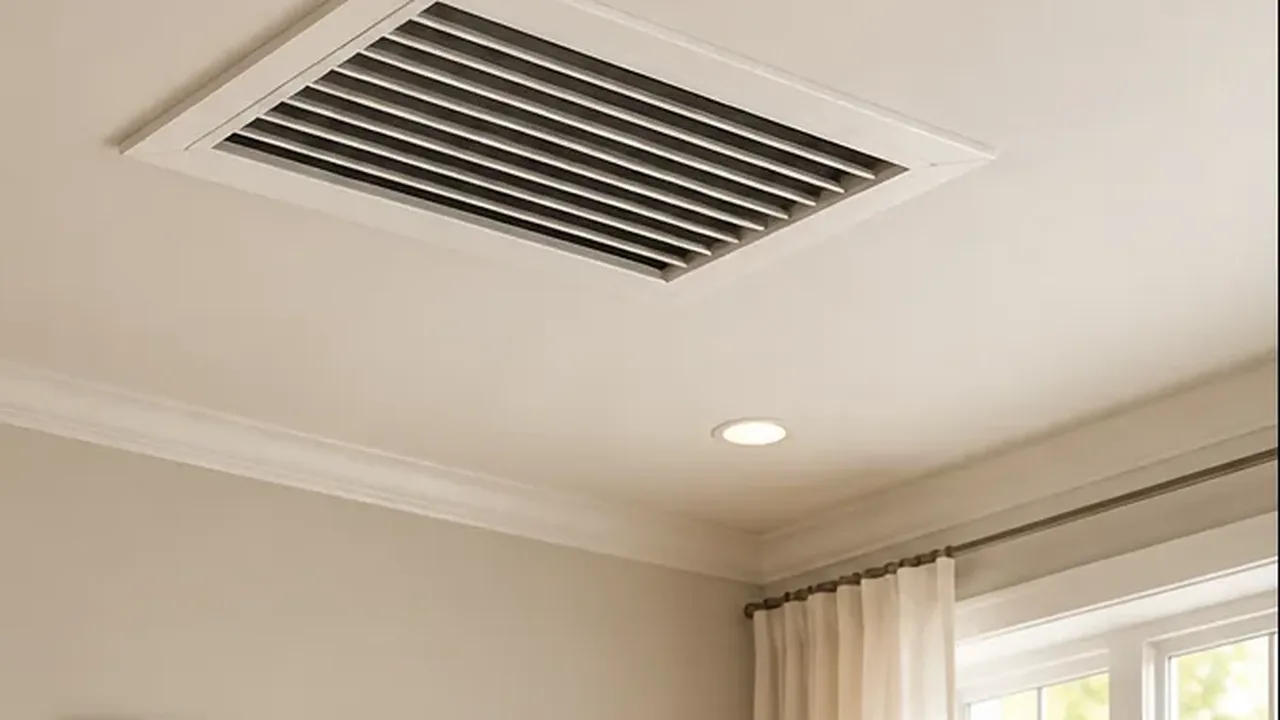
  • You can put the indoor unit completely out of sight. In a soffit, inside a closet or above the ceiling, the air handler goes where you don't see it. The only things you see in the room are the supply and return grilles.
  • The cabinet is very slim. The Thin-Air is 7⅞ inches tall, so it'll fit in some ceiling cavities and soffits that are too shallow for a standard ducted air handler to go into.
  • The multi-zone setup is flexible. As of October 2026 it is the only DIY mini split that lets you mix concealed duct, wall-mount and ceiling cassette units on one outdoor unit, with two or three indoor units per condenser.
  • In cold weather, it still heats. Every Thin-Air system is rated to heat down to −13°F outdoors.
  • The warranty works for DIY. Coverage is 5 years on parts and 7 years on the compressor, there is no registration cutoff, and installing it yourself does not void it.

What Is a DIY Concealed Duct Mini Split in 2026?

A concealed duct mini split is a heat pump system that uses an outdoor unit with a hidden indoor air handler. The air handler installs inside a ceiling cavity, attic or closet and delivers conditioned air through short duct runs to small supply grilles in each room. Indoor air handlers are hidden in ceilings in concealed duct systems, and they distribute air through small supply grilles rather than large wall-mounted panels.

A DIY mini split adds factory-charged line sets and quick-connect fittings to this setup. You connect the refrigerant lines, you run a communication wire between the indoor and outdoor parts, and you handle the basic electrical work. There's no brazing, no vacuum gauges and no refrigerant charging.

Concealed duct systems differ from wall mount and ceiling cassette heads in one critical way: nothing is visible except flush grilles. You might prefer concealed duct systems for their little impact on inside design. They can be particularly beneficial in historic homes where maintaining architectural integrity matters. They work well in homes lacking existing ductwork where adding traditional ducts would be hard to do.

DIY concealed duct systems can allow room-by-room temperature control. In a dual zone or multi zone setup, one outdoor condenser supplies multiple indoor units, and each one has its own thermostat and Wi-Fi control. A single Thin-Air handler can feed two or three rooms through short duct runs, so an 11,000 BTU unit can cover two small bedrooms from one hidden unit and help even out hot and cold spots.

Zone Air Thin-Air vs MRCOOL DIY: Who Really Does Concealed Duct DIY?

As of October 2026, Zone Air Thin-Air is the only DIY concealed ducted mini split system on the market: a manufactured concealed duct indoor unit, pre-charged R-454B line sets and a warranty that stays in force when you install it yourself.

Wall-mount indoor units, the OuttaSight ceiling cassette (a long, single-slot unit about 50 inches wide), and the DIY Hybrid Air Handler are what MRCOOL DIY focuses on. None of these is a low-profile concealed duct unit designed to fit inside a soffit. A ducted DIY option that supports upflow, downflow and horizontal positions, the MRCOOL Hybrid Air Handler has a painted galvanized steel cabinet that is 17.5 × 21 × 45 inches (24K) or 21 × 21 × 49 inches (36K), sized for a mechanical closet, not a 7⅞-inch ceiling void.

Concealed ducted mini splits can keep heating at low outdoor temperatures. Zone Air Thin-Air concealed units are rated for heating down to −13°F. That's the same floor as MRCOOL's standard DIY 5th Gen, which is rated to about −13°F, and 18° lower than MRCOOL's Easy Pro (5°F). Higher-tier MRCOOL DIY models are rated lower: its single-zone Hyper Heat wall units operate to −22°F, though they're wall units, not concealed ones. On the cooling side, Zone Air concealed systems rate 19–19.6 SEER2 single-zone and dual-zone and 22 SEER2 on the 3-zone. MRCOOL's own ducted option, the Hybrid Air Handler, has ratings of 19.4 SEER2 (24K) and 15.7 (36K).

Up to six zones from one outdoor condenser, mixing wall, cassette and hybrid handler styles, is what MRCOOL's DIY multi-zone systems can run. On one 27,000 BTU outdoor unit, Zone Air multi-zone systems run two or three indoor units, and as of October 2026 Zone Air is the only DIY mini split that lets you mix wall-mount, ceiling cassette and concealed ducted units on one outdoor unit. So a Thin-Air handler can serve the bedrooms while a wall unit or cassette handles the living room, all on the same condenser.

You'd want Zone Air Thin-Air when you want a completely hidden indoor unit, or a mix of hidden and visible units on one condenser. You'd want MRCOOL DIY when you need a hybrid air handler tied to full-size ductwork.

Key Parts: Air Handler, Line Set, Wire and Controls

Every DIY concealed duct mini split installation has the same core parts that go into it:

  • Outdoor condenser that is mounted on a concrete pad or on wall-mount brackets. That has the inverter compressor and fan inside it
  • Indoor air handler (concealed or hybrid), which is where the air gets cooled or heated
  • Pre-charged line set that carries R-454B between the outdoor unit and the indoor unit
  • Communication wire that connects the indoor and outdoor control boards
  • Condensate drain that moves moisture away from the air handler

Zone Air's Thin-Air concealed air handler stands out because of its ultra-slim construction: 27½ × 19¼ × 7⅞ inches on both the 9,500 and 11,000 BTU models, with rear or bottom return options, adjustable static pressure and short duct takeoffs. It can also take a fresh-air intake or connect to existing ducts. These units have variable-speed inverter technology, which ensures efficient heating and cooling performance by adjusting compressor speed to match the load rather than cycling on and off.

The other half of the story is Zone Air's line sets. Of the brands compared here, Zone Air is the only one that cuts your pre-charged line set to the exact length you measure, any whole foot from 5 to 75, and its 25, 33, 50 and 75 ft sets are each a single factory-sealed run with no field joint. MRCOOL sends out fixed 11.5, 16, 25, 35 and 50 ft Quick Connect sets, connects two sets with a coupler to go past 50 ft, and has you coil the excess behind the condenser.

MRCOOL DIY systems use pre-charged Quick Connect line sets, and its multi-zone line sets include a DIYPro communication cable. MRCOOL says "no special tools or training are necessary" to install its DIY heat pumps.

For controls, MRCOOL offers Wi-Fi connectivity with app support, Alexa and Google Assistant integration. The included remote control handles basic operation. Battery swaps for remote controls are a simple maintenance task. With a wired wall controller plus Wi-Fi app control for each zone, Zone Air concealed systems give you flexible control, and Zone Air supports Alexa and Google Home voice control with no paid app subscription.

Energy Efficiency, Cold-Climate Performance and Operating Costs

Energy efficiency in 2026 mini split systems is rated using SEER2, EER2 and HSPF2 test procedures, which test ducted equipment at higher external static pressure than the old SEER method did, closer to real duct conditions. The 5th Gen MRCOOL DIY series uses R-454B refrigerant and gets up to 23.9 SEER2 in some multi zone configurations. ENERGY STAR certification depends on the specific MRCOOL indoor/outdoor combination, so you'll want to verify it before you assume rebate eligibility.

Zone Air concealed duct models usually land around 19–19.6 SEER2. With wall heads, Zone Air reaches 24 SEER2 on its 230V single-zone units and its wall multi-zone systems. At 24 SEER2 on 230V, Zone Air is the highest-efficiency pre-charged quick-connect DIY system of the brands compared here (MRCOOL's best single-zone is 23.6, its best multi-zone 23.9).

For heating in colder climates, MRCOOL's higher-tier single-zone DIY models operate to −22°F. Heating down to −13°F, Zone Air Thin-Air concealed units cover most northern US markets. In hot climates it runs the other way: Zone Air is rated to cool in outdoor temperatures up to 131°F, while MRCOOL publishes 122°F.

Both brands' DIY systems cut energy waste through inverter compressor technology and multi zone control. Conditioning only occupied rooms rather than an entire home, combined with setback schedules via app controls, can cut kWh usage by a good amount during hot summers and cold winters alike, reducing the cost of cooling and heating by targeting specific zones.

Planning a DIY Concealed Duct Install

Proper installation is going to need thinking through space, access and duct design before any equipment gets sent to your door.

  • Load calculation: Measure the sq ft of each room and how much sun it gets. Zone Air rates the 9,500 BTU Thin-Air for 300–475 sq ft and the 11,000 BTU for 350–550 sq ft. MRCOOL rates its DIY 12K wall unit up to 550 sq ft and the 18K up to 800 sq ft. Oversizing burns energy. Undersizing creates cold spots. A sizing calculator is a good place to start.
  • Duct runs: Keep supply ducts from a concealed Thin-Air handler to 15 ft or less per run. Duct design is critical for proper airflow and energy efficiency in concealed systems. Zone Air concealed units support external static pressure of 0.1–0.4 inches WG. Overly tight ducts cause whistling and reduced output.
  • Condensate management: Zone Air concealed handlers include a built-in condensate pump that raises water up to 30 inches. Route drain lines to a safe discharge point with proper slope.
  • Electrical: Dedicate a 208–230V circuit. A single-zone Thin-Air system (9,500 or 11,000 BTU) needs a 15A double-pole breaker. Dual zone and 3-zone systems on the 27,000 BTU outdoor unit need 30A. Install a disconnect near the outdoor unit per NEC code.

Zone Air puts a first-time wall-mount install at 4–6 hours for two people. Concealed duct installations usually take 6–8 hours due to ceiling cuts and duct fabrication. Budget accordingly.

DIY Installation Workflow Step by Step

Designed for beginner installation, MRCOOL DIY systems and the Zone Air Thin-Air follow a similar easy installation sequence. Here's the general step-by-step order (our concealed duct install guide goes into more detail):

  1. Mount the indoor air handler. For concealed units, secure hanging rods to ceiling joists. For hybrid air handlers, it is positioned in a closet or mechanical room.
  2. Cut supply and return openings. Attach short insulated ducts to supply fittings and install flush grilles. Size return grilles big enough so you don't starve the unit for air.
  3. Run the pre-charged line set. The MRCOOL DIY system uses pre-charged Quick Connect line sets. Zone Air sends similarly sealed sets, cut to your measured length if you need it. Route both lines and the communication wire through the wall to the outdoor unit.
  4. Mount the outdoor condenser on a concrete pad or on brackets that mount to the wall. Leave clearance per the manual.
  5. The refrigerant circuit stays sealed throughout. Make quick-connect fittings. Hand-tighten, then torque to spec.
  6. Connect the condensate drain and check that the slope or pump operation is right.
  7. Wire the disconnect and connect to the breaker panel. Complete electrical. Many homeowners hire a licensed electrician for panel work even on a DIY system.
  8. Power on and commission. Check for leaks at connections, register Wi-Fi and app controls, and check temperature and airflow at every supply grille in cooling mode and heat mode.

MRCOOL DIY Hybrid Air Handler, an "Almost Concealed" Option

The MRCOOL DIY Hybrid Air Handler is MRCOOL's answer if you want whole-home comfort through traditional ducts rather than slim concealed units. It's not a concealed unit, but it keeps all equipment out of the living space.

Supporting multiple installation configurations, the MRCOOL DIY Hybrid Air Handler can be upflow, downflow or horizontal. It comes in two capacities, 24,000 and 36,000 BTU, and MRCOOL says it heats or cools up to 1,500 sq ft. Both are using a cabinet made of painted galvanized steel.

Including a self-diagnostics panel that displays error codes for troubleshooting, the DIY Hybrid Air Handler is easy to diagnose. Optional emergency heat kits up to 20 kW are adding backup for extreme cold, turning the unit into a flexible solution for large spaces that need reliable heat even when heat pump capacity drops.

Controls include the MRCOOL Smart Wi-Fi Thermostat (included) with touchscreen and mobile app control. It's one thermostat for one ducted zone, working as a traditional air handler running on a heat pump outdoor unit. MRCOOL also lets it share a DIY multi-zone condenser with wall or OuttaSight heads, so the ducted handler can cover the main floor while ductless heads take the problem rooms.

Compared to Zone Air Thin-Air, the hybrid handler is larger and goes in a closet or utility space rather than a shallow ceiling. But if you are replacing an old furnace or adding central air to a house with existing ductwork, it's a strong option that stays within the DIY install framework.

Maintenance, Troubleshooting and Warranty in DIY Installations

Routine maintenance includes cleaning filters and clearing condensate backups. For concealed handlers, access the washable filter through a ceiling panel. For hybrid units, open the filter rack. Vacuum return grilles quarterly. Inspect line set insulation annually for cracks or pest damage.

For troubleshooting, start with basics: verify breakers, check thermostat settings and review error codes. MRCOOL Hybrid air handlers display diagnostic codes on a built-in panel. Zone Air Thin-Air units have a self-diagnostic system that shows fault codes. Common codes flag frozen coils (airflow restriction), communication faults (loose wire), or drain overflow.

Refrigerant leaks need professional repair services. Any work that breaks the sealed refrigerant circuit demands EPA Section 608 certification, a vacuum pump and gauges. A licensed HVAC technician should handle compressor faults, electrical shorts and refrigerant issues even on DIY systems. Unauthorized modifications can void warranty coverage from either brand.

Warranty norms in 2026: Zone Air offers 5-year parts and 7-year compressor coverage with no registration deadline, and installing it yourself doesn't void it as long as you follow the manual and local codes. MRCOOL's DIY 5th Gen carries the same headline term, 5-year parts and 7-year compressor, with no registration needed. Zone Air also takes returns within 30 days of delivery on uninstalled units, ships free to the lower 48, and does final assembly, testing and inspection in the USA. Professional help is recommended for any repair beyond filter cleaning, drain clearing or thermostat adjustment.

Is a DIY Concealed Duct Mini Split Right for You?

A concealed duct install needs you to cut ceiling openings, hang an air handler from joists, and make short duct runs.

Self-assess honestly. If you're comfortable with a drill, a hole saw and basic carpentry, a Zone Air Thin-Air concealed system is within reach.

Here's when each brand and style makes the most sense:

  • Best for homes under construction, gut renovations or top-floor updates where ceiling access is open and the look of the room demands hidden grilles only, Zone Air Thin-Air concealed duct is the way to go. It's the pick when you want a DIY system with no visible indoor unit, or a mix of concealed, wall and cassette units on one condenser, with heating down to −13°F.
  • Best for retrofits where a visible indoor unit is acceptable and for homes needing four to six zones, MRCOOL DIY wall mount or ceiling cassette is the choice.
  • Best for homes with existing ductwork or where a central handler in a closet can serve the whole house through ducts, the MRCOOL DIY hybrid air handler gives you the feel of a traditional HVAC system with heat pump efficiency.

Compare total project cost: equipment, permits, electrical and possible carpentry against full-service contractor quotes. As of October 2026, a single-zone Thin-Air system lists at $2,069.99 (9,500 BTU) or $2,469.99 (11,000 BTU), a dual-zone concealed system at $3,639.99 and a 3-zone at $4,209.99, with pre-charged line sets cut to the length each room needs. Get a contractor quote for the same ducted job to see what doing it yourself saves. A wall-mount system from either brand is the faster install.

The market for DIY mini split systems keeps expanding, and both brands send directly to you. Whether you shop for a Zone Air concealed unit or an MRCOOL DIY multi zone package, the ability to connect factory-sealed refrigerant lines yourself, mount the outdoor condenser and control every room from your phone makes 2026 the most accessible year yet for homeowner installation of zoned climate control.

Specs and warranty terms are manufacturer-published as of October 2026, subject to change. Verify before you buy. MRCOOL® is a trademark of its owner. This article is not affiliated with or endorsed by MRCOOL.

Keep Reading

Related guides

More on hidden ducted systems you can install yourself.

Ductless4Less Team

About this guide

We cross-check every SEER2, warranty, and price claim against AHRI-certified and manufacturer documentation. The goal is simple: help homeowners buy and install the right ductless mini split for the best possible value, without the salesy noise.

Plan your concealed duct system

Size every room with the free calculator, then compare multi-zone systems.