
Ductless mini splits for less · 2026 buyer's guides & free sizing helpSize my system →

Best Concealed Duct Multi Zone Mini Splits

A concealed duct multi zone mini split can hook one outdoor unit to several indoor units that hide above ceilings or inside soffits. Each indoor unit pushes conditioned air through short supply ducts to nearby rooms, with just grilles showing at the ceiling line. You might pick this over wall cassettes because there's no visible indoor unit taking over the room, and over central HVAC because mini splits connect outdoor and indoor units with refrigerant lines instead of big trunk ducts.

Concealed duct multi-zone mini splits give you the zoning flexibility of ductless setups combined with the kind of distribution you get from central ducted systems. But here's the catch: traditional multi zone mini split brands from Daikin, Mitsubishi and Fujitsu need professional installation. A licensed contractor can do the refrigerant work, the vacuum evacuation and the commissioning. These aren't DIY systems.

Zone Air's Thin-Air concealed ducted line is the only DIY concealed ducted mini split system on the market as of October 2026, and it's our pick for a whole-home DIY project. Its pre-charged, quick-connect line sets mean you don't need a vacuum pump, refrigerant gauges or EPA 608 certification.

How they compare at a glance:

  • Daikin, Mitsubishi, Fujitsu - pro-installed, broad product lines, higher capacity range, contractor network needed
  • Zone Air - built for you, concealed duct heat pumps designed for DIY installation, sold direct from the manufacturer

Key benefits of concealed duct multi zone mini splits:

  • Hidden indoor units behind ceiling drywall and grilles
  • Zoning for multiple rooms with independent temperature control
  • Energy savings from inverter heat pumps (up to 30% vs older equipment)
  • Simple install steps for Zone Air. No refrigerant handling needed

What Is a Concealed Duct Multi Zone Mini Split?

A concealed duct multi zone mini split system has an inverter heat pump outdoor unit connected to multiple concealed indoor units through refrigerant lines. Each indoor unit sits in a ceiling cavity, crawlspace or attic, delivering air through flush grilles. Short supply ducts branch from each handler to nearby rooms, while return air flows back through a separate grille.

This differs from standard ductless mini splits, where indoor units usually mount high on walls or ceilings in plain sight. It also differs from full-size central ducted systems that rely on big trunk lines and a furnace or air handler in a mechanical closet. Concealed duct systems use insulated ducts to move air through ceiling or wall grilles, but those ducts are short - usually under 15 to 25 feet per branch.

Indoor units can be wall, ceiling or floor-mounted in ductless configurations. But in a concealed duct setup, these indoor units hide inside ceilings, crawlspaces or attics. Ducted mini-split systems are often installed in ceilings, attics or soffits, with only grilles visible to occupants.

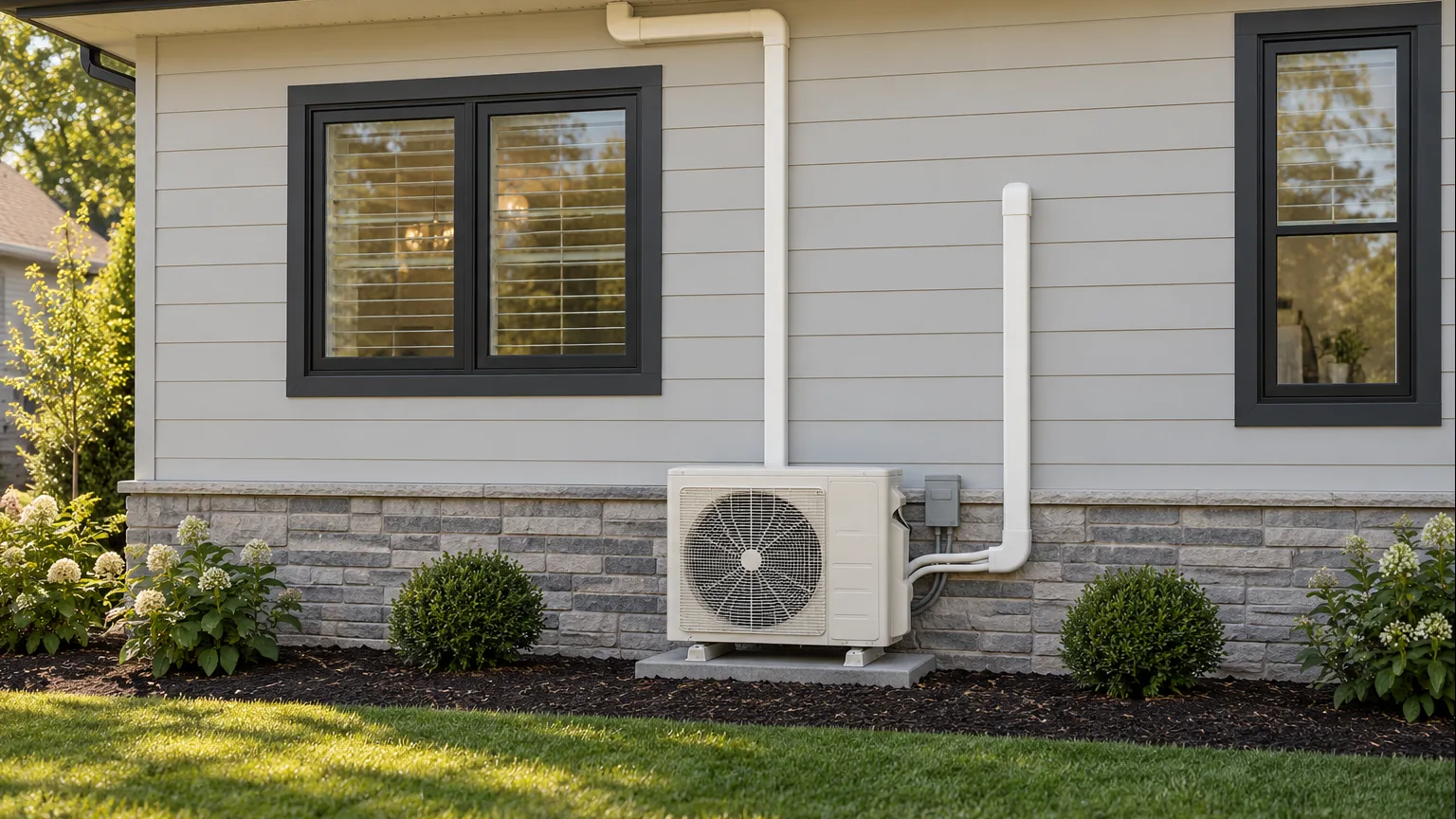
In a multi zone configuration, one outdoor unit serves two to eight indoor units. Concealed duct systems can accommodate multiple indoor units connected to a single outdoor unit for zoning, giving each room or group of rooms its own temperature set point. Think of it this way: outdoor unit on a concrete pad, refrigerant lines through the wall, concealed indoor unit above the hallway, short ducts branching to two bedrooms.

Concealed Duct vs Wall-Mounted Mini Splits

In homes built after 2000, wall-mounted mini splits are the most common split system upgrade. They work well and they're simple: you mount the indoor unit on a wall, drill a three-inch hole and run the line set outside. But that white rectangular box on the wall is hard to miss. Concealed duct multi-zone systems are often used in custom homes and nice inside spaces where looks matter as much as comfort.

Aesthetic differences:

  • Concealed duct units are hidden behind drywall with only supply and return grilles visible
  • Wall-mounted units sit in plain sight - functional but not invisible

Airflow and comfort:

  • A single concealed duct indoor unit can serve two to four nearby rooms through branched ducts
  • A wall-mounted unit mainly conditions one room it's installed in

Noise comparison:

  • Concealed duct indoor units are often seen as quieter since the handler sits in a ceiling cavity - Zone Air's Thin-Air units run 39 dB(A) on low fan (43 on turbo), Mitsubishi's PEAD 9K ducted unit runs 25 dB(A) on low fan (31 on high), and Daikin's FDMA ducted units are 32–40 dB(A) at the quiet fan setting, so the pro units are quieter on paper
  • Wall units produce similar decibel levels but the sound source is in the room with you

Installation complexity:

  • Concealed units need ceiling access, framing space and short duct runs
  • Installation of concealed duct systems is more complex than standard mini-split systems
  • Wall units need only a wall penetration - mini splits can be simpler to install than ducted systems
  • Concealed duct systems provide flexibility for retrofitting in renovations where running full-size ducts is difficult

Mini splits lose less heat than traditional ducted systems since the duct runs are short, though ductwork can lose heat if it's not insulated right, making ductless mini splits technically more efficient in that narrow comparison.

Why Go Multi Zone? Zoning, Comfort and Energy Savings

Zoning means each indoor unit - or each group of rooms fed by a concealed duct handler - gets its own temperature control. Each indoor unit in a multi-zone system can have its own temperature setting, and each concealed ducted unit connects to a single outdoor compressor but operates independently.

Multi zone mini split systems avoid heating and cooling unused rooms, unlike many central systems from the 1990s and early 2000s that send conditioned air into every space at once. Mini-split systems let you set your own comfort in multiple areas, so the guest bedroom stays at 68°F while the living room runs at 72°F. Each indoor unit can be controlled independently for comfort.

Primary benefits of multi zone zoning:

  • There is personal comfort in bedrooms vs living spaces
  • Mini splits can dehumidify air continuously for better comfort and humidity control
  • Reduced runtime in unoccupied rooms
  • Measurable energy savings - some homeowners report 30% or more vs older equipment
  • Mini splits maintain consistent temperatures year-round in each room
  • Mini splits can dehumidify air continuously during operation, reducing that sticky feeling in summer

Example layout: Take a three-bedroom, 1,800 sq ft house built in 2012. You could set up four zones: one concealed duct handler above the hallway serving two bedrooms, a second handler for the primary bedroom, a third for the open-plan living and dining area, and a fourth for a home office. Inverter heat pumps maintain steady temperatures instead of the frequent on/off cycling you get with older furnaces and single-stage AC units.

Daikin, Mitsubishi and Fujitsu Concealed Duct Systems

Daikin, Mitsubishi Electric and Fujitsu are the three big mini split brands for pro-installed concealed duct systems in North America. Each company has a collection of ducted indoor units across a wide capacity range - usually 7,000 to 24,000 BTU per indoor unit on multi-zone systems, with multi-zone outdoor units ranging from about 18,000 to 60,000 BTU.

Daikin offers the Aurora FDMA concealed ducted line with SEER2 up to 18.3 and HSPF2 up to 9.2 on the 24K pairing, heating rated to −13°F. The ability to handle external static pressure up to 0.6 in. W.G. for longer duct runs. Its MXT and MXM multi-zone outdoor units take up to five indoor units, with the FDMA ducted head on the compatible list. The Daikin VRV IV S-series is rated up to 23 SEER2, but it's a 3 to 5 ton light-commercial system sold into larger homes. Daikin's ductless warranty runs 12 years on all parts, compressor included, when the unit is registered within 60 days of installation, and 5 years if it's not. So what about units bought online? They're excluded unless a licensed dealer installs them. Daikin is known for its controls and smart thermostat integration.

Mitsubishi Electric's PEAD mid-static ducted units reach up to 21.7 SEER2 and up to 11.5 HSPF2 depending on the pairing, with external static pressure settings from 0.14 to 0.60 in. W.G., and its MXZ multi-zone outdoor units connect up to eight ducted or ductless indoor units. The Hyper-Heating ducted pairings hold 100% of rated heating capacity at 5°F and run to −13°F. Mitsubishi's warranty is 5 years parts and 7 years compressor as the base term, 10 years on both with registration within 90 days, and 12 years only when a Diamond Contractor installs and registers the system. A licensed contractor must do the install for any coverage at all. Indoor sound on the 9K PEAD runs 25 dB(A) on low fan. Mitsubishi is known for its contractor network and cold climate performance.

Fujitsu builds the AIRSTAGE line (formerly Halcyon) with strong cold-climate operation. Its Centauri medium-static duct unit rates up to 19.1 SEER2 and 10.5 HSPF2, handles 0.12 to 0.80 in. W.G. of static pressure, runs as low as 24 dB(A) indoors, and heats to −5°F with the standard outdoor unit or −15°F with the XLTH outdoor unit. Fujitsu's published tables show its Orion XLTH 9K wall unit delivering 15,400 BTU/h at 5°F against a 12,000 BTU/h rating. The Altair 500 wall series rates up to 26 SEER2, and Fujitsu's top wall-mount, the Orion XLTH+, reaches 33.5 SEER2. Fujitsu's standard warranty is 5 years parts and 7 years compressor, 10 years on both with a licensed-contractor install and registration within 60 days, and 12 years with an Elite Contractor. Systems bought from an online retailer are not covered.

For context, other brands like LG also compete here - the LG Art Cool Deluxe wall-mount series rates 25.5 SEER2 on the 12K and 27.0 on the 9K. And Mirage, a budget brand, puts out 10 years on the compressor, 4 years on the outdoor control board, and 2 years on other parts, with a licensed installer needed. No other brand from this group, however, offers a DIY concealed duct path.

These systems aren't designed for DIY. A contractor handles refrigerant work, evacuation and commissioning, and all three warranties need a licensed contractor install. Always compare official specs (SEER2, HSPF2, sound ratings) on each manufacturer's website when you're working with an installer.

The Only DIY Concealed Duct Mini Split from Zone Air

Zone Air's Thin-Air line is the only DIY concealed ducted mini split system on the market as of October 2026, built for homeowners who want to install their own ducted system without hiring a contractor for refrigerant work. Daikin, Mitsubishi and Fujitsu don't sell one, and neither does any other DIY brand we know of: the other pre-charged quick-connect lines stop at wall-mount and ceiling cassette heads (one sells a central air handler, which is ducted but not a concealed room unit).

What makes Zone Air different:

  • Factory-sealed, pre-charged line sets bought per zone - no vacuum pump, no flaring, no EPA 608 certification needed
  • Written DIY manual, install video library and live technical support 8 AM–6 PM MT from the manufacturer
  • Dual-zone systems (e.g., 22,000 BTU connected capacity with two 11,000 BTU handlers, $4,039.99 as of October 2026) and three-zone systems ($4,809.99), both on the same 27,000 BTU outdoor unit
  • Single-zone concealed handlers of 9,500 and 11,000 BTU, rated for up to 475 and 550 sq ft per head
  • Heating operation is rated down to −13°F and cooling is rated for outdoor temperatures up to 131°F
  • Warranty: 5 years parts, 7 years compressor, no registration deadline - DIY installation does not void the warranty
  • 30-day returns on uninstalled units (25% restocking fee, RMA needed) and free shipping to the lower 48 states

Concealed duct systems use variable-speed inverter compressors for energy efficiency, and Zone Air is no exception. Inverter technology in concealed duct systems lets you have variable-speed operation, which helps energy efficiency across the range of operation. Units feature washable filters, a rear or bottom return, and adjustable external static pressure from 0.1 to 0.4 in. W.G., per the spec sheet.

Zone Air concealed duct DIY systems use R-454B refrigerant, which matches the industry's shift toward lower-GWP options. The "Thin-Air" handlers are 7⅞ inches tall, so they fit into tight attic or soffit spaces where stock construction may limit ceiling height, and each one can feed two or three rooms through short branch ducts, take a fresh-air intake or tie into existing ductwork. Efficiency ratings land at 19–22 SEER2 depending on the specific model and configuration, which is below the best pro ducted units. While Daikin, Mitsubishi and Fujitsu are the big names in the contractor market, Zone Air is the one brand going after you if you want a hidden, ducted DIY alternative for multiple rooms.

What sets Zone Air apart from the other DIY mini split brands:

  • Of the brands compared here, Zone Air is the only one that cuts your pre-charged line set to the exact length you measure, any whole foot from 5 to 75 (as of October 2026). The 25 to 75 ft sets are each one continuous factory-sealed run with no field coupler.
  • It's the only DIY mini split that lets you mix wall-mount, ceiling cassette and concealed ducted units on one outdoor unit (as of October 2026). One outdoor unit, the right indoor unit for every room, and you can install it yourself.
  • Its 230V wall-mount systems rate 24 SEER2, the highest of any pre-charged quick-connect DIY system we know of as of October 2026. The concealed Thin-Air heads give up some of that (19–22 SEER2) for the hidden install.
  • Final assembly, testing and inspection in the USA from globally-sourced components.

The honest tradeoffs: returns carry a 25% restocking fee, multi-zone systems ship without line sets (you buy one per zone). The pro brands above put out higher efficiency numbers on their ducted units.

Key Features of Concealed Duct Mini Splits

Whether you're looking at Daikin, Mitsubishi, Fujitsu or Zone Air systems, this buyer's checklist can help you compare what matters.

FeatureWhat to CheckTypical Range
SEER2 (cooling efficiency)Higher is better; affects rebate eligibility18–26+ for quality units installed after 2023
HSPF2 (heating efficiency)Critical in cold climates9–11+
External static pressureMust handle your duct layout0.4 in. W.G. (Zone Air) to 0.6–0.8 (pro units)
Indoor noiseEspecially for bedrooms24–39 dB(A) on low fan
Outdoor noiseNeighbor proximity45–55 dB(A)
Voltage/phaseMatch your electrical service208/230V, single phase
Low-temp heatingFor cold climates−13°F (Zone Air, Daikin FDMA, Mitsubishi H2i ducted); Fujitsu −5°F standard or −15°F XLTH
WarrantyParts and compressor5–12 years depending on brand, registration, and who installs it

Most mini splits use inverter technology for energy savings, so confirm the system you buy is inverter-driven. Proper sizing is critical for mini-split system performance - an oversized unit short-cycles and wastes power, while an undersized unit runs constantly. Mini-splits need proper sizing to avoid running poorly. Look for smart thermostat compatibility and Wi-Fi app integration for remote adjust and scheduling.

Planning a Multi Zone Concealed Duct Layout

Before you buy equipment, plan your layout on paper. This step is the same whether you're going with a contractor or tackling a Zone Air DIY install.

Grouping strategies:

  • Use one concealed indoor unit above a hallway ceiling to serve two adjacent bedrooms
  • One unit can go to an open-plan living, dining and kitchen space
  • Give the primary bedroom its own zone for quiet operation

For homes between 1,200 and 2,500 sq ft, you'll usually need 3 to 6 zones. Concealed duct systems usually need a Manual J load calculation for system design - this ensures each zone gets the right BTU capacity. Many online calculators can approximate loads, but a proper Manual J accounts for insulation, window area, orientation and climate zone.

Short and flexible duct runs are critical for installing concealed duct systems effectively. Duct runs must be sealed and insulated right to maintain airflow static pressure. Short runs of supply and return duct layouts must keep static pressure within manufacturers' limits - Zone Air lists a maximum of 15 feet per supply run, and the pro brands put out their own limits in the installation manual.

You need proper planning to ensure enough service access space for the indoor air handler. Position return grilles in the center (often in the hallway near the handler) and supply registers at the ceiling perimeter of each room to avoid drafts and hot or cold spots. So what about new construction? You have open joist bays. In retrofit work, you'll rely on attic space, drop ceilings or soffit chases to route ducts.

Pro-Installed vs Zone Air DIY Concealed Duct Systems

Installing a concealed duct system takes planning, ductwork and refrigerant line installation - but the work flow differs a lot between pro-installed brands and Zone Air.

Pro-installed workflow (Daikin, Mitsubishi, Fujitsu):

  1. Site visit and load calculation
  2. System design and equipment selection
  3. Permit application
  4. Mounting outdoor and indoor units
  5. Running and flaring refrigerant line sets
  6. Pressure testing with nitrogen is an important step in the installation process
  7. Vacuum evacuation of the line set
  8. Refrigerant charging and leak check
  9. Ductwork fabrication and connection
  10. Electrical wiring and commissioning

Zone Air DIY work flow:

  1. Plan zones and draw your duct layout
  2. Mount indoor handlers in ceiling cavity with room for service access
  3. Connect pre-charged, quick-connect line sets (no vacuum pump, no flaring)
  4. Short branch ducts can run to supply registers
  5. Install return grilles
  6. Wire per manual instructions (208/230V dedicated circuit. The 27K multi-zone outdoor unit takes a 30A double-pole breaker)
  7. Follow prescribed start-up steps

Installation involves securing indoor units with room for service access and making accurate pitch for drainage. Condensate drainage management is critical in concealed duct installations to prevent water damage - Zone Air units include a built-in condensate pump, but verify drainage routing slopes away from finished spaces.

On the DIY side, Zone Air's dual-zone concealed system lists at $4,039.99 and the three-zone at $4,809.99 as of October 2026, plus a line set per zone (16 ft from $229.99), duct materials, and an electrician for the panel connection. Pro-installed concealed duct multi-zone systems from the other brands cost well above that once design, labor and commissioning are included, so get local quotes.

Even on a DIY project, call in a licensed electrician for the panel connection and check with your local inspector on permit requirements under the code edition your area uses. Cutting corners on leak checks or electrical safety can void equipment warranties and cause failures.

Zone Air addresses refrigerant handling concerns through its sealed, pre-charged system design, but some areas may still have specific rules. Always verify local regulations before starting.

Outdoor Unit Siting and Installation Tips

Where you put the outdoor unit affects noise, performance and longevity for any mini split brand. Getting this right isn't optional - it's the foundation.

Practical guidelines:

  • Place the outdoor unit on a level concrete pad or wall brackets with manufacturer-specified clearances (usually 12–24 inches on sides, 36+ inches in front)
  • Avoid roof locations for DIY projects - the weight, access and vibration create unnecessary risk
  • Keep line set lengths within limits: Zone Air's pre-charged sets run up to 75 feet with a 30-foot vertical lift limit, and the pro brands put out their own limits
  • Avoid placing the outdoor condenser near bedroom windows - outdoor units run 45–55 dB(A)

Cold climate considerations:

Standard mini-splits are often rated to about 5°F. Zone Air, Daikin FDMA and Mitsubishi Hyper-Heating ducted systems are rated to −13°F, and Fujitsu's XLTH outdoor units go to −15°F. Older mini-splits may struggle in freezing conditions, so confirm your specific model's low-temperature rating. In areas where winter temperatures routinely drop below 20°F, use a raised stand (12–18 inches) for snow clearance and consider a wind baffle.

Ensure proper condensate drainage away from your home's foundation around the outdoor unit, especially during cooling season when the unit produces significant condensation.

Operating Costs and Long-Term Savings

Modern mini split heat pumps can dramatically reduce annual heating and cooling costs compared to electric resistance baseboard heaters or older furnaces and central AC. The reason is simple: heat pumps move heat rather than generating it, producing 2–4 units of heating energy for every unit of electricity consumed.

That ratio is called the coefficient of performance (COP). A COP of 3.0 means the system delivers three watts of heat for every watt of electricity. HSPF2 numbers on Daikin, Mitsubishi, Fujitsu and Zone Air spec sheets reflect this across an entire heating season - an HSPF2 of 10 translates to about a COP of 2.9 at seasonal average.

Example: A home replacing electric baseboard heaters with a concealed duct multi zone mini split can see large heating savings, because the heat pump delivers two to four units of heat per unit of electricity where baseboard delivers one. The actual dollar figure depends on your climate, your utility rate and how many rooms you stop conditioning when they're empty, so run your own numbers from last winter's bills. You can save energy by conditioning only occupied rooms instead of the whole house.

Zoning and set-back schedules further improve energy savings. A thermostat schedule that drops empty bedrooms by 5°F during work hours reduces runtime a lot. Most mini split systems support programmable schedules through wired controllers, Wi-Fi apps or integration with a smart thermostat platform.

Maintenance that keeps efficiency up:

  • Clean or replace filters every 1–3 months
  • Clear debris from the outdoor coil each season
  • Verify condensate drainage annually
  • Schedule a professional checkup every 2–3 years to keep performance up over a 10–15 year lifespan

Pro Brands vs Zone Air DIY

Matching your system choice to your project type, budget and skill level is the most important decision in this process. Here's when each path makes sense.

Choose Daikin, Mitsubishi or Fujitsu when:

  • You have a larger custom house, complex multi-story layout or commercial space
  • You want a contractor to design, install and service everything - including availability for warranty claims
  • You need capacities above 24,000 BTU per indoor unit or long, complex duct runs with high static pressure
  • You're willing to pay the highest price for premium performance and a local service relationship

Choose Zone Air when:

  • You're a capable DIY homeowner with attic or crawlspace access
  • Your house is small to mid-sized (about 1,000–2,500 sq ft)
  • You want a concealed duct system without contractor markups
  • Your budget matters, and you have the time and ability to follow detailed instructions
  • You want a hidden, ducted solution - not a wall-mounted DIY kit that is neither concealed nor ducted

Zone Air is the go-to option for anyone specifically seeking a concealed duct DIY mini split system, and if one room would do better with a wall unit or a ceiling cassette, the same 27K outdoor unit can carry it. You can even combine approaches: a Zone Air DIY system for main living areas and a pro-installed unit from Mitsubishi or Daikin in an addition or detached shop.

Factor in local labor rates, available rebate plans, your money situation and personal time when deciding between a pro install and a DIY approach. Limited stock or availability of certain models in your area may also influence timing.

How to Move Forward with a Concealed Duct Multi Zone Mini Split

Concealed duct multi zone mini splits deliver clean looks, comfort in individual rooms and strong energy efficiency from modern heat pumps - all without the construction headaches of traditional ductwork. Whether you're looking at a pro brand or a DIY path, here's your roadmap.

Step-by-step action plan:

  1. Assess your home - measure room sizes, check attic or ceiling cavity access, note electrical panel capacity
  2. Sketch potential zones - group rooms in a logical way, aim for 3–6 zones in a typical house
  3. Run a load calculation - Manual J or a reputable online calculator to determine BTU needs per zone
  4. Decide: DIY vs contractor - honest assessment of your skills, time and budget
  5. Gather options - put together a comparison list of Daikin, Mitsubishi, Fujitsu and Zone Air solutions with capacities, SEER2/HSPF2, warranty lengths and installation approach
  6. Plan installation timing - coordinate with electricians, inspectors or your own schedule

If you're leaning toward DIY, start by looking over Zone Air's concealed duct product documentation and its free sizing calculator. Its pre-charged line sets and step-by-step support are designed for exactly this kind of upgrade.

Before making major HVAC changes - especially in homes built before 2005 - check with your local code officials or an energy auditor. They can flag insulation gaps, electrical panel limitations or permit requirements you don't want to miss.

As of October 2026, Zone Air stays the only DIY concealed ducted mini split system on the market. It's our pick for one. If you want hidden comfort, room-by-room control and a simple installation path that doesn't need a contractor's license, it's the place to start your buy. Grab the spec sheets, draw your zones, and get moving.

FAQ

Concealed Duct Multi Zone Mini Split FAQ

One outdoor heat pump connected by refrigerant lines to two or more slim indoor air handlers hidden above ceilings, in soffits or in an attic. Each handler feeds one to three nearby rooms through short insulated ducts, so the only thing you see in the room is a supply grille and a return grille, and each zone keeps its own thermostat.
Only with Zone Air as of October 2026. Its Thin-Air concealed ducted units ship with factory-sealed, pre-charged quick-connect line sets, so there is no vacuum pump, gauge set or EPA 608 work. Daikin, Mitsubishi and Fujitsu ducted systems are flare systems that a licensed contractor evacuates and charges, and all three warranties require a contractor install.
Daikin (Aurora FDMA heads on MXT and MXM outdoor units, up to five indoor units), Mitsubishi Electric (PEAD and SEZ ducted heads on MXZ outdoor units, up to eight indoor units), Fujitsu AIRSTAGE (Centauri medium-static and slim duct heads) and Zone Air (Thin-Air 9.5K and 11K heads, two or three on one 27,000 BTU outdoor unit, mixable with wall-mount and ceiling cassette units).
Quieter than a wall unit in the room, because the handler sits in the ceiling cavity. Published low-fan sound levels: Mitsubishi PEAD 9K 25 dB(A), Fujitsu Centauri as low as 24 dB(A), Daikin FDMA 32 to 40 dB(A), Zone Air Thin-Air 39 dB(A) on low and 43 on turbo.
Zone Air, Daikin FDMA and Mitsubishi Hyper-Heating ducted pairings are rated to −13°F, with Mitsubishi holding 100% of rated capacity at 5°F. Fujitsu's Centauri ducted unit heats to −5°F with the standard outdoor unit or −15°F with the XLTH outdoor unit. Standard-tier pro systems often stop around 5°F.
Zone Air's dual-zone concealed system lists at $4,039.99 and its three-zone at $4,809.99 as of October 2026, plus a pre-charged line set per zone (16 ft from $229.99), duct materials and an electrician for the panel connection. Pro-installed Daikin, Mitsubishi and Fujitsu systems are quoted installed, with design, labor and commissioning on top of the equipment, so get local quotes.
Not for Zone Air: the refrigerant stays sealed in the factory-charged line set and the quick-connect fittings torque down with a wrench. Every pro-brand ducted system uses flared copper that the installer pressure-tests with nitrogen and pulls into a vacuum before charging.
Zone Air Thin-Air units adjust from 0.1 to 0.4 in. W.G., which is why Zone Air limits each supply run to 15 feet. Daikin FDMA goes to 0.6 in. W.G., Mitsubishi PEAD has five settings from 0.14 to 0.60, and Fujitsu Centauri runs 0.12 to 0.80, so the pro units can push air through longer duct runs.
Specs and warranty terms are manufacturer-published as of October 2026, subject to change. Verify before you buy. Ductless4Less is not affiliated with or endorsed by Zone Air, Daikin, Mitsubishi Electric, Fujitsu, LG or Mirage; brand names are trademarks of their respective owners.
Sources & Methodology

Where our data comes from

Efficiency, electrical, line set and warranty figures are the manufacturers' published specs, manuals and warranty documents, checked in October 2026; retail prices are the listings on the dates given.

Keep Reading

Related guides

Compare pro and DIY multi-zone systems, then size every room.

Avery Lang

Lead Reviewer, Ductless4Less

Avery leads a small team of hands-on DIY installers who cross-check every SEER2, warranty, and price claim against AHRI-certified and manufacturer documentation. The goal is simple: help homeowners buy and install the right ductless mini split for the best possible value, without the salesy noise.

Plan your concealed duct system

Size every room with the free calculator, then compare multi-zone systems.