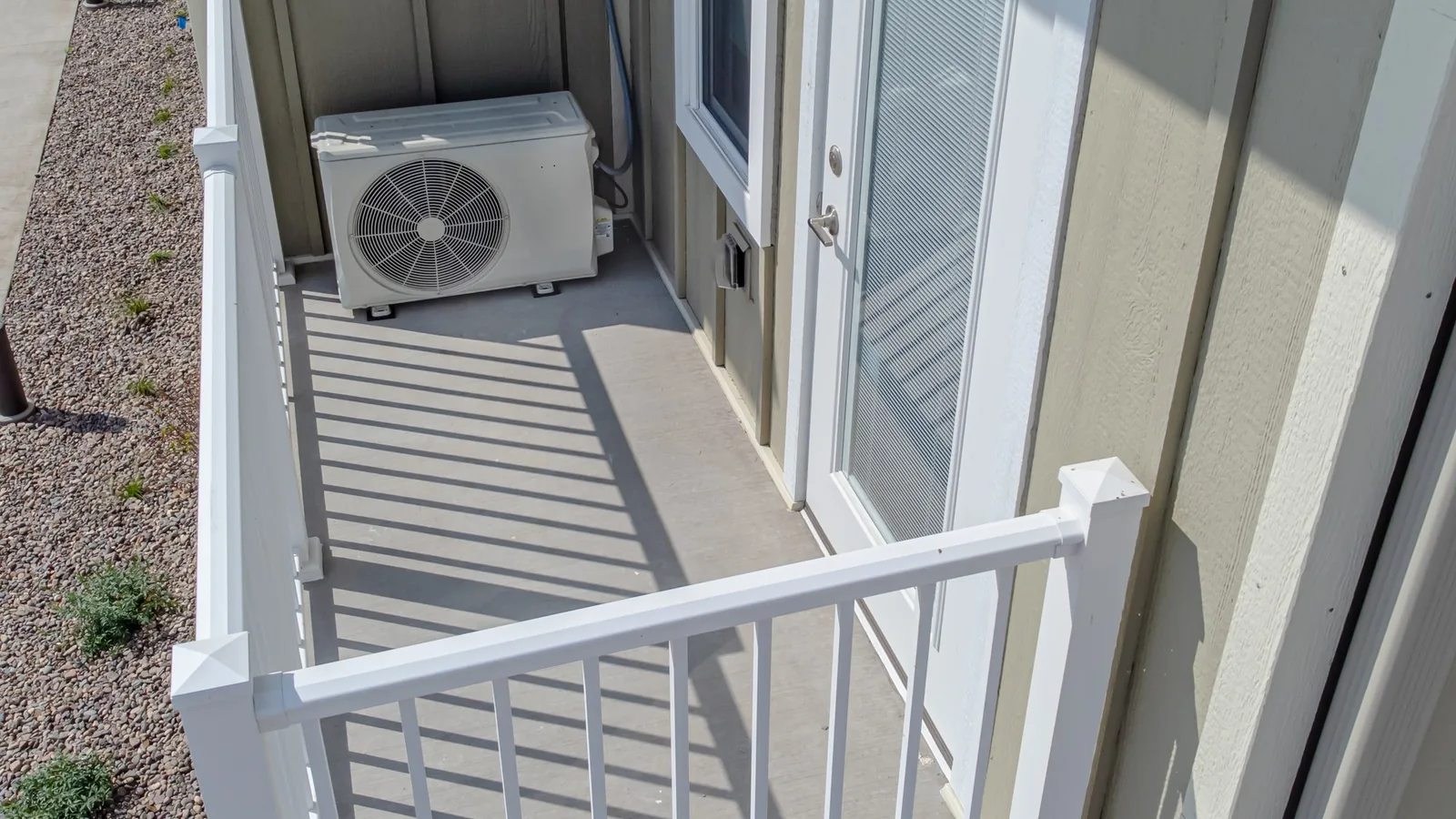
What to Look For in a 115V DIY Mini Split (9K–12K BTU)
Not all 115V DIY minis are equal. Efficiency ratings, install method, line set design, and cold-climate performance drive real-world comfort and total cost of ownership. Here's what matters most.
Voltage, Amps and Circuit Type
A 115V mini split system uses standard household voltage in the U.S., which means 115V systems avoid needing a heavy 240V circuit. A dedicated circuit is required for 115V mini split installations to meet electrical codes.
-
Zone Air 9K and 12K 115V: A dedicated 15A single-pole breaker, with a plug-in option where code allows it.
-
MRCOOL DIY 9K and 12K 115V: Hardwired. Minimum circuit ampacity 18A, maximum 20A breaker.
At this BTU range, 115V and 230V give you about the same level of comfort. The trade-off is that Zone Air's 115V models run at 23 SEER2, while the 230V models run at 24 SEER2, so if you've already got 230V available you might pick up a small efficiency edge.
BTU Capacity and Room Size Match
Proper sizing prevents wasted energy and poor humidity control:
-
9,000 BTU: Best for about 250–400 sq ft with standard 8 ft ceilings and reasonable insulation.
-
12,000 BTU: Best for roughly 400–550 sq ft, or smaller rooms with high ceilings, lots of glass, or weak insulation.
Real load depends on insulation quality, window area, ceiling height, climate zone and air leakage. Zone Air's live technical support team (8 AM–6 PM MT) can help interpret borderline situations.
Efficiency Ratings (SEER2, HSPF2)
SEER2 is the measure of how efficient the cooling is over the season, and HSPF2 is the measure of how efficient the heating is over the season. Higher numbers mean your energy bills will be lower as time goes on. Modern inverter-driven mini splits typically achieve 20+ SEER2 efficiency ratings, and ductless heat pumps avoid energy loss from ducts, so even a modest-sized unit can beat central forced-air systems in a single zone.
-
Top tier (DIY pre-charged): The Zone Air 115V comes in at 23 SEER2. With the MRCOOL DIY 5th Gen 115V, you are looking at 23.5–23.6 SEER2 / 10.2–11.5 HSPF2. As for MRCOOL DIY single-zone systems, the top rating you will find is 23.6 SEER2.
-
Best-in-class (230V): Zone Air leads the brands compared here at 24 SEER2 on 230V models (MRCOOL's best single-zone is 23.6).
-
Standard non-DIY minis: Typically 18–20 SEER2, requiring HVAC tools and a licensed technician.
Both Zone Air and MRCOOL sit in the top efficiency tier, and they are well above window units and electric baseboards when it comes to efficiency.
Pre-Charged Quick-Connect vs. Flare & Vacuum Methods
The defining feature of a true DIY installation is the pre-charged quick-connect line set. MRCOOL DIY systems use pre-charged Quick Connect line sets, and so does Zone Air, with no vacuum pump, no gauge set and no EPA 608 certification in the install. Installation typically requires no special tools or training beyond basic hand tools and a drill.
By contrast, traditional flare-connection brands like Pioneer, Senville and Cooper & Hunter require a vacuum pump and gauge set (to rent or buy), plus the knowledge to properly evacuate and charge the system. That tooling cost alone eliminates the labor savings of a DIY install. Quick Connect fittings must be properly handled to avoid refrigerant leaks, so following the installation manual carefully is essential.
Line Set Length and Layout Flexibility
Every extra joint or coupler in a refrigerant line set is another potential leak point and another install step. This matters especially in garages, detached work spaces and ADUs where runs are rarely a "standard kit" length.
Zone Air's custom-cut line sets are factory-sealed in one continuous run from 5 to 75 ft, matched to your exact layout with no field joints. MRCOOL's catalog lists pre-charged line sets in 11.5, 16, 25, 35 and 50 ft lengths and Line Set Couplers for runs up to 75 ft-joining two MRCOOL sets with a coupler beyond 50 ft adds a connection point that eliminates the simplicity of a single sealed run.
Cold-Climate Heating and Hot-Weather Cooling
Zone Air 115V systems deliver powerful heating down to −13°F and cool in outdoor temps up to 131°F. MRCOOL DIY 5th Gen models share the −13°F heating floor but publish a lower outdoor cooling limit of 122°F. Higher-tier MRCOOL DIY models are rated lower for heating. Real heating capacity drops as temperatures fall-a 12K unit may deliver around 8,500 BTU/h at 17°F-so backup heat may be needed in prolonged extreme cold.
Where this matters most:
-
Minnesota bonus room in January: Both brands heat to −13°F, but the actual output you get will be reduced. You might want to go with a unit that is slightly bigger or you might want to add a backup heater.
-
Arizona garage in August: Zone Air's 131°F cooling limit gives you more room than MRCOOL's 122°F when the desert heat hits its highest point.
-
Texas workshop in summer: High humidity and triple-digit temps mean you'll want the system with the higher outdoor operating ceiling.
Controls, Smart Features and Zoning
Both Zone Air and MRCOOL DIY units ship with a remote control included and offer WiFi compatibility through dedicated apps. MRCOOL DIY 5th Gen adds Wi-Fi through a dongle for smartphone app control, while Zone Air provides app control plus Amazon Alexa and Google Home voice commands. MRCOOL lists Alexa and Google Assistant through its smart thermostat.
Each indoor unit runs as its own zone with its own thermostat and schedule. On Zone Air's multi-zone condensers, you can mix wall-mount heads, ceiling cassettes and single-room concealed ducted air handlers on the same outdoor unit-and add zones later without redoing refrigerant work.
Warranty, Support and Returns
-
Zone Air: 5-year parts and 7-year compressor coverage with no registration deadline. Installing it yourself does not void the warranty. You've got 30-day returns on uninstalled units, free shipping to the lower 48, and live technical support from the people who actually built the system. Zone Air sells and ships direct, so the sale, warranty, parts and returns all go through one company.
-
MRCOOL DIY 5th Gen: Also 5-year parts / 7-year compressor, and owner install is allowed. But MRCOOL doesn't sell direct to consumers-you buy through a dealer or retailer (Home Depot, Costco, online dealers), so returns and exchanges depend on the seller. The MRCOOL DIY series includes a 5-year parts warranty, but MRCOOL's DIY Select models only carry a shorter 1-year parts / 2-year compressor warranty.