
Ductless mini splits for less · 2026 buyer's guides & free sizing helpSize my system →

Quick Answer: What Is an ENERGY STAR Cold Climate Mini Split?

An ENERGY STAR cold climate mini split is a ductless air source heat pump that meets both the standard ENERGY STAR certification requirements and an extra set of low-temperature performance requirements designed for harsh winters. Newer mini-splits can now work reliably in very cold climates, so you can use them as your main heating system in places like Minnesota, Maine and southern Canada.

It's critical to understand that "ENERGY STAR certified" and "ENERGY STAR cold climate" are separate labels. A unit can earn the basic ENERGY STAR label by meeting the minimum efficiency levels for moderate weather. The cold climate label adds extra steps: the system has to keep strong heating capacity and a minimum COP at 5°F (−15°C), not just at a comfortable 47°F.

These cold climate heat pumps are specifically engineered to drastically reduce reliance on oil, propane or electric resistance heat. The rest of this article goes through the cold climate criteria-including the Heating Seasonal Performance Factor, Seasonal Energy Efficiency Ratio, Energy Efficiency Ratio, capacity retention and COP-so you can make informed decisions before you buy.

ENERGY STAR Cold Climate Criteria: The Five Core Requirements

Before a mini split gets the cold climate label, it has to first meet the basic ENERGY STAR program rules for split-system heat pumps under 65,000 BTU/h. Under the current ENERGY STAR key product criteria (effective January 1, 2023), split-system heat pumps need at least 15.2 SEER2, 11.0 EER2 and 7.8 HSPF2.

Along with those basic rules, the ENERGY STAR cold climate criteria also add these tough requirements for non-ducted (ductless) systems:

  • To get certified as a cold climate unit, the HSPF2 rating has to be at least 8.5 (for ducted splits, the minimum is a little lower, at 8.1).
  • The SEER2 rating has to be at least 15.2, which is the same minimum as the standard label.
  • A COP of at least 1.75 is required at 5°F, and this is measured with the Appendix M1 low-temperature test at the H4₂ condition.
  • Cold climate heat pumps have to keep at least 70% of their capacity at 5°F compared to their rated capacity at 47°F.
  • The unit must pass a controls verification procedure that checks that the settings built into the unit, not changes made only in the lab, produce the stated COP and capacity at 5°F.

These values come from third-party verified testing, not marketing brochures. It's also important to note that the cold climate designation is a performance floor, not a guarantee of best-in-class efficiency. Some units far exceed the minimums while others barely clear them. Systems rated at 65,000 BTU/h and above fall outside this specification.

Key Efficiency Metrics: HSPF2, EER2, SEER2, and COP

Knowing how to read a spec sheet is half the battle. Here are the numbers that matter:

  • HSPF2 (Heating Seasonal Performance Factor): This is the main heating efficiency rating for air source heat pumps. It shows how the unit does at heating on average over a season for a standard climate (Region IV). With a higher HSPF2, you use less electricity over the heating season. High efficiency heating performance is important for cold-climate mini-splits, so look for HSPF2 well above the 8.5 minimum.
  • SEER2 (Seasonal Energy Efficiency Ratio): This shows how efficient the unit is at cooling when the outdoor temperature changes. It's less critical in cold regions, but you still need it for ENERGY STAR certification. For reference, Zone Air's 230V 9K and 12K wall units are rated 24 SEER2 (its 115V units are 23).
  • EER2 (Energy Efficiency Ratio): This measures how the unit does at full-load cooling when the outdoor temperature is high (usually 95°F). Some rebate programs need minimum EER2 values alongside SEER2.
  • COP at specific temperatures: The ratio of heat output to electrical input at a given outdoor temperature. Running the numbers, a COP of 1.75 means you get 1.75 units of heat for every unit of electricity you use. The cold climate criteria hinge on COP at 5°F and the corresponding capacity retention at that point.

When you're comparing systems, look at HSPF2 and COP at 5°F together. A system with a high HSPF2 but a low COP at 5°F may not be ideal in zones where your design temperature routinely drops near 0°F.

Why Capacity at 5°F Matters Most

"Will it run?" is a very different question from "will it heat my house?" Capacity retention answers the second question.

  • Capacity retention at 5°F is the percentage of the rated 47°F heating capacity that the mini split can still deliver when the outdoor temperature drops to 5°F. Heat pumps must retain at least 70% of their capacity at 5°F to meet the cold climate criteria.
  • A concrete example: a 12,000 BTU/h mini split that keeps 70% capacity at 5°F must provide at least 8,400 BTU/h at that temperature to qualify.
  • Many units say they have an "operating range" down to −13°F or lower, but an operating range only tells you the unit keeps running, not how much heat it delivers there. The ENERGY STAR cold climate criteria are not met by the operating range alone.
  • Mitsubishi's Hyper-Heat line cuts how much capacity drops off in extreme cold, with some models keeping over 90% of their rated capacity at 5°F.

Always check the manufacturer's extended performance data and AHRI listings to confirm both capacity and efficiency at your local design temperature, not just the rating at 47°F.

Mini Split System Types and ENERGY STAR Cold Climate Designation

The term "mini split" covers single-zone systems, which have one outdoor unit and one indoor head, and multi-zone systems, where one outdoor unit is paired with two to eight or more indoor heads. The ENERGY STAR certification, including the cold climate label, goes to a tested indoor/outdoor match, not just the outdoor unit model number alone.

  • Different indoor heads matched to the same outdoor unit can produce different capacities and COP at 5°F. The cold climate label is not on all combinations within a product family.
  • Ducted mini splits and concealed-duct air handlers can also get the cold climate label if the tested match meets the criteria.
  • Some brands market features like "hyper heat," "XLTH," or "low ambient" that may or may not line up with the official key product criteria. In the DIY market, MRCOOL's DIY 5th Gen is rated to operate down to about −13°F, and the higher-tier DIY models are rated to go lower. Zone Air's DIY systems are AHRI Certified and rated to heat down to −13°F, and there is a one-page spec sheet for every unit. Whatever the brand, check the actual ENERGY STAR listing before you trust what the marketing language says.
  • Low-ambient models keep their capacity below 0°F, but you should confirm the certified system's capacity ratio and COP data instead of relying on brand claims alone.

On multi-zone systems the style of the indoor unit is important too. Zone Air is the only DIY mini split that lets you mix wall-mount, ceiling cassette and concealed ducted units on one outdoor unit (as of November 2026), with 2–3 indoor units on its 27K condenser.

How ENERGY STAR Cold Climate Mini Splits Affect Energy Bills and Environmental Impact

Lab ratings matter because they connect directly to real-world energy bills and environmental impact for households in cold areas.

  • A higher HSPF2 and a strong COP at 5°F mean you use less energy over long heating seasons compared with electric baseboard, older air source heat pumps, or typical oil and propane furnaces. ENERGY STAR certified HVAC systems reduce energy consumption a lot versus non-certified HVAC equipment.
  • At 5°F, a COP of 1.75 gives you about 75% more heat per watt than electric resistance heating (COP ~1.0). That works out to about 40%+ less electricity to produce the same warmth, and that directly cuts your energy bills. These systems lead to lower utility bills for you.
  • Lower kWh usage means fewer greenhouse gas emissions, especially in regions that still rely on fossil-fuel generation for some of their power. This helps combat climate change, and the benefits multiply if you later add rooftop solar or buy green power.
  • Variable-speed compressors also keep indoor temperatures more even from room to room and they run more quietly than single-speed equipment.

The federal 25C heat pump tax credit ended for equipment placed in service after December 31, 2025, but many state clean-heat programs, utility rebates and Canadian provincial rebates still reference "ENERGY STAR cold climate heat pump" as a minimum threshold. Verify your local incentive requirements-generic heat pump status may not qualify you for the best rebates.

Choosing the Right Cold Climate Mini Split Size

Meeting the ENERGY STAR cold climate criteria is necessary, but that alone is not enough. Whether the unit actually delivers on its ratings depends on having the system designed correctly.

  • Use proper load calculations (ACCA Manual J for heating and cooling loads, Manual S for equipment selection) rather than sizing by rule of thumb. If you under-size a heat pump it can lead to needing expensive backup heating strips, and making the unit too big increases cost and reduces efficiency through cycling.
  • In cold regions, you'll want to size to the design temperature of your building (for example, 0°F in northern New England, −5°F in parts of Minnesota) and check the available capacity and COP at or below that temperature.
  • The heat pump "balance point" determines when backup or supplemental heat comes on. With a properly sized ENERGY STAR cold climate system, you can often carry most or all of the heating load down to single-digit temperatures.
  • Most cold-climate mini-splits require a dedicated 208/230V double-pole breaker-plan your electrical panel capacity accordingly.

Zone Air's free mini split sizing calculator is a quick first check before a full load calculation, and air sealing, insulation and ventilation upgrades cut the load any cold climate heat pump has to carry.

Backup Heat, Defrost and Real-World Cold Weather Performance

Even the best energy efficient cold climate heat pumps work with building loads, defrost cycles and backup heat differently in practice than they do on paper.

  • Below freezing, frost builds up on the outdoor coil. Every now and then the unit switches into cooling mode to melt ice during defrost cycles. That temporarily stops or cuts back on indoor heating output. This is normal and it's factored into seasonal ratings.
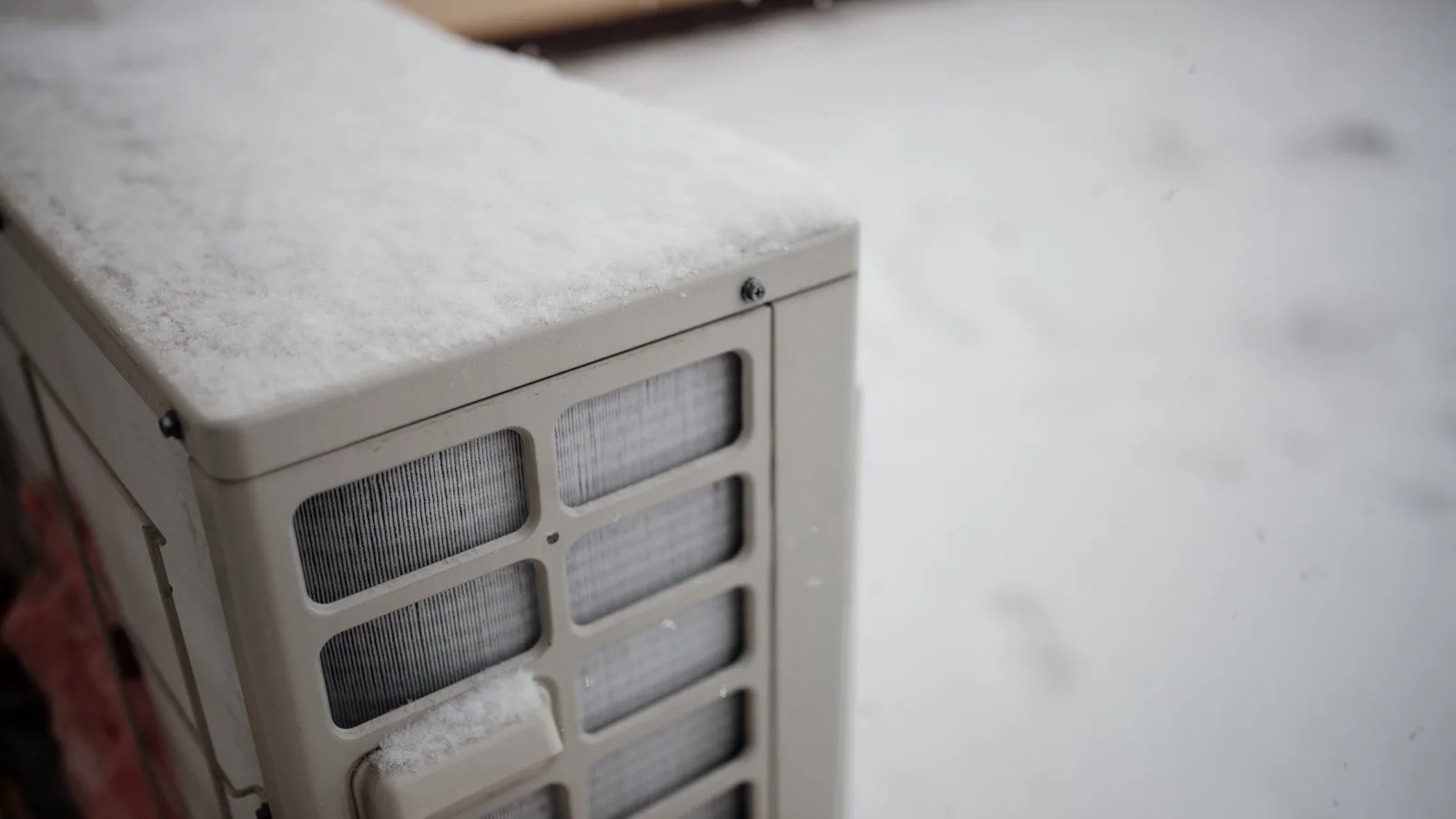
  • Keep outdoor units elevated above expected snow depth, clear of snowbanks and away from downspouts or roof valleys that can bury or ice over coils. Poor placement increases defrost frequency and reduces performance. If moving the outdoor unit to a better spot stretches the line run, Zone Air cuts its pre-charged line sets to the exact length you measure, any whole foot from 5 to 75 ft, so there is no excess to coil.
  • Backup heat (electric resistance strips, hydronic coil, existing boiler or furnace) makes sense for design temperatures well below 0°F or in drafty older homes where loads exceed the heat pump's tested 5°F capacity. Size your backup based on your load calculation, not generic guesses.
  • "Do mini splits work at 0°F?" Yes. Properly selected ENERGY STAR cold climate units do well into sub-zero conditions when the air conditioning system (meaning the full HVAC system) is designed right for the building and climate.

How to Confirm a Mini Split Is ENERGY STAR Cold Climate Certified

Before you commit to a purchase, you'll want to confirm the system actually holds the ENERGY STAR cold climate label. Here's how to do that.

  • Search the official ENERGY STAR Product Finder by brand and model number, then check the listing for the cold climate label. That's a lot more reliable than trusting what you read in marketing brochures.
  • Ask for the AHRI certificate for the exact indoor and outdoor combo you are looking at. Check the listed capacities at 47°F and 5°F, plus the HSPF2, SEER2, EER2 and COP at 5°F. ENERGY STAR needs low-temperature performance that a third party has checked, so this data is backed up by an outside party.
  • Be careful about claims like "low ambient operation to −22°F" when they don't show capacity and COP at 5°F or 0°F. Just having a wide operating range is not enough to meet the cold climate criteria.
  • Ask contractors pointed questions: "Is this exact match ENERGY STAR cold climate certified?" and "What heating capacity does it deliver at my design temperature?"

If you are installing it yourself, you can reach Zone Air's live technical support (8 AM–6 PM MT) to walk through the spec sheets with you before you buy.

Getting the Most From ENERGY STAR Cold Climate Mini Splits

An ENERGY STAR cold climate heat pump is a heat pump that meets strict energy efficiency guidelines, and those guidelines go well beyond the ratings for mild weather. It needs proven capacity retention at 5°F, a minimum COP of 1.75 at that temperature, and a higher floor for HSPF2. These limits exist because they directly reduce your carbon footprint, lower your energy bills and cut your environmental impact in cold regions.

You need three things for success: proven cold climate certification, accurate load-based system design and quality installation and maintenance that is tailored to snow and ice conditions. If you're in a cold region, an ENERGY STAR cold climate mini split can serve as your main heat source, with backup that is planned for the most extreme events.

For DIY installs, Zone Air's systems are AHRI Certified and rated to heat down to −13°F. They carry 5-year parts and 7-year compressor coverage with no registration deadline, and installing it yourself does not void it.

Criteria are from ENERGY STAR's published key product criteria; specs and warranty terms are manufacturer-published as of November 2026, subject to change; verify before purchase.
Sources & Methodology

Where our data comes from

Specs, ratings, prices and warranty terms come from the manufacturers' published catalogs, manuals, spec sheets and policy pages linked below, checked in November 2026.

Keep Reading

Related guides

More on Energy Star Cold Climate Heat Pump Criteria.

Size for your coldest night first

Check your design temperature, then compare single-zone systems side by side.