
Ductless mini splits for less · 2026 buyer's guides & free sizing helpSize my system →

Quick Answer: Can MRCOOL DIY Mini Splits Really Handle Cold Climates?

MRCOOL DIY mini splits can heat when the weather gets cold. The standard DIY 5th Gen heat pump from MRCOOL is rated to operate down to about −13°F, and higher-tier DIY models are rated to operate at even lower temperatures. They're solid options for most winters, but no standard DIY mini split delivers its full nameplate heat at its lowest rated temperature.

  • MRCOOL's current DIY 5th Gen single zone line lists a heating range of −13°F to 75°F across its sizes (9K through 36K).
  • On the spec sheet, MRCOOL's DIY multi-zone condensers from 18K to 48K also say they can heat down to −13°F at the lowest. Only the 55K condenser reaches −22°F.
  • The higher-tier DIY single zone models are rated lower than −13°F, and you can only get them in 12K and 18K sizes.
  • All MRCOOL DIY systems use inverter-driven compressors, and these compressors adjust their output in sub-freezing weather. As the outdoor temperature gets closer to that floor, you can expect the output to drop, and that's something to keep in mind in true cold-climate regions.
  • Zone Air's DIY mini splits are rated to heat down to −13°F, which is the same floor as MRCOOL's standard DIY 5th Gen.

The rest of this article goes over the official specs, the real-world performance limits and how MRCOOL DIY lines up against Zone Air for customers who need dependable winter heat.

What Are MRCOOL DIY Mini Splits?

MRCOOL DIY systems are ductless inverter heat pump units that you can install yourself. They come with pre-charged Quick Connect line sets, and MRCOOL states that "no special tools or training are necessary to install". You'll need most of a day for a first install.

  • Single zone systems have one outdoor condenser paired with one indoor air handler, available up to 36,000 BTU for heating or cooling a single room or open space.
  • Multi zone systems use one outdoor condenser and connect it to 2–6 indoor units, depending on the size of the condenser.
  • Official specs come from standard lab tests, not from extended cold periods with wind and frost, so it makes sense to build in a buffer of safety.

Traditional HVAC installation costs $8,000–$15,000, so homeowners can save thousands on labor alone. MRCOOL's DIY 5th Gen single zone units are rated up to 23.6 SEER2 (9K), which helps on electricity long term. The cost savings are real, but equipment specs still need to be looked at side by side, especially where efficient heating through hard winters is the priority.

Official Cold Climate Specs for MRCOOL DIY 5th Gen Single Zone

The DIY 5th Gen single zone series is MRCOOL's current top DIY line, and it has specific published ranges every homeowner should understand before buying. Coverage by size (MRCOOL catalog):

Model (BTU)CoverageSEER2HSPF2-4Heating Floor
9,000 (115V)up to 400 sq ft23.611.5−13°F
12,000 (115V)up to 550 sq ft23.510.2−13°F
18,000up to 800 sq ft22.511.5−13°F
24,000up to 1,050 sq ft22.79.5−13°F
36,000up to 1,550 sq ft188.5−13°F
  • According to MRCOOL's manual, cooling runs from −13°F to 122°F and heating runs from −13°F to 75°F.
  • The 9K and 12K models are 115V and hardwired. 18K and up are 208/230V.
  • Heating output drops as it gets colder, so the unit may not cover the full design heating load in very cold climate zones without backup heat.

If you are looking at leftover 4th Gen stock, it's a good idea to check that model's own spec sheet. The numbers above are for MRCOOL's current DIY 5th Gen line.

MRCOOL DIY Multi-Zone Cold Climate Specs

MRCOOL's DIY multi-zone condensers let you connect several indoor heads to one outdoor heat pump. It is a flexible system for whole-home comfort, but you'd want to understand how capacity gets shared between zones in deep cold before you buy.

  • Condensers come in 18K (up to 3 zones), 27K (4), 36K (5), 48K (6) and 55K (6), covering about 750 to 2,290 sq ft.
  • Heating operation is rated to −13°F on the 18K through 48K. The 55K is rated to −22°F. There is no multi-zone version of MRCOOL's higher-tier DIY cold-climate line.
  • These systems need 208/230V, single-phase power. Max fuse sizes are 20A on the 18K and 25A on the 27K to 35A on the 36K and 45A on the 48K and 55K.
  • Your indoor options are wall-mount heads and the OuttaSight ceiling cassette. They all run on pre-charged Quick Connect line sets.

Zone Air's DIY multi-zone systems use one 27,000 BTU outdoor unit rated at 28,000 BTU heating and down to −13°F, and Zone Air is the only DIY mini split that lets you mix wall-mount, ceiling cassette and concealed ducted units on one outdoor unit (as of November 2026). With wall heads it's rated at 24 SEER2, against MRCOOL's 23.9 (18K) and 23 (27K).

What MRCOOL DIY 5th Gen Offers in Cold Weather

MRCOOL's 5th Generation DIY single zone line replaced the 4th Gen series with changes in efficiency and controls.

  • MRCOOL's 5th Gen uses R-454B refrigerant, which has lower global warming potential than older refrigerants. It's got a Gold Fin coating on the outdoor coil for corrosion resistance.
  • You can control it with a smartphone app, and Follow Me is also listed as a feature. It works with Alexa and Google Assistant too.
  • Defrost cycles run on their own to clear ice off the outdoor coil when it's freezing and humid out.
  • With MRCOOL's DIY 5th Gen you get a 5-year parts warranty and a 7-year compressor warranty, and no registration is required. Coverage starts from your proof-of-purchase date.

Zone Air's warranty matches those same big terms: 5-year parts and 7-year compressor coverage with no registration deadline. Also, installing it yourself won't void it.

Real Weather vs. Lab Specs for Cold Climates

Official specs come from test conditions, but real winter weather is a different story. Wind, humidity, frost buildup and sustained cold snaps all put way more stress on a mini split system than any lab can copy.

  • Every heat pump puts out less than its nameplate capacity at 0°F or −5°F, and that includes MRCOOL's standard DIY 5th Gen, which is rated down to −13°F.
  • Defrost cycles become longer and more frequent below freezing. They temporarily stop the heat from getting delivered indoors, so rooms can feel cool.
  • Take Minneapolis in January: the design temperatures there sit around −11°F. A unit rated to −13°F "works" on paper, but if your home is poorly insulated you may need backup heat or a bigger unit to stay comfortable. That is true for MRCOOL's standard DIY 5th Gen and it's also true for Zone Air, since they both have the same −13°F floor.
  • In mild cold climates where winter lows rarely drop below 15°F, either brand can often serve as the primary heating system. In hard climates, you'll need to plan on supplemental heat.

Sizing MRCOOL DIY vs. Zone Air for Cold Climates

Getting the size right matters a lot more in cold climates than it does in regions where cooling is the main concern. If you buy a mini split system that's too small and it's supposed to be your main heat source, you'll end up with cold rooms and electric bills that are way too high.

  • For a single zone install that heats one room or an open area, you'll want to compare like for like. Zone Air's 9K has coverage up to 450 sq ft, the 12K has coverage up to 600. The 18K has coverage up to 900.
  • For multi zone setups, you'll want to keep in mind that all the heads share one condenser. When every zone calls for heat at −5°F at the same time, each room gets a slice of a reduced output. That happens whichever brand you buy.
  • Avoid undersizing. If winter lows regularly hit 0°F, consider stepping up one capacity tier.
  • Longer runs of line set, too many turns or running through space that isn't conditioned all add small losses in performance. For either brand, the way to go is to plan a layout that is compact.
  • Efficiency matters more when the unit is your main heat. At 24 SEER2 on 230V, Zone Air is the highest-efficiency pre-charged quick-connect DIY system of the brands compared here (MRCOOL's best single-zone is 23.6). For 115V, the units from Zone Air are 23 SEER2, which is slightly below the 115V 9K and 12K from MRCOOL.

Installing a DIY Cold Climate Mini Split

Even a good cold-climate heat pump will fall short if the install misses winter conditions like snow, ice and condensate management.

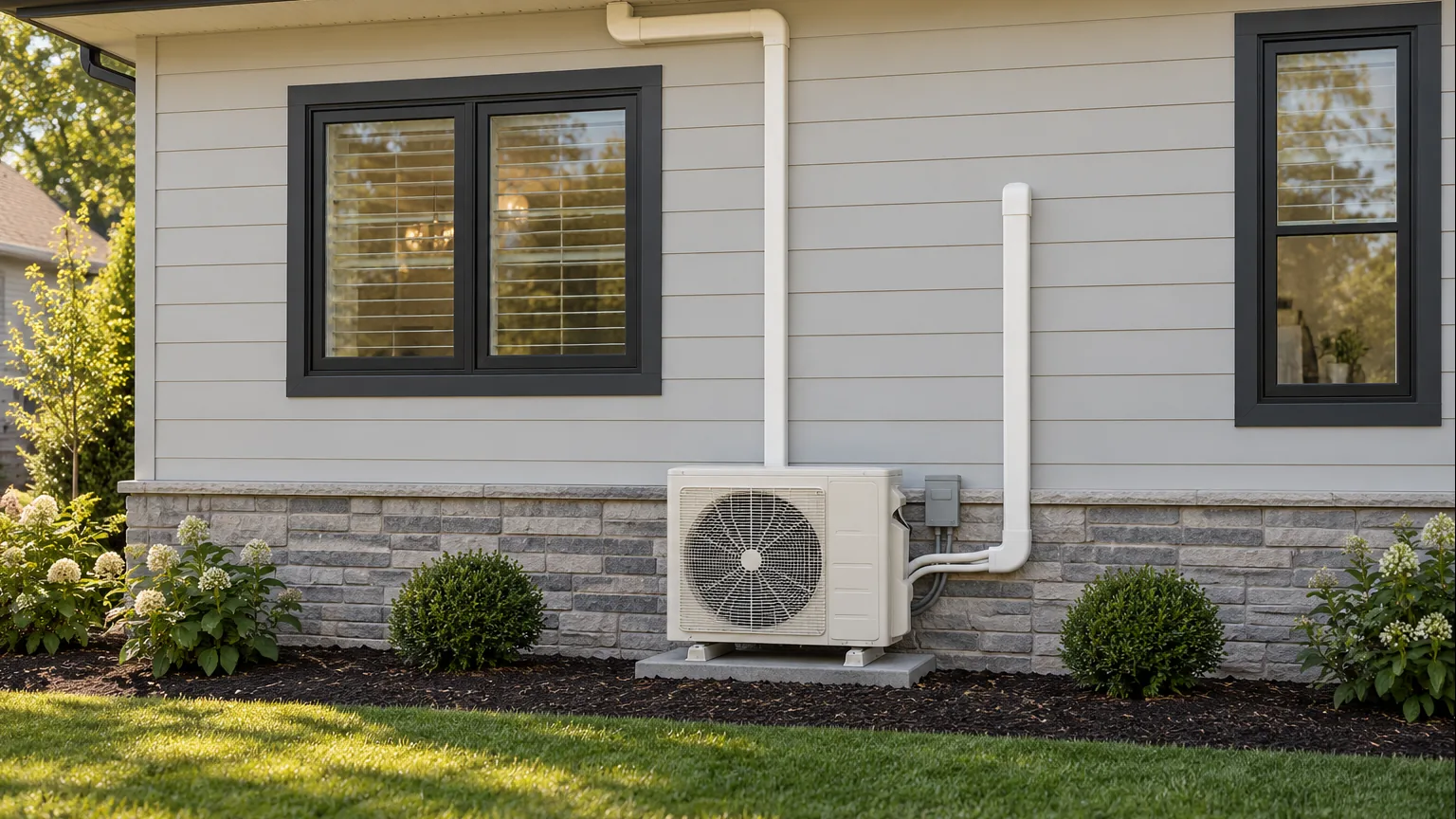
  • Mount the outdoor unit 18–24 inches above grade in areas with snow using a solid wall bracket or stand. Orient the condenser to reduce wind exposure, which makes coil ice and defrost frequency worse.
  • MRCOOL sends pre-charged line sets in fixed 11.5, 16, 25, 35 and 50 ft lengths, with couplers for longer runs, and its manual has you coil the excess behind the condenser. Of the brands compared here, Zone Air is the only one that cuts your pre-charged line set to the exact length you measure, any whole foot from 5 to 75 (as of November 2026), so there's no extra tubing coiled outside in the cold.
  • Put UV-resistant covers on any line sets that are exposed, especially where they run through spaces that are not conditioned, to keep heat from escaping.
  • Install indoor air handlers high on exterior walls where warm air can circulate well into the room. Seal up all the holes in the wall around the line set so drafts and moisture can't get in.

MRCOOL DIY vs Zone Air: Which Mini Split Makes More Sense for Your Winter?

On cold-weather ratings, MRCOOL's standard DIY 5th Gen and Zone Air are the same. The differences are in the rest of the system.

  • Cold-climate performance: both are rated to −13°F. When you look at MRCOOL's higher-tier DIY models, they are rated lower and that is in the 12K and 18K single zone sizes.
  • Efficiency: Zone Air gets 24 SEER2 on its 230V single-zone units and on its wall multi-zone units. MRCOOL's best single-zone is 23.6.
  • Hot summers too: Zone Air is rated to cool when the outdoor temperature is as high as 131°F (MRCOOL publishes 122°F).
  • System types: both offer single zone and multi zone, but only Zone Air lets you mix wall, ceiling cassette and concealed ducted heads on one DIY outdoor unit (as of November 2026).
  • DIY ease: both use pre-charged quick-connect line sets. Zone Air's line sets are cut to the length you measured, and its warranty stays in force on a DIY install.
  • Buying terms: Zone Air sells direct, with 30-day returns on uninstalled units and free shipping to the lower 48. Its units are AHRI Certified, with final assembly, testing, and inspection in the USA.

If you live where winter lows rarely drop below 10°F, either brand is usually enough on its own. If you regularly see 0°F to −13°F, size carefully and plan backup heat for the coldest nights. If you see colder than −13°F, you'll need a unit rated lower or a second heat source.

Have questions about which system fits your home? Compare Zone Air's spec sheets side by side with MRCOOL's catalog, and choose the system that matches your true winter design temperatures, not just nameplate ratings. Your comfort depends on what happens at the coldest hour of the coldest night.

Specs and warranty terms are manufacturer-published as of November 2026, subject to change; verify before purchase. MRCOOL® is a trademark of its owner; Zone Air is not affiliated with or endorsed by MRCOOL.
Sources & Methodology

Where our data comes from

MRCOOL operating ranges, SEER2, HSPF2, coverage and electrical data are from MRCOOL's published catalog, manuals and warranty, checked in November 2026. Zone Air figures are from its published spec sheets and policy pages.

Keep Reading

Related guides

More on MRCOOL DIY cold-climate heating.

Size for your coldest night first

Check your design temperature, then compare single-zone systems side by side.