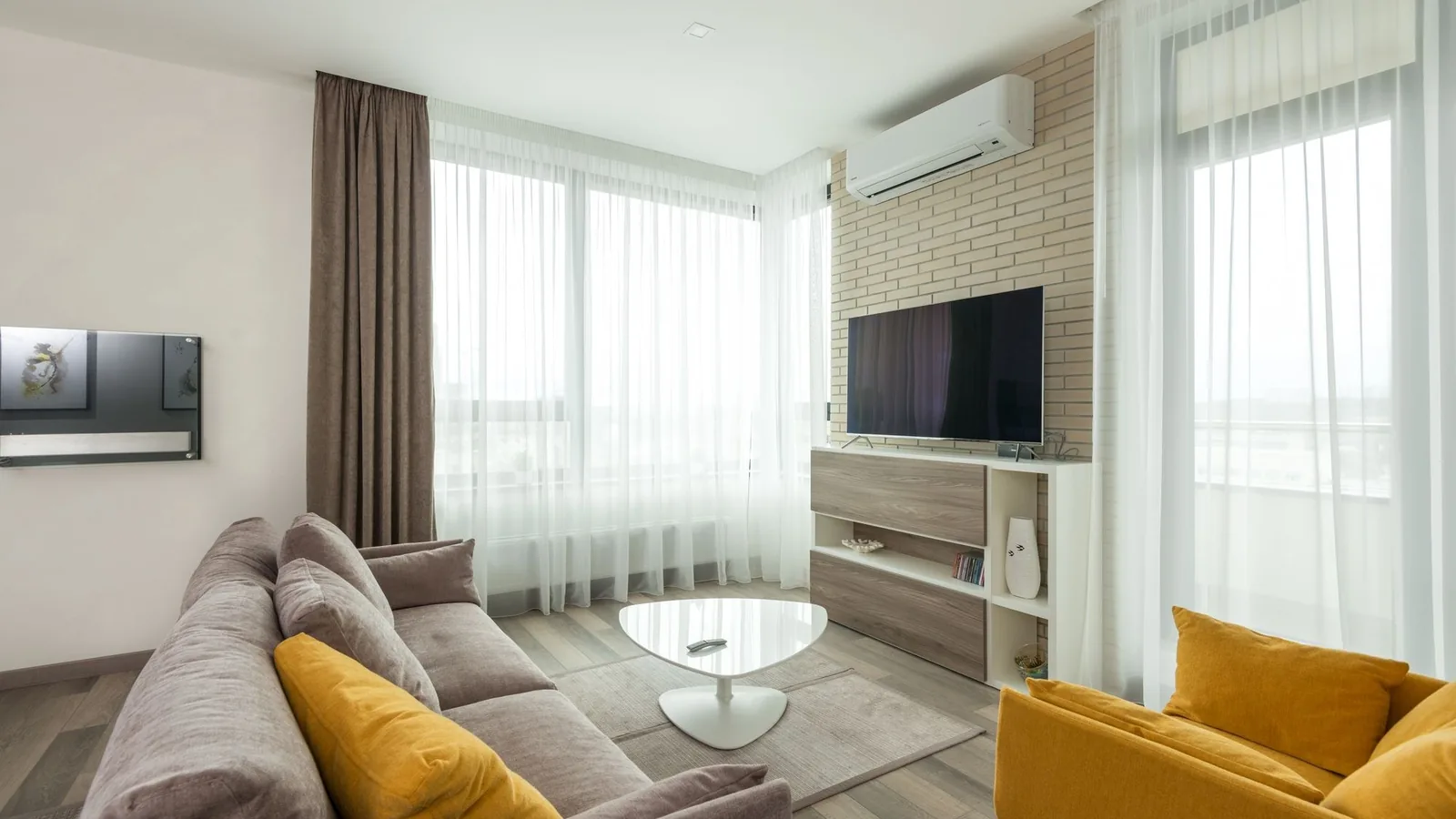
Best 24,000 BTU Mini Splits for 2026
1. Best Overall 24,000 BTU Mini Split
Mitsubishi Hyper-Heat H2i MSZ-FH24NA
Mitsubishi Electric systems last 15 to 20 years on average. The MSZ-FH24NA is the model that gets that reputation. This wall-mount mini split has a SEER2 of about 28.4, an HSPF2 of about 12.5, and it keeps putting out heat from triple-digit temperatures all the way down to −13°F. For a primary heating and cooling system in a large living area or open floor plan, it can be the gold standard among premium systems.
Why It Stands Out
This system holds full capacity at 17°F and keeps strong output even at 5°F, where Mitsubishi's cold-climate systems maintain capacity that budget models just can't match. The indoor unit runs whisper-quiet at low fan speeds. The inverter compressor changes speed smoothly instead of cycling on and off. Mitsubishi backs it with a strong warranty when it's installed and registered by a licensed contractor.
Best For
-
Homeowners who plan to stay 10+ years and want the most quiet, most reliable option
-
Primary heating and cooling in mixed or cold climates
-
Those who are willing to pay more upfront so they can get lower energy bills and a longer service life
Not ideal if you're on a strict budget or want DIY installation.
Key Strengths
-
A SEER2 of about 28.4 and an HSPF2 of about 12.5 put it at the top efficiency tier in the 24K class
-
Heating down to −13°F with little loss of capacity
-
Smooth, quiet indoor unit with fine control of the fan speed
-
There's a strong network of contractors and parts across the US
-
Mitsubishi models reach up to 17 SEER2 in their base wall-mount lines, but the Hyper-Heat series pushes well beyond that
Possible Limitations
-
Compared to budget or DIY options, the installed cost is higher
-
Needs professional installation by a licensed contractor for full warranty
-
More complex electronics mean repairs cost more if something fails out of warranty
2. Best DIY 24,000 BTU Mini Split (Pre-Charged Line Set)
MRCOOL DIY 5th Gen 24,000 BTU
The MRCOOL DIY 5th Gen 24K comes with a 25-foot pre-charged line set using R-454B refrigerant, the lower-GWP replacement for R-410A. No vacuum pump, no flaring tools, no gauges. The line set in a mini split installation connects the indoor unit to the outdoor condenser, and MRCOOL's quick-connect fittings mean you can handle that connection yourself if you're capable with this kind of work.
Why It Stands Out
Its SEER2 of 22.7 and HSPF2 around 9.5 deliver competitive efficiency at a fraction of the installed cost of premium pro-grade systems. It heats down to −13°F, though output drops to about 67% of rated capacity (around 16,100 BTU) at 5°F. Built-in Wi-Fi, a clear installation manual and extensive YouTube walkthroughs make this the most accessible high-capacity ductless system for handy homeowners.
DIY mini split systems can save $1,500 to $3,000 in installation costs versus hiring a pro. Installing a mini split often needs to comply with local building codes, so check permit requirements in your area, and most jurisdictions still require a licensed electrician for the dedicated circuit.
Best For
-
Detached garages, large shops, bonus rooms and ADUs where labor savings matter most
-
If you're on a budget and confident with wall penetration, mounting and basic electrical work
-
Mild to moderate climates where the loss of heating capacity at extreme lows isn't a dealbreaker
Key Strengths
-
25-foot pre-charged R-454B line set included, no specialized tools needed
-
SEER2 22.7 with heating to −13°F
-
Built-in Wi-Fi and app control so you can schedule and monitor the system
-
7-year compressor warranty and 5-year parts warranty with warranty registration
-
Indoor noise gets as low as 20 dB(A) in sleep mode
Possible Limitations
-
Outdoor unit runs around 58.5 dB, which is louder than some premium systems
-
67% capacity retention at 5°F limits it as a sole heat source in truly cold climates
-
Smaller contractor support network if something goes wrong
-
Equipment price can be higher than budget pro-install brands
3. Best Budget 24,000 BTU Mini Split
Senville AURA 24K
Senville's AURA line at 24K delivers a SEER2 around 21 and HSPF2 around 13.5, with a heating floor rated to −22°F. That's a cold-weather spec at a price point well below Mitsubishi or Fujitsu. This is a pro-install system, not a DIY kit, but the equipment cost sits a lot lower than premium brands.
Why It Stands Out
Senville positions the AURA as their higher-performance tier while keeping the price tag competitive. We know from tracking their 12K lineup that the Senville LETO 12K was $799.99 and the AURA 12K was $1,399.99 on September 29, 2026, a $600 gap between budget and premium within the same brand. That pattern scales to 24K: expect the AURA 24K to land in the $2,000 to $2,800 range for equipment, about half or less of a Mitsubishi Hyper-Heat unit.
The system includes a line set and basic accessories. What does that mean for you? It means add-on costs are lower than with some pro brands that sell the refrigerant lines separately.
Best For
-
Finishing a basement, sunroom or large bonus room where budget matters
-
Rental properties or secondary spaces where absolute top-tier longevity isn't critical
-
If you're in a cold climate and want low ambient heating capability without the premium price tag
Key Strengths
-
An HSPF2 of 13.5 is among the highest in the value segment
-
Heating rated to −22°F (though real-world capacity at those extremes will be reduced)
-
Line set included, reducing total cost
-
Competitive with or better than many mid-tier mini split brands on raw specs
Possible Limitations
-
Warranty terms are shorter or more limited than premium brands
-
Parts availability may involve longer shipping times versus Mitsubishi or Daikin's US distributor networks
-
You can expect 7 to 12 years of hard-use life versus 15 to 20 for premium systems
-
Indoor unit noise and build quality may not match the refinement of Fujitsu or Mitsubishi heads
4. Best 24,000 BTU Mini Split for Cold Climates
Mitsubishi Hyper-Heat H2i MSZ-FH24NA (also our Best Overall)
Yes, the same model shows up here because nothing else in the 24K class matches its cold-weather output. Mitsubishi's Hyper-Heat models operate down to −13°F. The heating performance of mini splits can vary down to sub-zero temperatures depending on model. This one barely flinches.
Why It Stands Out
At 5°F, the MSZ-FH24NA keeps the vast majority of its rated heating capacity. That matters when this BTU mini split is your primary heat source in a 1,000-square-foot zone and outdoor temperatures drop into the single digits for weeks. With refined defrost logic, crankcase and base-pan heaters keep the outdoor unit running even in heavy snow. The outdoor coil clears ice efficiently without long, uncomfortable interruptions to conditioned air.
Higher HSPF2 means lower heating bills. At HSPF2 12.5, this system costs a lot less to run per heating season than conventional systems or older heat pumps with HSPF2 in the 8 range.
Best For
-
Northern US or mountain-region homeowners who are relying on this unit as main heat for 900 to 1,200 square feet
-
Areas where winter lows regularly hit the teens or below
-
If you're replacing oil, propane or baseboard electric heat with a mini split
Key Strengths
-
Tested and rated output at 5°F and −13°F
-
HSPF2 ~12.5 drives real savings over a heating season
-
Robust defrost, crankcase heater and base-pan heater design
-
Quiet operation even during defrost cycles
-
Compatible with Mitsubishi's smart controls and Kumo Cloud app
Possible Limitations
-
Mitsubishi mini splits usually cost $3,500 to $5,500 installed per zone
-
Needs professional installation and top-tier line set routing, condensate management and snow clearance to see full benefit
-
Overkill if your winters rarely dip below 25°F
5. Best Quiet 24,000 BTU Mini Split
Fujitsu Airstage H-Series 24K
Fujitsu's H-series in ceiling cassette and wall-mount configurations is engineered for ultra-quiet operation. The circular-flow cassette version distributes air evenly across the room, which reduces the "one spot gets blasted" problem common with wall heads in large master suites or home offices.
Why It Stands Out
Noise levels of mini split indoor units can drop as low as 19 dB on low fan speeds. The Fujitsu H-series approaches that territory. The cassette design eliminates the visible indoor unit on the wall, spreading conditioned air from the ceiling. At a SEER2 of 23.2 and HSPF2 of 11.0, efficiency is strong. Heating output stays at approximately 23,600 BTU even at 5°F, which is roughly 98% of rated capacity - far above average.
Best For
-
Whisper-quiet bedrooms, home offices or studios where noise is unacceptable
-
Homeowners who want the exact indoor aesthetic of a ceiling-mount rather than a wall-mount
-
People recording audio or video who need silent background
Key Strengths
-
Among the lowest indoor noise ratings in the 24K class
-
Fine fan speed steps and sleep modes for nighttime comfort
-
Retains \~98% heating capacity at 5°F
-
Smooth inverter modulation eliminates harsh on/off cycling
-
SEER2 23.2 places it in a high efficiency tier
Possible Limitations
-
Ceiling cassette installation complexity drives up labor cost
-
Equipment pricing runs around $2,900 to $6,300 depending on indoor head style
-
Needs professional service for ceiling work and proper drain routing
-
App and remote learning curve for some users
6. Best 24,000 BTU Zone on a Multi-Zone Condenser
Fujitsu AOU24RLXFZ Multi-Zone Outdoor Unit
Some homeowners don't want one massive 24K wall head. They want one large zone for a great room plus smaller heads for bedrooms. A multi-zone outdoor unit like the Fujitsu AOU24RLXFZ supports a 24K head and two or three smaller 9K to 12K zones off a single outdoor combination, reducing the number of condensers cluttering the exterior.
Why It Stands Out
This condenser supports multiple zones with flexible port sizing and efficient modulation when several rooms call at once. Multi-zone systems handle partial load well, throttling the compressor down when only one or two zones are active. The result is lower operating costs than running separate single-zone systems for each room.
Best For
-
Homes that need a 24K zone for a living area plus 9K to 12K heads for multiple zones in bedrooms
-
Open concept homes without existing ductwork
-
Climates where zoning can save significant energy by not heating or cooling empty rooms
Key Strengths
-
One outdoor unit serves the whole home, reducing exterior clutter
-
Flexible port count lets you mix head sizes
-
Smart zone control options available
-
Efficient at partial load thanks to inverter-driven compressor
Possible Limitations
-
If the single condenser fails, all zones go down
-
Multi-zone system design and sizing is not DIY-friendly. A Manual J load calculation for each zone is essential
-
Multi-zone mini split systems can cost $8,000 to $12,000 or more installed
-
Installation complexity increases with each additional zone